Threat Wire
BleepingComputer [Critical] FBI links $6.3 billion Binance crypto heist to North Korean hackers BleepingComputer [Critical] Alpine Linux rebuilds GitLab after attempted RCE attack CVE-2026-118539 [Critical] Security Affairs newsletter Round 602 by Pierluigi Paganini – INTERNATIONAL EDITION CVE-2026-58882 [Critical] SMS of Death: Android under attack, an invisible SMS can block calls and emergency services The Hacker News [Critical] CVSS 10.0 LXD, MicroCloud Flaw Lets Attackers Impersonate Trusted Clients Without a Private Key The Hacker News [Critical] FBI Links North Korea's TraderTraitor to Record $6.43 Billion Binance Crypto Heist CVE-2026-111357 [Critical] U.S. CISA adds Ivanti Connect Secure flaws to its Known Exploited Vulnerabilities catalog BleepingComputer [Critical] Northflank security breach leads to abuse of customers' AI API keys BleepingComputer [Critical] FBI links $6.3 billion Binance crypto heist to North Korean hackers BleepingComputer [Critical] Alpine Linux rebuilds GitLab after attempted RCE attack CVE-2026-118539 [Critical] Security Affairs newsletter Round 602 by Pierluigi Paganini – INTERNATIONAL EDITION CVE-2026-58882 [Critical] SMS of Death: Android under attack, an invisible SMS can block calls and emergency services The Hacker News [Critical] CVSS 10.0 LXD, MicroCloud Flaw Lets Attackers Impersonate Trusted Clients Without a Private Key The Hacker News [Critical] FBI Links North Korea's TraderTraitor to Record $6.43 Billion Binance Crypto Heist CVE-2026-111357 [Critical] U.S. CISA adds Ivanti Connect Secure flaws to its Known Exploited Vulnerabilities catalog BleepingComputer [Critical] Northflank security breach leads to abuse of customers' AI API keys

CyberWatch Newsroom Live Intel

Continuous enterprise threat intelligence tracking active in-the-wild zero-days (CISA KEV), Microsoft Windows KB cumulative updates, MSRC security advisories, and CVE remediation.

Last Checked: Nov 2, 2026 - 02:28:59 UTC (Hourly Auto-Sync Active)
Showing 24 of 5,807 advisories
Page 108 of 242
Meari IoT Cloud Platform OpenAPI Service Important CISA Advisory
2026-10-01 CISA Advisory

Meari IoT Cloud Platform OpenAPI Service

View CSAF Summary Successful exploitation of these vulnerabilities could allow attackers to manipulate device configurations, trigger unauthorized behaviors, and access sensitive information such as device credentials, owner details, and network data without proper authorization. The following versions of Meari IoT Cloud Platform OpenAPI Service are affected: IoT Cloud Platform OpenAPI Service vers:all/* (CVE-2026-101104, CVE-2026-96613) CVSS Vendor Equipment Vulnerabilities v3 7.7 Meari Meari IoT Cloud Platform OpenAPI Service Missing Authorization Background Critical Infrastructure Sectors: Commercial Facilities, Information Technology Countries/Areas Deployed: Worldwide Company Headquarters Location: China Vulnerabilities Expand All + CVE-2026-101104 The Meari IoT Cloud Platform OpenAPI Service is vulnerable to an authorization flaw that allows authenticated users to manipulate the configurations of devices they do not own. This vulnerability enables attackers to perform unauthorized actions, such as altering device settings or triggering unintended behaviors, without verifying ownership or permissions. View CVE Details Affected Products Meari IoT Cloud Platform OpenAPI Service Vendor: Meari Product Version: Meari IoT Cloud Platform OpenAPI Service: vers:all/* Product Status: known_affected Remediations No fix planned Meari did not respond to CISA's coordination attempts. IoT Cloud Platform OpenAPI users are advised to contact Meari for support https://www.meari.com/en/downLoadCenter . Relevant CWE: CWE-862 Missing Authorization Metrics CVSS Version Base Score Base Severity Vector String 3.1 7.7 HIGH CVSS:3.1/AV:N/AC:L/PR:L/UI:N/S:C/C:N/I:H/A:N 4.0 6.3 MEDIUM CVSS:4.0/AV:N/AC:L/AT:N/PR:L/UI:N/VC:N/VI:N/VA:N/SC:N/SI:H/SA:N CVE-2026-96613 The Meari IoT Cloud Platform OpenAPI Service is vulnerable to an authorization flaw that allows authenticated users to access the complete device shadow of any device by specifying its device ID. This vulnerability exposes sensitive information, such as device credentials, owner details, network data, and telemetry, without verifying any relationship between the requester and the target device. View CVE Details Affected Products Meari IoT Cloud Platform OpenAPI Service Vendor: Meari Product Version: Meari IoT Cloud Platform OpenAPI Service: vers:all/* Product Status: known_affected Remediations No fix planned Meari did not respond to CISA's coordination attempts. IoT Cloud Platform OpenAPI users are advised to contact Meari for support https://www.meari.com/en/downLoadCenter . Relevant CWE: CWE-862 Missing Authorization Metrics CVSS Version Base Score Base Severity Vector String 3.1 6.5 MEDIUM CVSS:3.1/AV:N/AC:L/PR:L/UI:N/S:U/C:H/I:N/A:N 4.0 7.1 HIGH CVSS:4.0/AV:N/AC:L/AT:N/PR:L/UI:N/VC:H/VI:N/VA:N/SC:N/SI:N/SA:N Acknowledgments Gabriel Adams reported these vulnerabilities to CISA Legal Notice and Terms of Use This product is provided subject to this Notification ( https://www.cisa.gov/notification ) and this Privacy & Use policy ( https://www.cisa.gov/privacy-policy ). Recommended Practices CISA recommends users take defensive measures to minimize the risk of exploitation of these vulnerabilities. Minimize network exposure for all control system devices and/or systems, ensuring they are not accessible from the internet. Locate control system networks and remote devices behind firewalls and isolating them from business networks. When remote access is required, use more secure methods, such as Virtual Private Networks (VPNs), recognizing VPNs may have vulnerabilities and should be updated to the most current version available. Also recognize VPN is only as secure as the connected devices. CISA reminds organizations to perform proper impact analysis and risk assessment prior to deploying defensive measures. CISA also provides a section for control systems security recommended practices on the ICS webpage on cisa.gov/ics. Several CISA products detailing cyber defense best practices are available for reading and download, including Improving Industrial Control Systems Cybersecurity with Defense-in-Depth Strategies. CISA encourages organizations to implement recommended cybersecurity strategies for proactive defense of ICS assets. Additional mitigation guidance and recommended practices are publicly available on the ICS webpage at cisa.gov/ics in the technical information paper, ICS-TIP-12-146-01B--Targeted Cyber Intrusion Detection and Mitigation Strategies. Organizations observing suspected malicious activity should follow established internal procedures and report findings to CISA for tracking and correlation against other incidents. No known public exploitation specifically targeting these vulnerabilities has been reported to CISA at this time. Revision History Initial Release Date: 2026-10-01 Date Revision Summary 2026-10-01 1 Initial Publication Legal Notice and Terms of Use

Fix: Review CISA guidance and apply vendor security updates immediately.

CISA Malcolm Important CISA Advisory
2026-10-01 CISA Advisory

CISA Malcolm

View CSAF Summary The following versions of CISA Malcolm are affected: Malcolm CVSS Vendor Equipment Vulnerabilities v3 8.8 CISA CISA Malcolm Improper Neutralization of Input During Web Page Generation ('Cross-site Scripting'), Improper Neutralization of Special Elements used in an OS Command ('OS Command Injection'), Improper Limitation of a Pathname to a Restricted Directory ('Path Traversal'), Server-Side Request Forgery (SSRF), Authentication Bypass by Spoofing, Missing Authorization, Missing Authentication for Critical Function, Incorrect Authorization, Use of Default Credentials, Improper Certificate Validation, URL Redirection to Untrusted Site ('Open Redirect'), Dependency on Vulnerable Third-Party Component, Use of Password Hash With Insufficient Computational Effort Background Critical Infrastructure Sectors: Energy, Information Technology, Water and Wastewater Countries/Areas Deployed: Worldwide Company Headquarters Location: United States Vulnerabilities Expand All + CVE-2026-90443 A web interface reflects a portion of the request URL into a script context and a hyperlink attribute without adequate encoding, and does not require authentication to reach. This allows an unauthenticated network attacker to craft a link that, when visited by a user, executes arbitrary script in the context of the affected application and can redirect the user's browser to an arbitrary external site. Successful exploitation could allow an attacker to act with the compromised user's session privileges within the application. View CVE Details Affected Products CISA Malcolm Vendor: CISA Product Version: CISA Malcolm Product Status: known_affected Remediations Vendor fix The latest version of Malcolm (September 2026 or later) fixes these vulnerabilities. Affected users are encouraged to update their instance of Malcolm to the latest version. Relevant CWE: CWE-79 Improper Neutralization of Input During Web Page Generation ('Cross-site Scripting') Metrics CVSS Version Base Score Base Severity Vector String 3.1 5.4 MEDIUM CVSS:3.1/AV:N/AC:L/PR:N/UI:R/S:U/C:L/I:L/A:N 4.0 5.3 MEDIUM CVSS:4.0/AV:N/AC:L/AT:N/PR:N/UI:P/VC:L/VI:L/VA:N/SC:N/SI:N/SA:N CVE-2026-90444 A file-transfer interface that requires valid credentials accepts attacker-controlled filenames without restricting shell metacharacters. An automated process later constructs and runs a system command using the uploaded file's name, allowing an authenticated attacker to embed and execute arbitrary operating system commands with the privileges of that process. This allows an attacker to read and modify ingested log data, and could provide a foothold for further movement within the internal network. View CVE Details Affected Products CISA Malcolm Vendor: CISA Product Version: CISA Malcolm Product Status: known_affected Remediations Vendor fix The latest version of Malcolm (September 2026 or later) fixes these vulnerabilities. Affected users are encouraged to update their instance of Malcolm to the latest version. Relevant CWE: CWE-78 Improper Neutralization of Special Elements used in an OS Command ('OS Command Injection') Metrics CVSS Version Base Score Base Severity Vector String 3.1 8.8 HIGH CVSS:3.1/AV:N/AC:L/PR:L/UI:N/S:U/C:H/I:H/A:H 4.0 8.7 HIGH CVSS:4.0/AV:N/AC:L/AT:N/PR:L/UI:N/VC:H/VI:H/VA:H/SC:N/SI:N/SA:N CVE-2026-90445 An interface that accepts file uploads from authenticated users extracts the contents of uploaded archives without validating that extracted file paths remain within the intended destination directory. This allows an authenticated attacker to craft an archive whose entries traverse outside the destination directory, causing the extraction process to write files to arbitrary locations with the privileges of that process. This could allow an attacker to inject fabricated records into the system's stored data or tamper with application configuration. View CVE Details Affected Products CISA Malcolm Vendor: CISA Product Version: CISA Malcolm Product Status: known_affected Remediations Vendor fix The latest version of Malcolm (September 2026 or later) fixes these vulnerabilities. Affected users are encouraged to update their instance of Malcolm to the latest version. Relevant CWE: CWE-22 Improper Limitation of a Pathname to a Restricted Directory ('Path Traversal') Metrics CVSS Version Base Score Base Severity Vector String 3.1 6.5 MEDIUM CVSS:3.1/AV:N/AC:L/PR:L/UI:N/S:U/C:N/I:H/A:N 4.0 7.1 HIGH CVSS:4.0/AV:N/AC:L/AT:N/PR:L/UI:N/VC:N/VI:H/VA:N/SC:N/SI:N/SA:N CVE-2026-90446 An application programming interface endpoint accepts a user-supplied value and interpolates it directly into the path of a backend request to the underlying search and analytics data store, without restricting its contents. This allows an authenticated attacker to substitute an arbitrary backend path, causing the application's own elevated service credentials to be used against unintended internal endpoints. This could allow an attacker to enumerate or read internal configuration and administrative data from the backend data store that would otherwise be restricted. View CVE Details Affected Products CISA Malcolm Vendor: CISA Product Version: CISA Malcolm Product Status: known_affected Remediations Vendor fix The latest version of Malcolm (September 2026 or later) fixes these vulnerabilities. Affected users are encouraged to update their instance of Malcolm to the latest version. Relevant CWE: CWE-918 Server-Side Request Forgery (SSRF) Metrics CVSS Version Base Score Base Severity Vector String 3.1 4.3 MEDIUM CVSS:3.1/AV:N/AC:L/PR:L/UI:N/S:U/C:L/I:N/A:N 4.0 5.3 MEDIUM CVSS:4.0/AV:N/AC:L/AT:N/PR:L/UI:N/VC:L/VI:N/VA:N/SC:N/SI:N/SA:N CVE-2026-90447 A routing rule selects between two different authentication mechanisms for the same downstream service based on the value of a client-supplied request header, rather than on any property the client cannot control. An authenticated user in possession of a shared service credential can set this header to route around the primary role-based authorization check and reach the alternate path's fixed, elevated role instead. This allows a low-privileged authenticated attacker who knows the shared credential to perform actions reserved for a higher-privileged role. View CVE Details Affected Products CISA Malcolm Vendor: CISA Product Version: CISA Malcolm Product Status: known_affected Remediations Vendor fix The latest version of Malcolm (September 2026 or later) fixes these vulnerabilities. Affected users are encouraged to update their instance of Malcolm to the latest version. Relevant CWE: CWE-290 Authentication Bypass by Spoofing Metrics CVSS Version Base Score Base Severity Vector String 3.1 6.5 MEDIUM CVSS:3.1/AV:N/AC:L/PR:L/UI:N/S:U/C:N/I:H/A:N 4.0 7.1 HIGH CVSS:4.0/AV:N/AC:L/AT:N/PR:L/UI:N/VC:N/VI:H/VA:N/SC:N/SI:N/SA:N CVE-2026-90448 A deployment mode intended to expose only read access to stored data proxies a set of application programming interface routes without restricting which request methods are allowed. One such route accepts a request that creates or overwrites a stored record, including an attacker-chosen identifier, using the application's own elevated backend credentials. This allows an authenticated user on a deployment intended to be read-only to forge or overwrite stored records that should not be modifiable in that deployment mode. View CVE Details Affected Products CISA Malcolm Vendor: CISA Product Version: CISA Malcolm Product Status: known_affected Remediations Vendor fix The latest version of Malcolm (September 2026 or later) fixes these vulnerabilities. Affected users are encouraged to update their instance of Malcolm to the latest version. Relevant CWE: CWE-862 Missing Authorization Metrics CVSS Version Base Score Base Severity Vector String 3.1 6.5 MEDIUM CVSS:3.1/AV:N/AC:L/PR:L/UI:N/S:U/C:N/I:H/A:N 4.0 7.1 HIGH CVSS:4.0/AV:N/AC:L/AT:N/PR:L/UI:N/VC:N/VI:H/VA:N/SC:N/SI:N/SA:N CVE-2026-90449 When a particular authentication mode is configured, the reverse proxy forwards requests for a bundled third-party administrative interface directly to that interface without applying the gateway's own authentication requirement first. All access control for this administrative interface, which manages the credential store used to gate every other service in the deployment, is delegated entirely to that third-party interface's own login mechanism. Any authentication weakness in that bundled interface would compromise the credential store protecting the rest of the deployment. View CVE Details Affected Products CISA Malcolm Vendor: CISA Product Version: CISA Malcolm Product Status: known_affected Remediations Vendor fix The latest version of Malcolm (September 2026 or later) fixes these vulnerabilities. Affected users are encouraged to update their instance of Malcolm to the latest version. Relevant CWE: CWE-306 Missing Authentication for Critical Function Metrics CVSS Version Base Score Base Severity Vector String 3.1 6.5 MEDIUM CVSS:3.1/AV:N/AC:L/PR:N/UI:N/S:U/C:L/I:L/A:N 4.0 6.9 MEDIUM CVSS:4.0/AV:N/AC:L/AT:N/PR:N/UI:N/VC:L/VI:L/VA:N/SC:N/SI:N/SA:N CVE-2026-90450 The application's role-authorization lookup defaults to granting access when a request handler's name is not present in its table of role requirements, rather than defaulting to deny. Any request handler that is not explicitly registered in this table is reachable by any authenticated user regardless of their assigned role, and any newly added handler is fail-open by default until explicitly added to the table. View CVE Details Affected Products CISA Malcolm Vendor: CISA Product Version: CISA Malcolm Product Status: known_affected Remediations Vendor fix The latest version of Malcolm (September 2026 or later) fixes these vulnerabilities. Affected users are encouraged to update their instance of Malcolm to the latest version. Relevant CWE: CWE-863 Incorrect Authorization Metrics CVSS Version Base Score Base Severity Vector String 3.1 4.3 MEDIUM CVSS:3.1/AV:N/AC:L/PR:L/UI:N/S:U/C:L/I:N/A:N 4.0 5.3 MEDIUM CVSS:4.0/AV:N/AC:L/AT:N/PR:L/UI:N/VC:L/VI:N/VA:N/SC:N/SI:N/SA:N CVE-2026-90451 An example environment-configuration file ships with a fixed, publicly-known secret value used to sign authentication cookies for a bundled packet-analysis component. A deployment that copies this example file into active configuration without running the setup routine that regenerates the value will use the known default, allowing an attacker aware of the default to forge valid authentication cookies for that component. View CVE Details Affected Products CISA Malcolm Vendor: CISA Product Version: CISA Malcolm Product Status: known_affected Remediations Vendor fix The latest version of Malcolm (September 2026 or later) fixes these vulnerabilities. Affected users are encouraged to update their instance of Malcolm to the latest version. Relevant CWE: CWE-1392 Use of Default Credentials Metrics CVSS Version Base Score Base Severity Vector String 3.1 5.9 MEDIUM CVSS:3.1/AV:N/AC:H/PR:N/UI:N/S:U/C:N/I:H/A:N 4.0 8.2 HIGH CVSS:4.0/AV:N/AC:L/AT:P/PR:N/UI:N/VC:N/VI:H/VA:N/SC:N/SI:N/SA:N CVE-2026-90452 Requests from the reverse proxy to the identity-provider service for token discovery, introspection, and credential exchange do not verify the identity provider's server certificate. An attacker positioned on the network path between the proxy and the identity provider could impersonate the identity provider and issue forged authentication tokens accepted by the deployment. View CVE Details Affected Products CISA Malcolm Vendor: CISA Product Version: CISA Malcolm Product Status: known_affected Remediations Vendor fix The latest version of Malcolm (September 2026 or later) fixes these vulnerabilities. Affected users are encouraged to update their instance of Malcolm to the latest version. Mitigation The fix for this issue introduces a KEYCLOAK_SSL_VERIFY configuration variable but does not enable certificate validation by default. In addition to updating to the latest version of Malcolm, affected users should explicitly set KEYCLOAK_SSL_VERIFY to enable certificate validation, particularly in deployments where the identity provider is not co-located on a fully trusted network segment. Relevant CWE: CWE-295 Improper Certificate Validation Metrics CVSS Version Base Score Base Severity Vector String 3.1 5.3 MEDIUM CVSS:3.1/AV:A/AC:H/PR:N/UI:N/S:U/C:N/I:H/A:N 4.0 6 MEDIUM CVSS:4.0/AV:A/AC:H/AT:N/PR:N/UI:N/VC:N/VI:H/VA:N/SC:N/SI:N/SA:N CVE-2026-90453 A file-upload handler redirects the authenticated client's browser to a URL taken directly from that same request's Referer header, without validating it against the application's own origin. This allows an authenticated attacker to craft a request that causes another user's browser to be redirected to an arbitrary external destination after completing an upload. View CVE Details Affected Products CISA Malcolm Vendor: CISA Product Version: CISA Malcolm Product Status: known_affected Remediations Vendor fix The latest version of Malcolm (September 2026 or later) fixes these vulnerabilities. Affected users are encouraged to update their instance of Malcolm to the latest version. Relevant CWE: CWE-601 URL Redirection to Untrusted Site ('Open Redirect') Metrics CVSS Version Base Score Base Severity Vector String 3.1 3.5 LOW CVSS:3.1/AV:N/AC:L/PR:L/UI:R/S:U/C:N/I:L/A:N 4.0 5.1 MEDIUM CVSS:4.0/AV:N/AC:L/AT:N/PR:L/UI:P/VC:N/VI:L/VA:N/SC:N/SI:N/SA:N CVE-2026-90454 A deployment mode intended to expose only read access to a bundled packet-analysis component's interface denies a list of write-capable routes by pattern, but the pattern omits routes that modify tags attached to stored session records, and the proxy configuration otherwise permits the request method those routes use. This allows an authenticated user on a deployment intended to be read-only to add or remove tags on stored session records. View CVE Details Affected Products CISA Malcolm Vendor: CISA Product Version: CISA Malcolm Product Status: known_affected Remediations Vendor fix The latest version of Malcolm (September 2026 or later) fixes these vulnerabilities. Affected users are encouraged to update their instance of Malcolm to the latest version. Relevant CWE: CWE-862 Missing Authorization Metrics CVSS Version Base Score Base Severity Vector String 3.1 4.3 MEDIUM CVSS:3.1/AV:N/AC:L/PR:L/UI:N/S:U/C:N/I:L/A:N 4.0 5.3 MEDIUM CVSS:4.0/AV:N/AC:L/AT:N/PR:L/UI:N/VC:N/VI:L/VA:N/SC:N/SI:N/SA:N CVE-2026-90455 A prior update that raised a bundled HTTP client library to a version remediating known vulnerabilities was later reverted, reintroducing the earlier, vulnerable version into a log-processing component. The only code path in that component using the library issues a request to a single fixed, trusted vendor URL at initialization and does not process attacker-controlled input through the library, limiting practical exploitability of the reintroduced version in this context. View CVE Details Affected Products CISA Malcolm Vendor: CISA Product Version: CISA Malcolm Product Status: known_affected Remediations Vendor fix The latest version of Malcolm (September 2026 or later) fixes these vulnerabilities. Affected users are encouraged to update their instance of Malcolm to the latest version. Relevant CWE: CWE-1395 Dependency on Vulnerable Third-Party Component Metrics CVSS Version Base Score Base Severity Vector String 3.1 3.7 LOW CVSS:3.1/AV:N/AC:H/PR:N/UI:N/S:U/C:L/I:N/A:N 4.0 6.3 MEDIUM CVSS:4.0/AV:N/AC:H/AT:P/PR:N/UI:N/VC:L/VI:N/VA:N/SC:N/SI:N/SA:N CVE-2026-90456 An example environment-configuration file for a bundled inventory-management component ships with a fixed, publicly-known administrative password. A deployment that copies this example file into active configuration without running the setup routine that regenerates credentials will expose that component's administrative interface to anyone aware of the default value. View CVE Details Affected Products CISA Malcolm Vendor: CISA Product Version: CISA Malcolm Product Status: known_affected Remediations Vendor fix The latest version of Malcolm (September 2026 or later) fixes these vulnerabilities. Affected users are encouraged to update their instance of Malcolm to the latest version. Relevant CWE: CWE-1392 Use of Default Credentials Metrics CVSS Version Base Score Base Severity Vector String 3.1 8.1 HIGH CVSS:3.1/AV:N/AC:H/PR:N/UI:N/S:U/C:H/I:H/A:H 4.0 9.2 CRITICAL CVSS:4.0/AV:N/AC:L/AT:P/PR:N/UI:N/VC:H/VI:H/VA:H/SC:N/SI:N/SA:N CVE-2026-90457 The administrative password is hashed using a comparatively weak, fast algorithm for the credential store backing one authentication path, and the file containing that hash is written with permissions allowing it to be read by any local user. This is inconsistent with a separate, stronger hashing algorithm used for the same password on another authentication path. A party able to read this file, including a local user or a party with access to a configuration backup, could feasibly recover the underlying password through offline computation, compromising the administrative credential across every path that accepts it. View CVE Details Affected Products CISA Malcolm Vendor: CISA Product Version: CISA Malcolm Product Status: known_affected Remediations Vendor fix The latest version of Malcolm (September 2026 or later) fixes these vulnerabilities. Affected users are encouraged to update their instance of Malcolm to the latest version. Relevant CWE: CWE-916 Use of Password Hash With Insufficient Computational Effort Metrics CVSS Version Base Score Base Severity Vector String 3.1 6.2 MEDIUM CVSS:3.1/AV:L/AC:L/PR:N/UI:N/S:U/C:H/I:N/A:N 4.0 6.9 MEDIUM CVSS:4.0/AV:L/AC:L/AT:N/PR:N/UI:N/VC:H/VI:N/VA:N/SC:N/SI:N/SA:N Acknowledgments CISA reported these vulnerabilities. Legal Notice and Terms of Use This product is provided subject to this Notification ( https://www.cisa.gov/notification ) and this Privacy & Use policy ( https://www.cisa.gov/privacy-policy ). Recommended Practices CISA recommends users take defensive measures to minimize the risk of exploitation of these vulnerabilities. Minimize network exposure for all control system devices and/or systems, ensuring they are not accessible from the internet. Locate control system networks and remote devices behind firewalls and isolating them from business networks. When remote access is required, use more secure methods, such as Virtual Private Networks (VPNs), recognizing VPNs may have vulnerabilities and should be updated to the most current version available. Also recognize VPN is only as secure as the connected devices. CISA reminds organizations to perform proper impact analysis and risk assessment prior to deploying defensive measures. CISA also provides a section for control systems security recommended practices on the ICS webpage on cisa.gov/ics. Several CISA products detailing cyber defense best practices are available for reading and download, including Improving Industrial Control Systems Cybersecurity with Defense-in-Depth Strategies. CISA encourages organizations to implement recommended cybersecurity strategies for proactive defense of ICS assets. Additional mitigation guidance and recommended practices are publicly available on the ICS webpage at cisa.gov/ics in the technical information paper, ICS-TIP-12-146-01B--Targeted Cyber Intrusion Detection and Mitigation Strategies. Organizations observing suspected malicious activity should follow established internal procedures and report findings to CISA for tracking and correlation against other incidents. CISA also recommends users take the following measures to protect themselves from social engineering attacks: Do not click web links or open attachments in unsolicited email messages. Refer to Recognizing and Avoiding Email Scams for more information on avoiding email scams. Refer to Avoiding Social Engineering and Phishing Attacks for more information on social engineering attacks. No known public exploitation specifically targeting these vulnerabilities has been reported to CISA at this time. Revision History Initial Release Date: 2026-09-11 Date Revision Summary 2026-09-11 1 Initial Publication 2026-10-01 2 Update A - Including self-reference to Web version Legal Notice and Terms of Use

Fix: Review CISA guidance and apply vendor security updates immediately.

CISA Adds One Known Exploited Vulnerability to Catalog Critical CISA Advisory
2026-10-01 CISA Advisory

CISA Adds One Known Exploited Vulnerability to Catalog

CISA has added one new vulnerability to its Known Exploited Vulnerabilities (KEV) Catalog , based on evidence of active exploitation. CVE-2026-104286 Fortinet FortiMail Path Traversal Vulnerability This type of vulnerability is a frequent attack vector for malicious cyber actors and poses significant risks to the federal enterprise. Binding Operational Directive (BOD) 26-04: Prioritizing Security Updates Based on Risk establishes vulnerability management requirements for Federal Civilian Executive Branch (FCEB) agencies. BOD 26-04 reinforces the importance of the KEV Catalog and requires federal agencies to prioritize rapid remediation of high-risk vulnerabilities, specifically those identified by Common Vulnerabilities and Exposures (CVEs) listed in CISA’s KEV Catalog on publicly exposed assets that grant total control of the asset post-exploitation, while deferring action for lower-risk vulnerabilities. BOD 26-04 further establishes basic expectations for when agencies must check whether threat actors compromised the system before the patch was applied. While BOD 26-04 applies only to FCEB agencies, CISA encourages all organizations to adopt risk-based vulnerability management and prioritize remediation of KEV Catalog vulnerabilities . CISA will continue to add vulnerabilities to the catalog that meet the specified criteria . Aware of an exploited vulnerability not currently listed in the KEV Catalog? Submit it for potential addition through CISA’s KEV Nomination Form . Potential KEV additions must have a CVE ID, evidence of exploitation, and clear mitigation guidance.

Fix: Review CISA guidance and apply vendor security updates immediately.
How Financial Services Companies Can Modernize Their Software Supply Chain Moderate The Hacker News
2026-10-01 The Hacker News

How Financial Services Companies Can Modernize Their Software Supply Chain

Every security leader at a bank, insurer, or asset manager has had a version of this conversation: Security wants to eliminate a class of vulnerabilities. Engineering explains what it would take to upgrade the platform where they live. Somebody prices out the regression testing. Somebody else raises the change-freeze calendar. The finding gets an exception, …

Fix: Review advisory findings, isolate suspect endpoints, and verify threat signatures.
Convincing Free Mobile phishing emails appear after data breach Critical Malwarebytes Labs
2026-10-01 Malwarebytes Labs

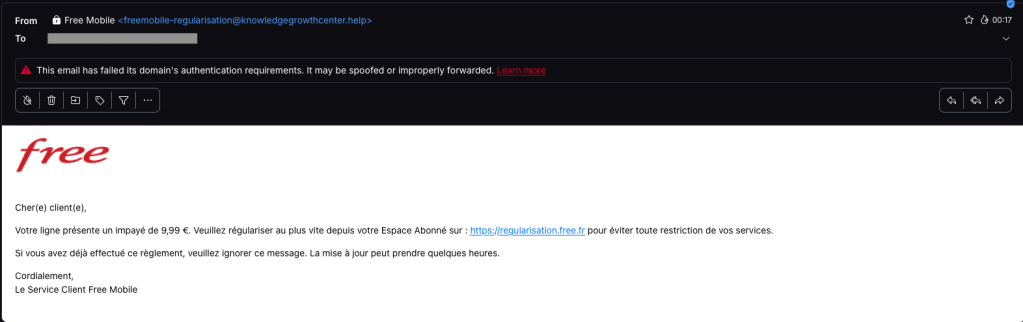
Convincing Free Mobile phishing emails appear after data breach

Free Mobile, one of France’s main cellular providers, was fined €27 million by France’s data protection regulator, the CNIL, in January over failures to protect customer data. The October 2024 breach allowed an unauthorized party to access sensitive customer records, including bank account details and login information. Since the breach, we’ve seen many poor…

Fix: Review advisory findings, isolate suspect endpoints, and verify threat signatures.
Armadin raises $255.5 million to expand AI offensive security platform Moderate Help Net Security
2026-10-01 Help Net Security

Armadin raises $255.5 million to expand AI offensive security platform

Armadin has raised $255.5 million in Series B funding co-led by Andreessen Horowitz (a16z) and Accel that brings the company’s valuation to over $2.5 billion. The round includes participation from new investors Bain Capital Ventures (BCV) and Redpoint. Existing investors 8VC, Ballistic Ventures, Google Ventures, In-Q-Tel, Kleiner Perkins, and Menlo Ventures …

Fix: Review advisory findings, isolate suspect endpoints, and verify threat signatures.
Microsoft enables Windows settings backup by default for orgs Moderate BleepingComputer
2026-10-01 BleepingComputer

Microsoft enables Windows settings backup by default for orgs

Microsoft announced that Windows settings backup and restore is now enabled by default on all Microsoft Entra-joined or Microsoft Entra hybrid-joined enterprise systems upgraded to Windows 11 26H2. [...]

Fix: Review advisory findings, isolate suspect endpoints, and verify threat signatures.
FBI tells ShinyHunters members to turn themselves in, after arrest of alleged leader Moderate Graham Cluley Security
2026-10-01 Graham Cluley Security

FBI tells ShinyHunters members to turn themselves in, after arrest of alleged leader

The FBI has a very simple message for the ShinyHunters gang: give yourselves up. On Tuesday, FBI cyber division assistant director Brett Leatherman released a video, thanking the Dutch police for arresting a 24-year-old man they believe to be a member of the group, and and who is separately suspected of attempting to arrange two murders. Read more in my arti…

Fix: Review advisory findings, isolate suspect endpoints, and verify threat signatures.
ShinyHunters suspect arrested, and is now investigated over alleged murder plots Moderate Graham Cluley Security
2026-10-01 Graham Cluley Security

ShinyHunters suspect arrested, and is now investigated over alleged murder plots

An alleged key figure in the ShinyHunters cybercrime group has been arrested in the Netherlands, and - in a sinister twist - the 24-year-old suspect is also being investigated for attempting to arrange two murders. Read more in my article on the Hot for Security blog.

Fix: Review advisory findings, isolate suspect endpoints, and verify threat signatures.
Malwarebytes earns another Top Product award in independent testing Important Malwarebytes Labs
2026-10-01 Malwarebytes Labs

Malwarebytes earns another Top Product award in independent testing

Every few months, Malwarebytes gets a chance to test its mettle against real-world threats in an independent laboratory setting. And the latest round of results gives us plenty to celebrate. Malwarebytes earned a perfect 18 out of 18 and received another Top Product award from AV-TEST. We also achieved Level 1 Certification from MRG Effitas, and we stopped 1…

Fix: Review advisory findings, isolate suspect endpoints, and verify threat signatures.
Pentagon breach exposes Social Security numbers and military records of millions Critical Malwarebytes Labs
2026-10-01 Malwarebytes Labs

Pentagon breach exposes Social Security numbers and military records of millions

The US government is alerting millions of people that their personal information was stolen during a breach of the Pentagon’s personnel records at the Defense Manpower Data Center (DMDC). The DMDC is a central US Department of Defense (DoD) organization that manages personnel records, ID credentials, and benefit entitlements for military and civilian staff, …

Fix: Review advisory findings, isolate suspect endpoints, and verify threat signatures.
OpenAI Disrupts Reasoning Extraction Campaign Linked to Moonshot AI Associates Moderate The Hacker News
2026-10-01 The Hacker News

OpenAI Disrupts Reasoning Extraction Campaign Linked to Moonshot AI Associates

OpenAI on Wednesday said it identified and disrupted a coordinated distillation campaign that was designed to illicitly extract protected reasoning from its artificial intelligence (AI) models. A "core cluster of the activity," going back to the first week of July, has been attributed to individuals associated with Moonshot AI, a Chinese AI company based in …

Fix: Review advisory findings, isolate suspect endpoints, and verify threat signatures.
CISA Adds Exploited Cisco Catalyst SD-WAN Manager Auth Bypass to KEV Critical CVE-2026-76504 The Hacker News
2026-10-01 The Hacker News

CISA Adds Exploited Cisco Catalyst SD-WAN Manager Auth Bypass to KEV

The U.S. Cybersecurity and Infrastructure Security Agency (CISA) on Wednesday added a critical authentication bypass flaw impacting Cisco Catalyst SD-WAN Manager to its Known Exploited Vulnerabilities (KEV), following reports of active exploitation. The vulnerability, tracked as CVE-2026-76504 (CVSS score: 9.8), could allow an unauthenticated, remote attacke…

Fix: Review advisory findings, isolate suspect endpoints, and verify threat signatures.
New Cisco SD-WAN zero-day exploited in-the-wild (CVE-2026-76504) Critical CVE-2026-76504 Help Net Security
2026-10-01 Help Net Security

New Cisco SD-WAN zero-day exploited in-the-wild (CVE-2026-76504)

For the fifth time this year, Cisco revealed attackers have exploited a vulnerability (CVE-2026-76504) in its SD-WAN solution in zero-day attacks. The vendor’s incident responders became aware of active exploitation of this vulnerability in September 2026, after getting pinged and resolving a Cisco Technical Assistance Center (TAC) support case. Cisco has ye…

Fix: Review advisory findings, isolate suspect endpoints, and verify threat signatures.
The Fine Art of Frustrating the Adversary Moderate Cisco Talos Intelligence
2026-10-01 Cisco Talos Intelligence

The Fine Art of Frustrating the Adversary

For Cybersecurity Awareness Month, eight Cisco Talos researchers share practical ways defenders can frustrate adversaries at different stages of an operation. Deception techniques such as honeypot accounts, false infrastructure, and tarpits can slow adversaries down while giving defenders earlier opportunities to detect their activity. Behavioral detections,…

Fix: Review advisory findings, isolate suspect endpoints, and verify threat signatures.
Hackers stole Pentagon personnel records of over 3 million people Important BleepingComputer
2026-10-01 BleepingComputer

Hackers stole Pentagon personnel records of over 3 million people

The Pentagon's Defense Manpower Data Center (DMDC) is notifying millions of military service members that hackers stole their data after breaching the Pentagon's human resources management system in October 2025. [...]

Fix: Review advisory findings, isolate suspect endpoints, and verify threat signatures.
Losing gamblers pushed to bet more by DraftKings’ AI, report says Moderate Malwarebytes Labs
2026-10-01 Malwarebytes Labs

Losing gamblers pushed to bet more by DraftKings’ AI, report says

Two separate investigations have raised concerns about betting site DraftKings’ marketing to target problem gamblers, including its use of AI. On September 19, the New York Times reported that the company’s machine learning model targeted people who were more likely to respond to betting promotions by gambling and losing more money. The model crunched data o…

Fix: Review advisory findings, isolate suspect endpoints, and verify threat signatures.
U.S. CISA adds Cisco Catalyst SD-WAN Manager flaw to its Known Exploited Vulnerabilities catalog Important CVE-2026-76504 SecurityAffairs
2026-10-01 SecurityAffairs

U.S. CISA adds Cisco Catalyst SD-WAN Manager flaw to its Known Exploited Vulnerabilities catalog

U.S. Cybersecurity and Infrastructure Security Agency (CISA) adds Cisco Catalyst SD-WAN Manager flaw to its Known Exploited Vulnerabilities catalog. The U.S. Cybersecurity and Infrastructure Security Agency (CISA) added a Cisco Catalyst SD-WAN Manager flaw, tracked as CVE-2026-76504 (CVSS score of 9.8), to its Known Exploited Vulnerabilities (KEV) catalog . …

Fix: Review advisory findings, isolate suspect endpoints, and verify threat signatures.
AI Agent Chains Zammad Zero-Days To Take Over DIVD Systems in Seconds Critical CVE-2026-102489 SecurityAffairs
2026-10-01 SecurityAffairs

AI Agent Chains Zammad Zero-Days To Take Over DIVD Systems in Seconds

DIVD was breached through two Zammad zero-days that let an AI agent reach root in seconds, steal data and pivot to other services before being stopped. The Dutch Institute for Vulnerability Disclosure, a nonprofit organization of volunteer security researchers whose whole job is finding and responsibly disclosing vulnerabilities in other people’s software, j…

Fix: Review advisory findings, isolate suspect endpoints, and verify threat signatures.
Google Rolls Out Gemini 4 Argon to Trusted Cyber Defenders, Plans Guardrail-Free Version Moderate The Hacker News
2026-10-01 The Hacker News

Google Rolls Out Gemini 4 Argon to Trusted Cyber Defenders, Plans Guardrail-Free Version

Google on Wednesday announced its latest frontier artificial intelligence (AI) model, Gemini 4 Argon, that it said is being rolled out to a set of trusted cyber defenders through its Fairwind Program. "It delivers frontier performance in complex workflows across real-world software engineering, enterprise knowledge work like legal and finance, and cybersecur…

Fix: Review advisory findings, isolate suspect endpoints, and verify threat signatures.
Sentinel Envelope Plus adds software protection without source code changes Critical Help Net Security
2026-10-01 Help Net Security

Sentinel Envelope Plus adds software protection without source code changes

Thales has announced Sentinel Envelope Plus, a new addition to its Sentinel Envelope software protection solution that significantly hardens compiled applications against AI-assisted reverse engineering, automated zero-day vulnerability discovery, and automated exploit generation. Sentinel Envelope Plus applies multiple layers of protection to software appli…

Fix: Review advisory findings, isolate suspect endpoints, and verify threat signatures.
MI5 Warns Over 100 Academics Helped China's Espionage Plans Moderate Infosecurity Magazine
2026-10-01 Infosecurity Magazine

MI5 Warns Over 100 Academics Helped China's Espionage Plans

MI5 has issued a rare warning to UK academics contributing to the China General Technology Research Institute

Fix: Review advisory findings, isolate suspect endpoints, and verify threat signatures.
Metamask discloses security incident affecting its infrastructure Moderate BleepingComputer
2026-10-01 BleepingComputer

Metamask discloses security incident affecting its infrastructure

On Thursday, cryptocurrency wallet provider MetaMask has disclosed an ongoing infrastructure security incident affecting some of its infrastructure. [...]

Fix: Review advisory findings, isolate suspect endpoints, and verify threat signatures.
Notification