Threat Wire
BleepingComputer [Critical] FBI links $6.3 billion Binance crypto heist to North Korean hackers BleepingComputer [Critical] Alpine Linux rebuilds GitLab after attempted RCE attack CVE-2026-118539 [Critical] Security Affairs newsletter Round 602 by Pierluigi Paganini – INTERNATIONAL EDITION CVE-2026-58882 [Critical] SMS of Death: Android under attack, an invisible SMS can block calls and emergency services The Hacker News [Critical] CVSS 10.0 LXD, MicroCloud Flaw Lets Attackers Impersonate Trusted Clients Without a Private Key The Hacker News [Critical] FBI Links North Korea's TraderTraitor to Record $6.43 Billion Binance Crypto Heist CVE-2026-111357 [Critical] U.S. CISA adds Ivanti Connect Secure flaws to its Known Exploited Vulnerabilities catalog BleepingComputer [Critical] Northflank security breach leads to abuse of customers' AI API keys BleepingComputer [Critical] FBI links $6.3 billion Binance crypto heist to North Korean hackers BleepingComputer [Critical] Alpine Linux rebuilds GitLab after attempted RCE attack CVE-2026-118539 [Critical] Security Affairs newsletter Round 602 by Pierluigi Paganini – INTERNATIONAL EDITION CVE-2026-58882 [Critical] SMS of Death: Android under attack, an invisible SMS can block calls and emergency services The Hacker News [Critical] CVSS 10.0 LXD, MicroCloud Flaw Lets Attackers Impersonate Trusted Clients Without a Private Key The Hacker News [Critical] FBI Links North Korea's TraderTraitor to Record $6.43 Billion Binance Crypto Heist CVE-2026-111357 [Critical] U.S. CISA adds Ivanti Connect Secure flaws to its Known Exploited Vulnerabilities catalog BleepingComputer [Critical] Northflank security breach leads to abuse of customers' AI API keys

CyberWatch Newsroom Live Intel

Continuous enterprise threat intelligence tracking active in-the-wild zero-days (CISA KEV), Microsoft Windows KB cumulative updates, MSRC security advisories, and CVE remediation.

Last Checked: Nov 2, 2026 - 02:28:59 UTC (Hourly Auto-Sync Active)
Showing 24 of 5,807 advisories
Page 151 of 242
Hitachi Energy FACTS Control Platform (FCP) Important CISA Advisory
2026-09-17 CISA Advisory

Hitachi Energy FACTS Control Platform (FCP)

View CSAF Summary Hitachi Energy is aware of vulnerabilities that affect the FACTS Control systems with GWS component listed in this document. An attacker exploiting these vulnerabilities can cause impact on confidentiality, integrity and availability of the product. Following FACTS Control systems with GWS component deployed from year 2020 onwards are likely affected by the above vulnerabilities. Product deployments without GWS component are not affected. • SVC Light (STATCOM) • Fixed Series Capacitor • Thyristor Controlled Series Capacitor • Static Var Compensator • Static Watt Compensator • Hybrid Synchronous Condensers Please refer to the Recommended Immediate Actions for information about the mitigation/remediation. The affected FCP versions are only applicable if GWS component is present. The following versions of Hitachi Energy FACTS Control Platform (FCP) are affected: FACTS Control Platform (FCP) 3.4.0, 3.7.0, 3.8.0, 3.10.0, 3.12.0, 3.14.0, 3.15.0, 4.0.0, 4.0.1, 4.1.0, 4.1.1 (CVE-2024-4872, CVE-2024-3980, CVE-2024-3982, CVE-2024-7940, CVE-2024-7941) CVSS Vendor Equipment Vulnerabilities v3 9.9 Hitachi Energy Hitachi Energy FACTS Control Platform (FCP) Improper Neutralization of Special Elements in Data Query Logic, Improper Limitation of a Pathname to a Restricted Directory ('Path Traversal'), Authentication Bypass by Capture-replay, Missing Authentication for Critical Function, URL Redirection to Untrusted Site ('Open Redirect') Background Critical Infrastructure Sectors: Energy Countries/Areas Deployed: Worldwide Company Headquarters Location: Switzerland Vulnerabilities Expand All + CVE-2024-4872 A vulnerability exists in the query validation of the FACTS Control system with GWS component. If exploited this could allow an authenticated attacker to inject code towards persistent data. Note that to successfully exploit this vulnerability an attacker must have a valid credential. View CVE Details Affected Products Hitachi Energy FACTS Control Platform (FCP) Vendor: Hitachi Energy Product Version: FACTS Control Platform (FCP) version 3.4.0, FACTS Control Platform (FCP) version 3.7.0, FACTS Control Platform (FCP) version 3.8.0, FACTS Control Platform (FCP) version 3.10.0, FACTS Control Platform (FCP) version 3.12.0, FACTS Control Platform (FCP) version 3.14.0, FACTS Control Platform (FCP) version 3.15.0, FACTS Control Platform (FCP) version 4.0.0, FACTS Control Platform (FCP) version 4.0.1, FACTS Control Platform (FCP) version 4.1.0, FACTS Control Platform (FCP) version 4.1.1 Product Status: known_affected Remediations Mitigation Follow general mitigation factors. For more information see the associated Hitachi Energy security advisory 8DBD000229 . Relevant CWE: CWE-943 Improper Neutralization of Special Elements in Data Query Logic Metrics CVSS Version Base Score Base Severity Vector String 3.1 9.9 CRITICAL CVSS:3.1/AV:N/AC:L/PR:L/UI:N/S:C/C:H/I:H/A:H CVE-2024-3980 The FACTS Control system with GWS allows an authenticated user input to control or influence paths or file names that are used in filesystem operations. If exploited the vulnerability allows the attacker to access or modify system files or other files that are critical to the application. View CVE Details Affected Products Hitachi Energy FACTS Control Platform (FCP) Vendor: Hitachi Energy Product Version: FACTS Control Platform (FCP) version 3.4.0, FACTS Control Platform (FCP) version 3.7.0, FACTS Control Platform (FCP) version 3.8.0, FACTS Control Platform (FCP) version 3.10.0, FACTS Control Platform (FCP) version 3.12.0, FACTS Control Platform (FCP) version 3.14.0, FACTS Control Platform (FCP) version 3.15.0, FACTS Control Platform (FCP) version 4.0.0, FACTS Control Platform (FCP) version 4.0.1, FACTS Control Platform (FCP) version 4.1.0, FACTS Control Platform (FCP) version 4.1.1 Product Status: known_affected Remediations Mitigation Follow general mitigation factors. For more information see the associated Hitachi Energy security advisory 8DBD000229 . Relevant CWE: CWE-22 Improper Limitation of a Pathname to a Restricted Directory ('Path Traversal') Metrics CVSS Version Base Score Base Severity Vector String 3.1 9.9 CRITICAL CVSS:3.1/AV:N/AC:L/PR:L/UI:N/S:C/C:H/I:H/A:H CVE-2024-3982 An attacker with local access to machine where FACTS Control system with GWS is installed, could enable the session logging supporting the product and try to exploit a session hijacking of an already established session. Note: By default, the session logging level is not enabled and only users with administrator rights can enable it. View CVE Details Affected Products Hitachi Energy FACTS Control Platform (FCP) Vendor: Hitachi Energy Product Version: FACTS Control Platform (FCP) version 3.10.0, FACTS Control Platform (FCP) version 3.12.0, FACTS Control Platform (FCP) version 3.14.0, FACTS Control Platform (FCP) version 3.15.0, FACTS Control Platform (FCP) version 4.0.0, FACTS Control Platform (FCP) version 4.0.1, FACTS Control Platform (FCP) version 4.1.0, FACTS Control Platform (FCP) version 4.1.1 Product Status: known_affected Remediations Mitigation Follow general mitigation factors. For more information see the associated Hitachi Energy security advisory 8DBD000229 . Relevant CWE: CWE-294 Authentication Bypass by Capture-replay Metrics CVSS Version Base Score Base Severity Vector String 3.1 8.2 HIGH CVSS:3.1/AV:L/AC:L/PR:H/UI:N/S:C/C:H/I:H/A:H CVE-2024-7940 The FACTS Control system with GWS product exposes a service that is intended for local only to all network interfaces without any authentication. View CVE Details Affected Products Hitachi Energy FACTS Control Platform (FCP) Vendor: Hitachi Energy Product Version: FACTS Control Platform (FCP) version 3.14.0, FACTS Control Platform (FCP) version 3.15.0, FACTS Control Platform (FCP) version 4.0.0, FACTS Control Platform (FCP) version 4.0.1, FACTS Control Platform (FCP) version 4.1.0, FACTS Control Platform (FCP) version 4.1.1 Product Status: known_affected Remediations Mitigation Follow general mitigation factors. For more information see the associated Hitachi Energy security advisory 8DBD000229 . Relevant CWE: CWE-306 Missing Authentication for Critical Function Metrics CVSS Version Base Score Base Severity Vector String 3.1 8.3 HIGH CVSS:3.1/AV:N/AC:H/PR:N/UI:R/S:C/C:H/I:H/A:H CVE-2024-7941 A vulnerability exists in FACTS Control system with GWS where a HTTP parameter may contain a URL value and could cause the web application to redirect the request to the specified URL. By modifying the URL value to a malicious site, an attacker may successfully launch a phishing scam and steal user credentials. View CVE Details Affected Products Hitachi Energy FACTS Control Platform (FCP) Vendor: Hitachi Energy Product Version: FACTS Control Platform (FCP) version 3.15.0, FACTS Control Platform (FCP) version 4.1.0, FACTS Control Platform (FCP) version 4.1.1 Product Status: known_affected Remediations Mitigation Follow general mitigation factors. For more information see the associated Hitachi Energy security advisory 8DBD000229 . Relevant CWE: CWE-601 URL Redirection to Untrusted Site ('Open Redirect') Metrics CVSS Version Base Score Base Severity Vector String 3.1 4.3 MEDIUM CVSS:3.1/AV:N/AC:L/PR:N/UI:R/S:U/C:N/I:L/A:N Acknowledgments Hitachi Energy reported these vulnerabilities to CISA. Notice The information in this document is subject to change without notice and should not be construed as a commitment by Hitachi Energy. Hitachi Energy provides no warranty, express or implied, including warranties of merchantability and fitness for a particular purpose, for the information contained in this document, and assumes no responsibility for any errors that may appear in this document. In no event shall Hitachi Energy or any of its suppliers be liable for direct, indirect, special, incidental or consequential damages of any nature or kind arising from the use of this document, or from the use of any hardware or software described in this document, even if Hitachi Energy or its suppliers have been advised of the possibility of such damages. This document and parts hereof must not be reproduced or copied without written permission from Hitachi Energy and the contents hereof must not be imparted to a third party nor used for any unauthorized purpose. All rights to registrations and trademarks reside with their respective owners. Support For additional information and support please contact your product provider or Hitachi Energy service organization. For contact information, see https://www.hitachienergy.com/contact-us/ for Hitachi Energy contact-centers. General Mitigation Factors Recommended security practices and firewall configurations can help protect a process control network from attacks that originate from outside the network. Such practices include that process control systems are physically protected from direct access by unauthorized personnel, have no direct connections to the Internet, and are separated from other networks by means of a firewall system that has a minimal number of ports exposed, and others that have to be evaluated case by case. Process control systems should not be used for Internet surfing, instant messaging, or receiving e-mails. Portable computers and removable storage media should be carefully scanned for viruses before they are connected to a control system. Proper password policies and processes should be followed. Additional information on Industrial Control Systems Cybersecurity Best Practices can be found in the Hitachi Energy “Industrial Control Systems Cybersecurity Best Practices” Cybersecurity Notification. [1] SSVC SSVCv2/E:N/A:N/2026-07-24T09:43:32Z/ Legal Notice and Terms of Use This product is provided subject to this Notification ( https://www.cisa.gov/notification ) and this Privacy & Use policy ( https://www.cisa.gov/privacy-policy ). Recommended Practices CISA recommends users take defensive measures to minimize the exploitation risk of this vulnerability. Minimize network exposure for all control system devices and/or systems, and ensure they are not accessible from the internet. Locate control system networks and remote devices behind firewalls and isolate them from business networks. When remote access is required, use more secure methods, such as Virtual Private Networks (VPNs), recognizing VPNs may have vulnerabilities and should be updated to the most recent version available. Also recognize VPN is only as secure as its connected devices. CISA reminds organizations to perform proper impact analysis and risk assessment prior to deploying defensive measures. CISA also provides a section for control systems security recommended practices on the ICS webpage on cisa.gov. Several CISA products detailing cyber defense best practices are available for reading and download, including Improving Industrial Control Systems Cybersecurity with Defense-in-Depth Strategies. CISA encourages organizations to implement recommended cybersecurity strategies for proactive defense of ICS assets. Additional mitigation guidance and recommended practices are publicly available on the ICS webpage at cisa.gov in the technical information paper, ICS-TIP-12-146-01B--Targeted Cyber Intrusion Detection and Mitigation Strategies. Organizations observing suspected malicious activity should follow established internal procedures and report findings to CISA for tracking and correlation against other incidents. Advisory Conversion Disclaimer This ICSA is a verbatim republication of Hitachi Energy PSIRT 8DBD000229 from a direct conversion of the vendor's Common Security Advisory Framework (CSAF) advisory. This is republished to CISA's website as a means of increasing visibility and is provided "as-is" for informational purposes only. CISA is not responsible for the editorial or technical accuracy of republished advisories and provides no warranties of any kind regarding any information contained within this advisory. Further, CISA does not endorse any commercial product or service. Please contact Hitachi Energy PSIRT directly for any questions regarding this advisory. Revision History Initial Release Date: 2026-07-28 Date Revision Summary 2026-07-28 1 Initial public release 2026-09-17 2 Initial CISA Republication of Hitachi Energy PSIRT 8DBD000229 advisory Legal Notice and Terms of Use


Fix: Review CISA guidance and apply vendor security updates immediately.
Schneider Electric PowerChute Serial Shutdown Important CISA Advisory
2026-09-17 CISA Advisory

Schneider Electric PowerChute Serial Shutdown

View CSAF Summary Schneider Electric is aware of vulnerabilities in its PowerChute Serial Shutdown product. The PowerChute Serial Shutdown product is a UPS management software enabling graceful system shutdown and energy management capabilities for desktops, servers and workstations. Failure to apply the remediation provided below may risk improper authentication validation which could result in disruption of operations and access to system data. The following versions of Schneider Electric PowerChute Serial Shutdown are affected: PowerChute Serial Shutdown vers:intdot/ CVSS Vendor Equipment Vulnerabilities v3 5.3 Schneider Electric Schneider Electric PowerChute Serial Shutdown Improper Restriction of Excessive Authentication Attempts Background Critical Infrastructure Sectors: Commercial Facilities, Critical Manufacturing, Energy, Information Technology Countries/Areas Deployed: Worldwide Company Headquarters Location: France Vulnerabilities Expand All + CVE-2026-13348 CWE-307: Improper Restriction of Excessive Authentication Attempts vulnerability exists that could allow an attacker to gain unauthorized access to a user account by performing an arbitrary number of authentication attempts when redirect handling is disabled. View CVE Details Affected Products Schneider Electric PowerChute Serial Shutdown Vendor: Schneider Electric Product Version: PowerChute Serial Shutdown Version 1.5 and prior Product Status: fixed, known_affected Remediations Vendor fix Version v1.6 of PowerChute Serial Shutdown includes a fix for these vulnerabilities and is available for download here: • Windows: https://www.se.com/ww/en/download/document/SPD-PCSS_WIN_EN/ Reboot needed: Upon installation, the service is automatically restarted. A customer can validate a successful install by checking the version information in the Control Panel or on the About page within PCSS after logging in. Specific instructions and hardening guidelines for these remediations can be found in the Security Handbook . Vendor fix Version v1.6 of PowerChute Serial Shutdown includes a fix for these vulnerabilities and is available for download here: • Linux: https://www.se.com/ww/en/download/document/SPD-PCSS_LNX_EN/ Reboot needed: Upon installation, the service is automatically restarted. A customer can validate a successful install by checking the version information in the Control Panel or on the About page within PCSS after logging in. Specific instructions and hardening guidelines for these remediations can be found in the Security Handbook . For more information see the associated Schneider Electric security advisory Improper Restriction of Excessive Authentication Attempts vulnerability on PowerChute Serial Shutdown - SEVD-2026-223-01 CSAF Version , Improper Restriction of Excessive Authentication Attempts vulnerability on PowerChute Serial Shutdown - SEVD-2026-223-01 PDF Version . Relevant CWE: CWE-307 Improper Restriction of Excessive Authentication Attempts Metrics CVSS Version Base Score Base Severity Vector String 3.1 5.3 MEDIUM CVSS:3.1/AV:N/AC:L/PR:N/UI:N/S:U/C:L/I:N/A:N Acknowledgments Schneider Electric CPCERT reported this vulnerability to CISA. General Security Recommendations Schneider Electric strongly recommends the following industry cybersecurity best practices. Locate control and safety system networks and remote devices behind firewalls and isolate them from the business network. Install physical controls so no unauthorized personnel can access your industrial control and safety systems, components, peripheral equipment, and networks. Place all controllers in locked cabinets and never leave them in the “Program” mode. Never connect programming software to any network other than the network intended for that device. Scan all methods of mobile data exchange with the isolated network such as CDs, USB drives, etc. before use in the terminals or any node connected to these networks. Never allow mobile devices that have connected to any other network besides the intended network to connect to the safety or control networks without proper sanitation. Minimize network exposure for all control system devices and systems and ensure that they are not accessible from the Internet. When remote access is required, use secure methods, such as Virtual Private Networks (VPNs). Recognize that VPNs may have vulnerabilities and should be updated to the most current version available. Also, understand that VPNs are only as secure as the connected devices. For more information refer to the Schneider Electric Recommended Cybersecurity Best Practices document . For More Information This document provides an overview of the identified vulnerability or vulnerabilities and actions required to mitigate. For more details and assistance on how to protect your installation, contact your local Schneider Electric representative or Schneider Electric Industrial Cybersecurity Services: https://www.se.com/ww/en/work/solutions/cybersecurity/ . These organizations will be fully aware of this situation and can support you through the process. For further information related to cybersecurity in Schneider Electric’s products, visit the company’s cybersecurity support portal page: https://www.se.com/ww/en/work/support/cybersecurity/overview.jsp LEGAL DISCLAIMER THIS NOTIFICATION DOCUMENT, THE INFORMATION CONTAINED HEREIN, AND ANY MATERIALS LINKED FROM IT (COLLECTIVELY, THIS “NOTIFICATION”) ARE INTENDED TO HELP PROVIDE AN OVERVIEW OF THE IDENTIFIED SITUATION AND SUGGESTED MITIGATION ACTIONS, REMEDIATION, FIX, AND/OR GENERAL SECURITY RECOMMENDATIONS AND IS PROVIDED ON AN “AS-IS” BASIS WITHOUT WARRANTY OR GUARANTEE OF ANY KIND. SCHNEIDER ELECTRIC DISCLAIMS ALL WARRANTIES RELATING TO THIS NOTIFICATION, EITHER EXPRESS OR IMPLIED, INCLUDING WARRANTIES OF MERCHANTABILITY OR FITNESS FOR A PARTICULAR PURPOSE. SCHNEIDER ELECTRIC MAKES NO WARRANTY THAT THE NOTIFICATION WILL RESOLVE THE IDENTIFIED SITUATION. IN NO EVENT SHALL SCHNEIDER ELECTRIC BE LIABLE FOR ANY DAMAGES OR LOSSES WHATSOEVER IN CONNECTION WITH THIS NOTIFICATION, INCLUDING DIRECT, INDIRECT, INCIDENTAL, CONSEQUENTIAL, LOSS OF BUSINESS PROFITS OR SPECIAL DAMAGES, EVEN IF SCHNEIDER ELECTRIC HAS BEEN ADVISED OF THE POSSIBILITY OF SUCH DAMAGES. YOUR USE OF THIS NOTIFICATION IS AT YOUR OWN RISK, AND YOU ARE SOLELY LIABLE FOR ANY DAMAGES TO YOUR SYSTEMS OR ASSETS OR OTHER LOSSES THAT MAY RESULT FROM YOUR USE OF THIS NOTIFICATION. SCHNEIDER ELECTRIC RESERVES THE RIGHT TO UPDATE OR CHANGE THIS NOTIFICATION AT ANY TIME AND IN ITS SOLE DISCRETION About Schneider Electric Schneider's purpose is to create Impact by empowering all to make the most of our energy and resources, bridging progress and sustainability for all. We call this Life Is On. Our mission is to be the trusted partner in Sustainability and Efficiency. We are a global industrial technology leader bringing world-leading expertise in electrification, automation and digitization to smart industries, resilient infrastructure, future-proof data centers, intelligent buildings, and intuitive homes. Anchored by our deep domain expertise, we provide integrated end-to-end lifecycle AI enabled Industrial IoT solutions with connected products, automation, software and services, delivering digital twins to enable profitable growth for our customers. We are a people company with an ecosystem of 150,000 colleagues and more than a million partners operating in over 100 countries to ensure proximity to our customers and stakeholders. We embrace diversity and inclusion in everything we do, guided by our meaningful purpose of a sustainable future for all. www.se.com Legal Notice and Terms of Use This product is provided subject to this Notification ( https://www.cisa.gov/notification ) and this Privacy & Use policy ( https://www.cisa.gov/privacy-policy ). Recommended Practices CISA recommends users take defensive measures to minimize the exploitation risk of these vulnerabilities. Minimize network exposure for all control system devices and/or systems, and ensure they are not accessible from the internet. Locate control system networks and remote devices behind firewalls and isolate them from business networks. When remote access is required, use more secure methods, such as Virtual Private Networks (VPNs), recognizing VPNs may have vulnerabilities and should be updated to the most recent version available. Also recognize VPN is only as secure as its connected devices. CISA reminds organizations to perform proper impact analysis and risk assessment prior to deploying defensive measures. CISA also provides a section for control systems security recommended practices on the ICS webpage on cisa.gov. Several CISA products detailing cyber defense best practices are available for reading and download, including Improving Industrial Control Systems Cybersecurity with Defense-in-Depth Strategies. CISA encourages organizations to implement recommended cybersecurity strategies for proactive defense of ICS assets. Additional mitigation guidance and recommended practices are publicly available on the ICS webpage at cisa.gov in the technical information paper, ICS-TIP-12-146-01B--Targeted Cyber Intrusion Detection and Mitigation Strategies. Organizations observing suspected malicious activity should follow established internal procedures and report findings to CISA for tracking and correlation against other incidents. Advisory Conversion Disclaimer This ICSA is a verbatim republication of Schneider Electric CPCERT SEVD-2026-223-01 from a direct conversion of the vendor's Common Security Advisory Framework (CSAF) advisory. This is republished to CISA's website as a means of increasing visibility and is provided "as-is" for informational purposes only. CISA is not responsible for the editorial or technical accuracy of republished advisories and provides no warranties of any kind regarding any information contained within this advisory. Further, CISA does not endorse any commercial product or service. Please contact Schneider Electric CPCERT directly for any questions regarding this advisory. Revision History Initial Release Date: 2026-08-11 Date Revision Summary 2026-08-11 1 Original Release 2026-09-17 2 Initial CISA Republication of Schneider Electric CPCERT SEVD-2026-223-01 advisory Legal Notice and Terms of Use

Fix: Review CISA guidance and apply vendor security updates immediately.
Google’s new agent security system detects tool misuse, loops and rogue behavior Moderate Help Net Security
2026-09-17 Help Net Security

Google’s new agent security system detects tool misuse, loops and rogue behavior

Google’s Agent Anomaly Detection is a reasoning-based oversight and audit layer for autonomous agents deployed on Agent Runtime in the Gemini Enterprise Agent Platform and built with the Agent Development Kit (ADK) for Python 1.2 or later. Google recommends ADK 2.1.0 or later. It is available in Private Preview. What Agent Anomaly Detection monitors Agent An…

Fix: Review advisory findings, isolate suspect endpoints, and verify threat signatures.
FBI takes down one of the longest-running DDoS-for-hire services Moderate Help Net Security
2026-09-17 Help Net Security

FBI takes down one of the longest-running DDoS-for-hire services

The FBI has seized the domains behind NightmareStresser, a DDoS-for-hire service officials call one of the longest running “booter” operations in existence. The domain seizure notice (Source: US Department of Justice) “Booter services such as those named in this action allegedly facilitate attacks on a wide array of victims in the United States and abroad, i…

Fix: Review advisory findings, isolate suspect endpoints, and verify threat signatures.
NightmareStresser Goes Offline in Global DDoS-for-Hire Crackdown Moderate SecurityAffairs
2026-09-17 SecurityAffairs

NightmareStresser Goes Offline in Global DDoS-for-Hire Crackdown

The DOJ seized domains behind NightmareStresser, a DDoS-for-hire service tied to hundreds of thousands of attacks since 2022, as part of Operation PowerOFF. Renting a DDoS attack used to be as easy as renting a movie. Pick a target, pay a few dollars, watch the site go dark. The Justice Department just made that a little harder by seizing the domains behind …

Fix: Review advisory findings, isolate suspect endpoints, and verify threat signatures.
US takes down NightmareStresser DDoS-for-hire platform Moderate BleepingComputer
2026-09-17 BleepingComputer

US takes down NightmareStresser DDoS-for-hire platform

The U.S. Federal Bureau of Investigation (FBI) seized the domains used by NightmareStresser, one of the world's longest-running distributed denial-of-service (DDoS) platforms. [...]

Fix: Review advisory findings, isolate suspect endpoints, and verify threat signatures.
12 celebrity deepfake websites seized by Manhattan DA Moderate Malwarebytes Labs
2026-09-17 Malwarebytes Labs

12 celebrity deepfake websites seized by Manhattan DA

The Manhattan District Attorney’s Office has seized the domains of 12 deepfake websites in what it called the largest known seizure of celebrity deepfake sites in history. The sites, which marketed themselves as deepfake pornography platforms, hosted AI-generated videos of over 1,200 people, including those in the public eye, ranging from politicians to acto…

Fix: Review advisory findings, isolate suspect endpoints, and verify threat signatures.
Cisco Warns of Active Exploitation of Critical ISE Flaw Critical Infosecurity Magazine
2026-09-17 Infosecurity Magazine

Cisco Warns of Active Exploitation of Critical ISE Flaw

Cisco urged ISE customers to apply a software update, as well as check for signs of exploitation

Fix: Review advisory findings, isolate suspect endpoints, and verify threat signatures.
CISO's Expert Guide to Agentic Pentesting for Websites Moderate The Hacker News
2026-09-17 The Hacker News

CISO's Expert Guide to Agentic Pentesting for Websites

Attackers now weaponize new vulnerabilities in about five days (Mandiant, part of Google Cloud). The median organization takes 43 days to patch one (Verizon DBIR 2026). A new free guide explains how autonomous AI agents are closing that gap, and what security leaders must demand before pointing one at production. TL;DR Exploitation is now the front door. It …

Fix: Review advisory findings, isolate suspect endpoints, and verify threat signatures.
T-Mobile rewards points expiry texts are a phishing scam Important Malwarebytes Labs
2026-09-17 Malwarebytes Labs

T-Mobile rewards points expiry texts are a phishing scam

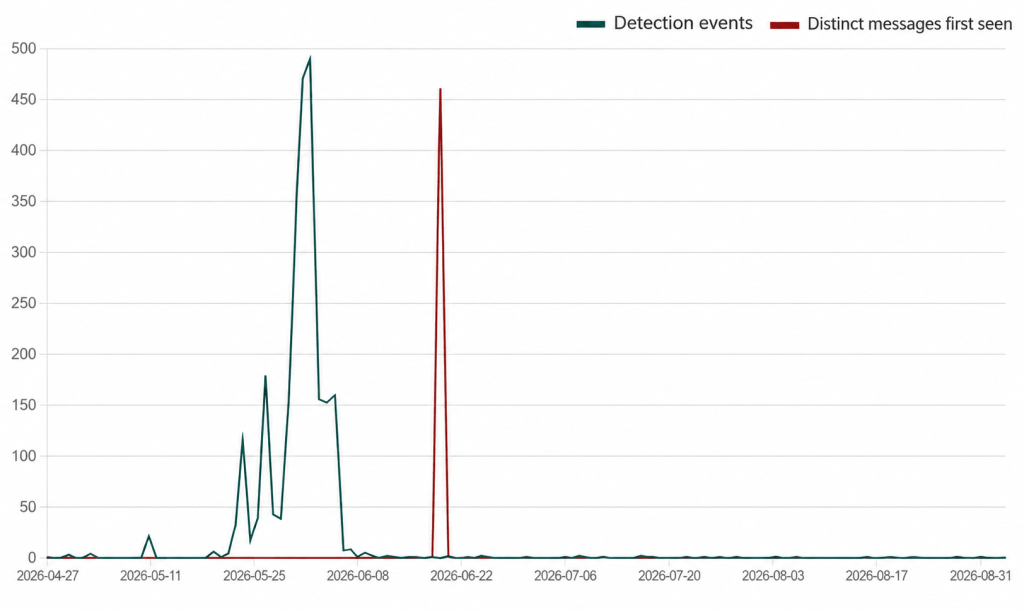
Since early May 2026, we’ve been monitoring a large phishing campaign based on T-Mobile rewards points. The messages falsely warn that a customer’s rewards points are about to expire. They aren’t legitimate account notices: They use urgency, invented point balances, and phishing links to push recipients into acting before they can verify the claim. A typical…

Fix: Review advisory findings, isolate suspect endpoints, and verify threat signatures.
Unauthenticated attackers are bypassing Cisco ISE’s management interface (CVE-2026-76460) Critical CVE-2026-76460 Help Net Security
2026-09-17 Help Net Security

Unauthenticated attackers are bypassing Cisco ISE’s management interface (CVE-2026-76460)

Two days after it warned customers about an actively exploited email gateway zero-day, Cisco confirmed one more flaw is being targeted: CVE-2026-76460, an authentication bypass bug in an API of Cisco Identity Services Engine (ISE). About CVE-2026-76460 Cisco ISE is an identity-based network access control and policy platform. It checks connecting users’ iden…

Fix: Review advisory findings, isolate suspect endpoints, and verify threat signatures.
Scammers leave AI fingerprints all over fake antivirus renewal page Moderate Help Net Security
2026-09-17 Help Net Security

Scammers leave AI fingerprints all over fake antivirus renewal page

AI appears to be helping scammers with little web development skill build convincing fake antivirus-renewal pages, Malwarebytes found. The researchers came across a scam page impersonating Avast, aimed at users in Belgium, that was more polished than most sites of its kind. The page told visitors their Avast Premium Security subscription had renewed for €129…

Fix: Review advisory findings, isolate suspect endpoints, and verify threat signatures.
China-Aligned FamousSparrow Deploys SparroWocky Backdoor Across Latin America Important The Hacker News
2026-09-17 The Hacker News

China-Aligned FamousSparrow Deploys SparroWocky Backdoor Across Latin America

The China-aligned state-sponsored threat actor known as FamousSparrow has been observed deploying a previously unreported backdoor called SparroWocky in attacks targeting multiple countries in Latin America since at least August 2025. "SparroWocky is a modular, C++ backdoor," ESET security researchers Alexandre Côté Cyr and Romain Dumont said in a technical …

Fix: Review advisory findings, isolate suspect endpoints, and verify threat signatures.
Ransomware incidents in Japan in the first half of 2026: Investigation of The Gentlemen’s infrastructure and evidence of Qilin's AI use Critical CVE-2025-2479 Cisco Talos Intelligence
2026-09-17 Cisco Talos Intelligence

Ransomware incidents in Japan in the first half of 2026: Investigation of The Gentlemen’s infrastructure and evidence of Qilin's AI use

Compared with the same period last year, ransomware incidents in Japan increased slightly by approximately 4.7%, indicating that ransomware continues to pose a significant threat. In Japan, The Gentlemen was the most active ransomware group in the first half of 2026. Attackers continue to primarily target small- and medium-sized enterprises, with organizatio…

Fix: Review advisory findings, isolate suspect endpoints, and verify threat signatures.
OpenAI Reveals Six Model Incidents Involving Hidden Failures and Unauthorized Uploads Moderate The Hacker News
2026-09-17 The Hacker News

OpenAI Reveals Six Model Incidents Involving Hidden Failures and Unauthorized Uploads

OpenAI on Wednesday disclosed six new instances of "unexpected or concerning model behavior" that took place over the past six months, while sharing a new framework for reporting, tracking, investigating, and disclosing model misalignment in a bid to improve transparency. "As AI systems grow more advanced and more widely deployed, we need to build a broader …

Fix: Review advisory findings, isolate suspect endpoints, and verify threat signatures.
U.S. CISA adds Acronis Backup, Cisco ISE, and Google Pixel flaws to its Known Exploited Vulnerabilities catalog Important CVE-2026-76460 SecurityAffairs
2026-09-17 SecurityAffairs

U.S. CISA adds Acronis Backup, Cisco ISE, and Google Pixel flaws to its Known Exploited Vulnerabilities catalog

U.S. Cybersecurity and Infrastructure Security Agency (CISA) adds Acronis Backup, Cisco ISE, and Google Pixel flaws to its Known Exploited Vulnerabilities catalog. The U.S. Cybersecurity and Infrastructure Security Agency (CISA) added [ 1 , 2 ] the following vulnerabilities to its Known Exploited Vulnerabilities (KEV) catalog : CVE-2026-76460 (CVSS score of …

Fix: Review advisory findings, isolate suspect endpoints, and verify threat signatures.
Chinese hackers use SparroWocky malware in govt espionage attacks Important BleepingComputer
2026-09-17 BleepingComputer

Chinese hackers use SparroWocky malware in govt espionage attacks

The China-linked espionage group FamousSparrow has been using a new backdoor named SparroWocky in attacks on government organizations in Latin America. [...]

Fix: Review advisory findings, isolate suspect endpoints, and verify threat signatures.
Spain reports first data breach involving autonomous AI agent Critical Help Net Security
2026-09-17 Help Net Security

Spain reports first data breach involving autonomous AI agent

Spain’s data protection authority (AEPD) has reported its first data breach blamed on an AI agent acting on its own, after the system reportedly logged into a company’s network, found a way to alter personal records, and pulled invoice data. “Before drawing any conclusions, it should be noted that the available information comes from the notification submitt…

Fix: Review advisory findings, isolate suspect endpoints, and verify threat signatures.
AI Agent Carries Out Multi-Stage Data Theft Attack Important Infosecurity Magazine
2026-09-17 Infosecurity Magazine

AI Agent Carries Out Multi-Stage Data Theft Attack

Spanish data protection agency AEPD reveals the country’s first AI-powered data breach

Fix: Review advisory findings, isolate suspect endpoints, and verify threat signatures.
Microsoft shares workaround for Windows domain login issues Moderate BleepingComputer
2026-09-17 BleepingComputer

Microsoft shares workaround for Windows domain login issues

Microsoft shared a temporary fix on Wednesday for a known issue that prevents Windows 11 users from logging in with valid domain credentials after installing the September 2026 security updates. [...]

Fix: Review advisory findings, isolate suspect endpoints, and verify threat signatures.
BIND 9 Update Fixes 14 Flaws, Including an Unauthenticated Crash Over DNS-over-HTTPS Important The Hacker News
2026-09-17 The Hacker News

BIND 9 Update Fixes 14 Flaws, Including an Unauthenticated Crash Over DNS-over-HTTPS

The Internet Systems Consortium (ISC) has released BIND 9.20.29 and 9.21.26 to fix fourteen security flaws it disclosed on 16 September in BIND 9, its open-source DNS server software. One of them affects any BIND server that answers DNS-over-HTTPS (DoH). A sender with no credentials can crash the server process, named, with a single request that carries an i…

Fix: Review advisory findings, isolate suspect endpoints, and verify threat signatures.
Fake AI trading agent steals crypto wallet passwords Moderate Help Net Security
2026-09-17 Help Net Security

Fake AI trading agent steals crypto wallet passwords

Attackers built a website for a fake AI crypto trading agent and used it to install Needle Stealer, malware that replaces a victim’s browser wallet with a copy that sends the wallet password to the attacker. HP caught the campaign between April and June 2026. The Needle campaign targets people who download AI agents from search results or ads, and users of s…

Fix: Review advisory findings, isolate suspect endpoints, and verify threat signatures.
Gyazo Breach Exposes 23.62 Million User Records and 490 Million Image Metadata Records Critical The Hacker News
2026-09-17 The Hacker News

Gyazo Breach Exposes 23.62 Million User Records and 490 Million Image Metadata Records

A security breach at Gyazo, Helpfeel's image-sharing service, exposed about 23.62 million user records, including email addresses and password hashes, the Kyoto-based company said in a notice published Wednesday. It also exposed about 490 million image metadata records, mostly for images from January 2019 or earlier, including the IDs that make up Gyazo imag…

Fix: Review advisory findings, isolate suspect endpoints, and verify threat signatures.
Chosen Brick, Iran’s Surveillance Malware Important SecurityAffairs
2026-09-17 SecurityAffairs

Chosen Brick, Iran’s Surveillance Malware

UK, US, and Dutch agencies expose Chosen Brick, Iranian malware used to track and harass dissidents, journalists, and activists via Telegram. The UK, the US, and the Netherlands published a joint advisory warning about a Windows malware family, dubbed Chosen Brick, that Iran’s intelligence services use to track down dissidents, journalists, and activists, an…

Fix: Review advisory findings, isolate suspect endpoints, and verify threat signatures.
Notification