Threat Wire
BleepingComputer [Critical] FBI links $6.3 billion Binance crypto heist to North Korean hackers BleepingComputer [Critical] Alpine Linux rebuilds GitLab after attempted RCE attack CVE-2026-118539 [Critical] Security Affairs newsletter Round 602 by Pierluigi Paganini – INTERNATIONAL EDITION CVE-2026-58882 [Critical] SMS of Death: Android under attack, an invisible SMS can block calls and emergency services The Hacker News [Critical] CVSS 10.0 LXD, MicroCloud Flaw Lets Attackers Impersonate Trusted Clients Without a Private Key The Hacker News [Critical] FBI Links North Korea's TraderTraitor to Record $6.43 Billion Binance Crypto Heist CVE-2026-111357 [Critical] U.S. CISA adds Ivanti Connect Secure flaws to its Known Exploited Vulnerabilities catalog BleepingComputer [Critical] Northflank security breach leads to abuse of customers' AI API keys BleepingComputer [Critical] FBI links $6.3 billion Binance crypto heist to North Korean hackers BleepingComputer [Critical] Alpine Linux rebuilds GitLab after attempted RCE attack CVE-2026-118539 [Critical] Security Affairs newsletter Round 602 by Pierluigi Paganini – INTERNATIONAL EDITION CVE-2026-58882 [Critical] SMS of Death: Android under attack, an invisible SMS can block calls and emergency services The Hacker News [Critical] CVSS 10.0 LXD, MicroCloud Flaw Lets Attackers Impersonate Trusted Clients Without a Private Key The Hacker News [Critical] FBI Links North Korea's TraderTraitor to Record $6.43 Billion Binance Crypto Heist CVE-2026-111357 [Critical] U.S. CISA adds Ivanti Connect Secure flaws to its Known Exploited Vulnerabilities catalog BleepingComputer [Critical] Northflank security breach leads to abuse of customers' AI API keys

CyberWatch Newsroom Live Intel

Continuous enterprise threat intelligence tracking active in-the-wild zero-days (CISA KEV), Microsoft Windows KB cumulative updates, MSRC security advisories, and CVE remediation.

Last Checked: Nov 2, 2026 - 02:28:59 UTC (Hourly Auto-Sync Active)
Showing 24 of 5,807 advisories
Page 176 of 242
Orthanc DICOM Server Important CISA Advisory
2026-09-10 CISA Advisory

Orthanc DICOM Server

View CSAF Summary Successful exploitation of this vulnerability could allow an authenticated remote attacker to write past the end of a heap allocation when Orthanc decodes an attacker-supplied PNG or JPEG image, resulting in a crash of the Orthanc process and a denial-of-service condition. The following versions of Orthanc DICOM Server are affected: Orthanc DICOM Server CVSS Vendor Equipment Vulnerabilities v3 8.1 Orthanc Orthanc DICOM Server Integer Overflow or Wraparound Background Critical Infrastructure Sectors: Healthcare and Public Health Countries/Areas Deployed: Worldwide Company Headquarters Location: Belgium Vulnerabilities Expand All + CVE-2026-87020 An integer overflow in a specified pitch and buffer-size computation leads to a heap out-of-bounds write when Orthanc decodes an attacker-supplied PNG. View CVE Details Affected Products Orthanc DICOM Server Vendor: Orthanc Product Version: Orthanc DICOM Server: Product Status: known_affected Remediations Mitigation Orthanc recommends users update to v1.13.0. https://orthanc.uclouvain.be/downloads/index.html Relevant CWE: CWE-190 Integer Overflow or Wraparound Metrics CVSS Version Base Score Base Severity Vector String 3.1 8.1 HIGH CVSS:3.1/AV:N/AC:L/PR:L/UI:N/S:U/C:N/I:H/A:H 4.0 7.2 HIGH CVSS:4.0/AV:N/AC:L/AT:N/PR:L/UI:N/VC:N/VI:H/VA:H/SC:N/SI:N/SA:N Acknowledgments Andrej Tomci reported this vulnerability to CISA. Legal Notice and Terms of Use This product is provided subject to this Notification ( https://www.cisa.gov/notification ) and this Privacy & Use policy ( https://www.cisa.gov/privacy-policy ). Recommended Practices CISA recommends users take defensive measures to minimize the risk of exploitation of this vulnerability. Minimize network exposure for all control system devices and/or systems, ensuring they are not accessible from the internet. Locate control system networks and remote devices behind firewalls and isolating them from business networks. When remote access is required, use more secure methods, such as Virtual Private Networks (VPNs), recognizing VPNs may have vulnerabilities and should be updated to the most current version available. Also recognize VPN is only as secure as the connected devices. CISA reminds organizations to perform proper impact analysis and risk assessment prior to deploying defensive measures. CISA also provides a section for control systems security recommended practices on the ICS webpage on cisa.gov/ics. Several CISA products detailing cyber defense best practices are available for reading and download, including Improving Industrial Control Systems Cybersecurity with Defense-in-Depth Strategies. CISA encourages organizations to implement recommended cybersecurity strategies for proactive defense of ICS assets. Additional mitigation guidance and recommended practices are publicly available on the ICS webpage at cisa.gov/ics in the technical information paper, ICS-TIP-12-146-01B--Targeted Cyber Intrusion Detection and Mitigation Strategies. Organizations observing suspected malicious activity should follow established internal procedures and report findings to CISA for tracking and correlation against other incidents. CISA also recommends users take the following measures to protect themselves from social engineering attacks: Do not click web links or open attachments in unsolicited email messages. Refer to Recognizing and Avoiding Email Scams for more information on avoiding email scams. Refer to Avoiding Social Engineering and Phishing Attacks for more information on social engineering attacks. No known public exploitation specifically targeting this vulnerability has been reported to CISA at this time. Revision History Initial Release Date: 2026-09-10 Date Revision Summary 2026-09-10 1 Initial Publication Legal Notice and Terms of Use

Fix: Review CISA guidance and apply vendor security updates immediately.

CISA Adds Two Known Exploited Vulnerabilities to Catalog Critical CISA Advisory
2026-09-10 CISA Advisory

CISA Adds Two Known Exploited Vulnerabilities to Catalog

CISA has added two new vulnerabilities to its Known Exploited Vulnerabilities (KEV) Catalog , based on evidence of active exploitation. CVE-2026-67277 MikroTik RouterOS Missing Authentication for Critical Function Vulnerability CVE-2026-86060 MikroTik RouterOS Improper Neutralization of Argument Delimiters in a Command Vulnerability These types of vulnerabilities are a frequent attack vector for malicious cyber actors and pose significant risks to the federal enterprise. Binding Operational Directive (BOD) 26-04: Prioritizing Security Updates Based on Risk establishes vulnerability management requirements for Federal Civilian Executive Branch (FCEB) agencies. BOD 26-04 reinforces the importance of the KEV Catalog and requires federal agencies to prioritize rapid remediation of high-risk vulnerabilities, specifically those identified by Common Vulnerabilities and Exposures (CVEs) listed in CISA’s KEV Catalog on publicly exposed assets that grant total control of the asset post-exploitation, while deferring action for lower-risk vulnerabilities. BOD 26-04 further establishes basic expectations for when agencies must check whether threat actors compromised the system before the patch was applied. While BOD 26-04 applies only to FCEB agencies, CISA encourages all organizations to adopt risk-based vulnerability management and prioritize remediation of KEV Catalog vulnerabilities . CISA will continue to add vulnerabilities to the catalog that meet the specified criteria . Aware of an exploited vulnerability not currently listed in the KEV Catalog? Submit it for potential addition through CISA’s KEV Nomination Form . Potential KEV additions must have a CVE ID, evidence of exploitation, and clear mitigation guidance.

Fix: Review CISA guidance and apply vendor security updates immediately.
NextGen Healthcare Mirth Connect Important CISA Advisory
2026-09-10 CISA Advisory

NextGen Healthcare Mirth Connect

View CSAF Summary Successful exploitation of these vulnerabilities could allow an attacker to exfiltrate date or cause a denial-of-service condition. The following versions of NextGen Healthcare Mirth Connect are affected: Mirth Connect CVSS Vendor Equipment Vulnerabilities v3 8.3 NextGen Healthcare NextGen Healthcare Mirth Connect Improper Neutralization of Special Elements used in an SQL Command ('SQL Injection'), Improper Restriction of XML External Entity Reference Background Critical Infrastructure Sectors: Healthcare and Public Health Countries/Areas Deployed: Worldwide Company Headquarters Location: United States Vulnerabilities Expand All + CVE-2026-82583 NextGen Connect (Mirth Connect) versions 4.7.1 and earlier allow an authenticated user to execute arbitrary SQL through a Database Connector API, which could result in disclosure of stored credentials for connected systems, arbitrary file write, and a denial-of-service condition. View CVE Details Affected Products NextGen Healthcare Mirth Connect Vendor: NextGen Healthcare Product Version: NextGen Healthcare Mirth Connect: Product Status: known_affected Remediations Vendor fix NextGen recommends users update Mirth Connect v4.7.2 or later. Users can download the latest version from the NextGen Healthcare customer portal. Relevant CWE: CWE-89 Improper Neutralization of Special Elements used in an SQL Command ('SQL Injection') Metrics CVSS Version Base Score Base Severity Vector String 3.1 8.3 HIGH CVSS:3.1/AV:N/AC:L/PR:L/UI:N/S:U/C:H/I:L/A:H 4.0 7.2 HIGH CVSS:4.0/AV:N/AC:L/AT:N/PR:L/UI:N/VC:H/VI:L/VA:H/SC:N/SI:N/SA:N CVE-2026-78224 The XSLT Transformer Step builds a bare TransformerFactory without the proper security options set, so XXE injection can allow data exfiltration and denial-of-service attacks. View CVE Details Affected Products NextGen Healthcare Mirth Connect Vendor: NextGen Healthcare Product Version: NextGen Healthcare Mirth Connect: Product Status: known_affected Remediations Vendor fix NextGen recommends users update Mirth Connect v4.7.2 or later. Users can download the latest version from the NextGen Healthcare customer portal. Relevant CWE: CWE-611 Improper Restriction of XML External Entity Reference Metrics CVSS Version Base Score Base Severity Vector String 3.1 8.2 HIGH CVSS:3.1/AV:N/AC:L/PR:N/UI:N/S:U/C:H/I:N/A:L 4.0 8.8 HIGH CVSS:4.0/AV:N/AC:L/AT:N/PR:N/UI:N/VC:H/VI:N/VA:L/SC:N/SI:N/SA:N CVE-2026-82578 When XML batch processing is turned on and the XPath option is selected, the raw batch input goes through a default XPath/JAXP setup with no entity restrictions, so XXE injection can allow data exfiltration and denial-of-service attacks. View CVE Details Affected Products NextGen Healthcare Mirth Connect Vendor: NextGen Healthcare Product Version: NextGen Healthcare Mirth Connect: Product Status: known_affected Remediations Vendor fix NextGen recommends users update Mirth Connect v4.7.2 or later. Users can download the latest version from the NextGen Healthcare customer portal. Relevant CWE: CWE-611 Improper Restriction of XML External Entity Reference Metrics CVSS Version Base Score Base Severity Vector String 3.1 7.5 HIGH CVSS:3.1/AV:N/AC:L/PR:N/UI:N/S:U/C:H/I:N/A:N 4.0 8.7 HIGH CVSS:4.0/AV:N/AC:L/AT:N/PR:N/UI:N/VC:H/VI:N/VA:N/SC:N/SI:N/SA:N Acknowledgments Abhinav Agarwal reported these vulnerabilities to CISA. Legal Notice and Terms of Use This product is provided subject to this Notification ( https://www.cisa.gov/notification ) and this Privacy & Use policy ( https://www.cisa.gov/privacy-policy ). Recommended Practices CISA recommends users take defensive measures to minimize the risk of exploitation of these vulnerabilities. Minimize network exposure for all control system devices and/or systems, ensuring they are not accessible from the internet. Locate control system networks and remote devices behind firewalls and isolating them from business networks. When remote access is required, use more secure methods, such as Virtual Private Networks (VPNs), recognizing VPNs may have vulnerabilities and should be updated to the most current version available. Also recognize VPN is only as secure as the connected devices. CISA reminds organizations to perform proper impact analysis and risk assessment prior to deploying defensive measures. CISA also provides a section for control systems security recommended practices on the ICS webpage on cisa.gov/ics. Several CISA products detailing cyber defense best practices are available for reading and download, including Improving Industrial Control Systems Cybersecurity with Defense-in-Depth Strategies. CISA encourages organizations to implement recommended cybersecurity strategies for proactive defense of ICS assets. Additional mitigation guidance and recommended practices are publicly available on the ICS webpage at cisa.gov/ics in the technical information paper, ICS-TIP-12-146-01B--Targeted Cyber Intrusion Detection and Mitigation Strategies. Organizations observing suspected malicious activity should follow established internal procedures and report findings to CISA for tracking and correlation against other incidents. CISA also recommends users take the following measures to protect themselves from social engineering attacks: Do not click web links or open attachments in unsolicited email messages. Refer to Recognizing and Avoiding Email Scams for more information on avoiding email scams. Refer to Avoiding Social Engineering and Phishing Attacks for more information on social engineering attacks. No known public exploitation specifically targeting these vulnerabilities has been reported to CISA at this time. Revision History Initial Release Date: 2026-09-10 Date Revision Summary 2026-09-10 1 Initial Publication Legal Notice and Terms of Use

Fix: Review CISA guidance and apply vendor security updates immediately.

ST Engineering iDirect iQ-Series Terminals (Update A) Important CISA Advisory
2026-09-10 CISA Advisory

ST Engineering iDirect iQ-Series Terminals (Update A)

View CSAF Summary Successful exploitation of these vulnerabilities could allow an attacker to gain unauthorized access to device information or cause a denial-of-service condition. The following versions of ST Engineering iDirect iQ-Series Terminals (Update A) are affected: Evolution iQ‑Series terminals 3315‑Series terminals 9‑Series terminals CVSS Vendor Equipment Vulnerabilities v3 8.8 ST Engineering iDirect ST Engineering iDirect iQ-Series Terminals Missing Authentication for Critical Function, Cross-Site Request Forgery (CSRF), Missing Authorization, Exposure of Sensitive System Information to an Unauthorized Control Sphere Background Critical Infrastructure Sectors: Communications, Defense Industrial Base, Energy, Government Services and Facilities, Transportation Systems Countries/Areas Deployed: Worldwide Company Headquarters Location: United States Vulnerabilities Expand All + CVE-2026-38059 The iDirect iQ200 exposes the /api/identity and /api/ REST API endpoints without authentication. An unauthenticated attacker with network access can retrieve sensitive device information including the serial number, Device ID (DID), Terminal Private Key identifier (TPK), MAC address, and exact firmware version. The DID and TPK are used for satellite network authentication in the iDirect platform, potentially enabling terminal impersonation and network reconnaissance. View CVE Details Affected Products ST Engineering iDirect iQ-Series Terminals (Update A) Vendor: ST Engineering iDirect Product Version: ST Engineering iDirect Evolution iQ‑Series terminals: Product Status: known_affected Remediations Mitigation ST Engineering iDirect has fixed the vulnerabilities and recommend users update the software to version 4.5.3.0 or newer. Mitigation Registered users are able to download patches from the iDirect Support Portal https://support.idirect.net. https://support.idirect.net Restrict management interfaces to trusted networks (e.g., VPN, ACLs). Avoid exposing administrative APIs to the public internet. Enforce strong authentication practices. Monitor for anomalous API activity and unexpected device reboots. Relevant CWE: CWE-306 Missing Authentication for Critical Function Metrics CVSS Version Base Score Base Severity Vector String 3.1 7.5 HIGH CVSS:3.1/AV:N/AC:L/PR:N/UI:N/S:U/C:H/I:N/A:N 4.0 8.7 HIGH CVSS:4.0/AV:N/AC:L/AT:N/PR:N/UI:N/VC:H/VI:N/VA:N/SC:N/SI:N/SA:N CVE-2026-38057 The iDirect iQ200 does not validate CSRF tokens on state-changing API endpoints after authentication. The /api/reboot endpoint accepts POST requests authenticated solely by a session cookie that lacks the SameSite attribute. A remote attacker can host a malicious web page that, when visited by an authenticated administrator, automatically submits a cross-site POST request causing an immediate device reboot and satellite link loss. Repeated attacks can sustain a denial-of-service condition. View CVE Details Affected Products ST Engineering iDirect iQ-Series Terminals (Update A) Vendor: ST Engineering iDirect Product Version: ST Engineering iDirect Evolution iQ‑Series terminals: Product Status: known_affected Remediations Mitigation ST Engineering iDirect has fixed the vulnerabilities and recommend users update the software to version 4.5.3.0 or newer. Mitigation Registered users are able to download patches from the iDirect Support Portal https://support.idirect.net. https://support.idirect.net Restrict management interfaces to trusted networks (e.g., VPN, ACLs). Avoid exposing administrative APIs to the public internet. Enforce strong authentication practices. Monitor for anomalous API activity and unexpected device reboots. Relevant CWE: CWE-352 Cross-Site Request Forgery (CSRF) Metrics CVSS Version Base Score Base Severity Vector String 3.1 8.1 HIGH CVSS:3.1/AV:N/AC:L/PR:N/UI:R/S:U/C:N/I:H/A:H 4.0 7 HIGH CVSS:4.0/AV:N/AC:L/AT:N/PR:N/UI:A/VC:N/VI:H/VA:H/SC:N/SI:N/SA:N CVE-2026-38056 A local privilege escalation vulnerability exists in the iDirect iQ200 VSAT terminal running firmware 23.0.1.0. The iQ200 is a rackmount satellite modem deployed across oil and gas, maritime, defense, and remote infrastructure as the primary, and often sole communications link for offshore rigs, vessels, and remote sites. Important context: the device ships from the factory with a pre-configured low-privilege local user account. This account is intended for field technicians who need shell access for maintenance and diagnostics but should not have full administrative control over the device. This built-in account provides the initial access required to exploit this vulnerability. No additional credentials need to be obtained or brute-forced. View CVE Details Affected Products ST Engineering iDirect iQ-Series Terminals (Update A) Vendor: ST Engineering iDirect Product Version: ST Engineering iDirect Evolution iQ‑Series terminals: Product Status: known_affected Remediations Mitigation ST Engineering iDirect has fixed the vulnerabilities and recommend users update the software to version 4.5.3.0 or newer. Mitigation Registered users are able to download patches from the iDirect Support Portal https://support.idirect.net. https://support.idirect.net Restrict management interfaces to trusted networks (e.g., VPN, ACLs). Avoid exposing administrative APIs to the public internet. Enforce strong authentication practices. Monitor for anomalous API activity and unexpected device reboots. Relevant CWE: CWE-862 Missing Authorization Metrics CVSS Version Base Score Base Severity Vector String 3.1 8.8 HIGH CVSS:3.1/AV:L/AC:L/PR:L/UI:N/S:C/C:H/I:H/A:H 4.0 9.4 CRITICAL CVSS:4.0/AV:L/AC:L/AT:N/PR:N/UI:N/VC:H/VI:H/VA:H/SC:H/SI:H/SA:H CVE-2026-38058 The endpoint on the iDirect iQ200 VSAT terminal returns the complete device configuration as JSON, including the SECURITY section which contains MD5-crypt password hashes for the root SSH and web administration accounts. Any user with valid web credentials can extract these hashes and crack them offline using commodity hardware. View CVE Details Affected Products ST Engineering iDirect iQ-Series Terminals (Update A) Vendor: ST Engineering iDirect Product Version: ST Engineering iDirect Evolution iQ‑Series terminals: Product Status: known_affected Remediations Mitigation ST Engineering iDirect has fixed the vulnerabilities and recommend users update the software to version 4.5.3.0 or newer. Mitigation Registered users are able to download patches from the iDirect Support Portal https://support.idirect.net. https://support.idirect.net Restrict management interfaces to trusted networks (e.g., VPN, ACLs). Avoid exposing administrative APIs to the public internet. Enforce strong authentication practices. Monitor for anomalous API activity and unexpected device reboots. Relevant CWE: CWE-497 Exposure of Sensitive System Information to an Unauthorized Control Sphere Metrics CVSS Version Base Score Base Severity Vector String 3.1 8.1 HIGH CVSS:3.1/AV:N/AC:L/PR:L/UI:N/S:U/C:H/I:H/A:N 4.0 8.6 HIGH CVSS:4.0/AV:N/AC:L/AT:N/PR:L/UI:N/VC:H/VI:H/VA:N/SC:N/SI:N/SA:N Acknowledgments Ahmed Alqahtani of Aramco reported these vulnerabilities to CISA. Legal Notice and Terms of Use This product is provided subject to this Notification ( https://www.cisa.gov/notification ) and this Privacy & Use policy ( https://www.cisa.gov/privacy-policy ). Recommended Practices CISA recommends users take defensive measures to minimize the risk of exploitation of these vulnerabilities. Minimize network exposure for all control system devices and/or systems, ensuring they are not accessible from the internet. Locate control system networks and remote devices behind firewalls and isolating them from business networks. CISA reminds organizations to perform proper impact analysis and risk assessment prior to deploying defensive measures. CISA also provides a section for control systems security recommended practices on the ICS webpage on cisa.gov/ics. Several CISA products detailing cyber defense best practices are available for reading and download, including Improving Industrial Control Systems Cybersecurity with Defense-in-Depth Strategies. CISA encourages organizations to implement recommended cybersecurity strategies for proactive defense of ICS assets. Additional mitigation guidance and recommended practices are publicly available on the ICS webpage at cisa.gov/ics in the technical information paper, ICS-TIP-12-146-01B--Targeted Cyber Intrusion Detection and Mitigation Strategies. Organizations observing suspected malicious activity should follow established internal procedures and report findings to CISA for tracking and correlation against other incidents. CISA also recommends users take the following measures to protect themselves from social engineering attacks: Do not click web links or open attachments in unsolicited email messages. Refer to Recognizing and Avoiding Email Scams for more information on avoiding email scams. Refer to Avoiding Social Engineering and Phishing Attacks for more information on social engineering attacks. No known public exploitation specifically targeting these vulnerabilities has been reported to CISA at this time. Revision History Initial Release Date: 2026-07-02 Date Revision Summary 2026-07-02 1 Initial Publication 2026-09-10 2 Update A - Updated Vulnerabilities and CVSS 4.0 score in Executive Summary. Added CVE-2026-38056 and CVE-2026-38058. Updated Mitigation section with newest product version. Legal Notice and Terms of Use

Fix: Review CISA guidance and apply vendor security updates immediately.
AVEVA Pipeline Integrity Monitor Important CISA Advisory
2026-09-10 CISA Advisory

AVEVA Pipeline Integrity Monitor

View CSAF Summary Successful exploitation of these vulnerabilities could allow an attacker to disclose information, brute-force hashes, or run arbitrary code in a browser session. The following versions of AVEVA Pipeline Integrity Monitor are affected: AVEVA Pipeline Integrity Monitor CVSS Vendor Equipment Vulnerabilities v3 8.4 AVEVA AVEVA Pipeline Integrity Monitor Use of Hard-coded Cryptographic Key, Use of a Broken or Risky Cryptographic Algorithm, Missing Authorization, Improper Neutralization of Input During Web Page Generation ('Cross-site Scripting') Background Critical Infrastructure Sectors: Critical Manufacturing Countries/Areas Deployed: Worldwide Company Headquarters Location: United Kingdom Vulnerabilities Expand All + CVE-2026-81821 The vulnerability, if exploited, could allow a miscreant with read access to PIMBoards project files to decrypt and view sensitive information. View CVE Details Affected Products AVEVA Pipeline Integrity Monitor Vendor: AVEVA Product Version: AVEVA Pipeline Integrity Monitor: Product Status: known_affected Remediations Vendor fix AVEVA recommends that organizations evaluate the impact of these vulnerabilities based on their operational environment, architecture, and product implementation. Customers using affected product versions or affected PIMBoards project files should take the following actions to mitigate the risk of exploit: Apply AVEVA Pipeline Integrity Monitor 2025 SP1 P2 Security Update and migrate old project files. For project files that cannot be migrated (e.g. backups or transient copies), evaluate the risk of potential password leakage from these files and implement stricter read access controls to protect these unsafe files. Require AVEVA Pipeline Integrity Monitor PIMBoards users to change their passwords. Vendor fix Important: PIMBoards Project Files migration from older versions to AVEVA Pipeline Integrity Monitor 2025 SP1 P2 is one-way due to the changes in password hashing algorithms and end-user managed encryption keys. Mitigation For more information, see AVEVA security bulletin AVEVA-2026-006. https://www.aveva.com/content/dam/aveva/documents/support/cyber-security-updates/SecurityBulletin_AVEVA-2026-006.pdf Relevant CWE: CWE-321 Use of Hard-coded Cryptographic Key Metrics CVSS Version Base Score Base Severity Vector String 3.1 8.4 HIGH CVSS:3.1/AV:L/AC:L/PR:L/UI:N/S:C/C:H/I:H/A:N 4.0 8.3 HIGH CVSS:4.0/AV:L/AC:L/AT:N/PR:L/UI:N/VC:H/VI:N/VA:N/SC:H/SI:H/SA:N CVE-2026-81822 The vulnerability, if exploited, could allow a miscreant with read access to PIMBoards project files to reverse engineer PIMBoards users' app-native passwords through computational brute-forcing of weak hashes, potentially allowing elevation to a PIMBoards administrator user. View CVE Details Affected Products AVEVA Pipeline Integrity Monitor Vendor: AVEVA Product Version: AVEVA Pipeline Integrity Monitor: Product Status: known_affected Remediations Vendor fix AVEVA recommends that organizations evaluate the impact of these vulnerabilities based on their operational environment, architecture, and product implementation. Customers using affected product versions or affected PIMBoards project files should take the following actions to mitigate the risk of exploit: Apply AVEVA Pipeline Integrity Monitor 2025 SP1 P2 Security Update and migrate old project files. For project files that cannot be migrated (e.g. backups or transient copies), evaluate the risk of potential password leakage from these files and implement stricter read access controls to protect these unsafe files. Require AVEVA Pipeline Integrity Monitor PIMBoards users to change their passwords. Vendor fix Important: PIMBoards Project Files migration from older versions to AVEVA Pipeline Integrity Monitor 2025 SP1 P2 is one-way due to the changes in password hashing algorithms and end-user managed encryption keys. Mitigation For more information, see AVEVA security bulletin AVEVA-2026-006. https://www.aveva.com/content/dam/aveva/documents/support/cyber-security-updates/SecurityBulletin_AVEVA-2026-006.pdf Relevant CWE: CWE-327 Use of a Broken or Risky Cryptographic Algorithm Metrics CVSS Version Base Score Base Severity Vector String 3.1 8.4 HIGH CVSS:3.1/AV:L/AC:L/PR:L/UI:N/S:C/C:H/I:H/A:N 4.0 8.3 HIGH CVSS:4.0/AV:L/AC:L/AT:N/PR:L/UI:N/VC:H/VI:N/VA:N/SC:H/SI:H/SA:N CVE-2026-81823 The vulnerability, if exploited, could allow an unauthenticated miscreant to perform read operations intended only for PIMBoards users, resulting in information disclosure. Write operations are not impacted. View CVE Details Affected Products AVEVA Pipeline Integrity Monitor Vendor: AVEVA Product Version: AVEVA Pipeline Integrity Monitor: Product Status: known_affected Remediations Vendor fix AVEVA recommends that organizations evaluate the impact of these vulnerabilities based on their operational environment, architecture, and product implementation. Customers using affected product versions or affected PIMBoards project files should take the following actions to mitigate the risk of exploit: Apply AVEVA Pipeline Integrity Monitor 2025 SP1 P2 Security Update and migrate old project files. For project files that cannot be migrated (e.g. backups or transient copies), evaluate the risk of potential password leakage from these files and implement stricter read access controls to protect these unsafe files. Require AVEVA Pipeline Integrity Monitor PIMBoards users to change their passwords. Vendor fix Important: PIMBoards Project Files migration from older versions to AVEVA Pipeline Integrity Monitor 2025 SP1 P2 is one-way due to the changes in password hashing algorithms and end-user managed encryption keys. Mitigation For more information, see AVEVA security bulletin AVEVA-2026-006. https://www.aveva.com/content/dam/aveva/documents/support/cyber-security-updates/SecurityBulletin_AVEVA-2026-006.pdf Relevant CWE: CWE-862 Missing Authorization Metrics CVSS Version Base Score Base Severity Vector String 3.1 5.3 MEDIUM CVSS:3.1/AV:N/AC:L/PR:N/UI:N/S:U/C:L/I:N/A:N 4.0 6.9 MEDIUM CVSS:4.0/AV:N/AC:L/AT:N/PR:N/UI:N/VC:L/VI:N/VA:N/SC:N/SI:N/SA:N CVE-2026-81824 The vulnerability, if exploited, could allow a miscreant to run arbitrary JavaScript code in a browser session of a PIMBoards user who was socially engineered to click on a malicious link. View CVE Details Affected Products AVEVA Pipeline Integrity Monitor Vendor: AVEVA Product Version: AVEVA Pipeline Integrity Monitor: Product Status: known_affected Remediations Vendor fix AVEVA recommends that organizations evaluate the impact of these vulnerabilities based on their operational environment, architecture, and product implementation. Customers using affected product versions or affected PIMBoards project files should take the following actions to mitigate the risk of exploit: Apply AVEVA Pipeline Integrity Monitor 2025 SP1 P2 Security Update and migrate old project files. For project files that cannot be migrated (e.g. backups or transient copies), evaluate the risk of potential password leakage from these files and implement stricter read access controls to protect these unsafe files. Require AVEVA Pipeline Integrity Monitor PIMBoards users to change their passwords. Vendor fix Important: PIMBoards Project Files migration from older versions to AVEVA Pipeline Integrity Monitor 2025 SP1 P2 is one-way due to the changes in password hashing algorithms and end-user managed encryption keys. Mitigation For more information, see AVEVA security bulletin AVEVA-2026-006. https://www.aveva.com/content/dam/aveva/documents/support/cyber-security-updates/SecurityBulletin_AVEVA-2026-006.pdf Relevant CWE: CWE-79 Improper Neutralization of Input During Web Page Generation ('Cross-site Scripting') Metrics CVSS Version Base Score Base Severity Vector String 3.1 4.7 MEDIUM CVSS:3.1/AV:N/AC:L/PR:N/UI:R/S:C/C:L/I:N/A:N 4.0 6.3 MEDIUM CVSS:4.0/AV:N/AC:L/AT:N/PR:N/UI:A/VC:N/VI:N/VA:N/SC:L/SI:H/SA:H Acknowledgments AVEVA reported vulnerabilities CVE-2026-81821 and CVE-2026-81822 to CISA. Adham Khairy Ramadan (0xadham) reported vulnerabilities CVE-2026-81823 and CVE-2026-81824 to AVEVA through HackerOne. Legal Notice and Terms of Use This product is provided subject to this Notification ( https://www.cisa.gov/notification ) and this Privacy & Use policy ( https://www.cisa.gov/privacy-policy ). Recommended Practices CISA recommends users take defensive measures to minimize the risk of exploitation of these vulnerabilities. Minimize network exposure for all control system devices and/or systems, ensuring they are not accessible from the internet. Locate control system networks and remote devices behind firewalls and isolating them from business networks. When remote access is required, use more secure methods, such as Virtual Private Networks (VPNs), recognizing VPNs may have vulnerabilities and should be updated to the most current version available. Also recognize VPN is only as secure as the connected devices. CISA reminds organizations to perform proper impact analysis and risk assessment prior to deploying defensive measures. CISA also provides a section for control systems security recommended practices on the ICS webpage on cisa.gov/ics. Several CISA products detailing cyber defense best practices are available for reading and download, including Improving Industrial Control Systems Cybersecurity with Defense-in-Depth Strategies. CISA encourages organizations to implement recommended cybersecurity strategies for proactive defense of ICS assets. Additional mitigation guidance and recommended practices are publicly available on the ICS webpage at cisa.gov/ics in the technical information paper, ICS-TIP-12-146-01B--Targeted Cyber Intrusion Detection and Mitigation Strategies. Organizations observing suspected malicious activity should follow established internal procedures and report findings to CISA for tracking and correlation against other incidents. CISA also recommends users take the following measures to protect themselves from social engineering attacks: Do not click web links or open attachments in unsolicited email messages. Refer to Recognizing and Avoiding Email Scams for more information on avoiding email scams. Refer to Avoiding Social Engineering and Phishing Attacks for more information on social engineering attacks. No known public exploitation specifically targeting these vulnerabilities has been reported to CISA at this time. Revision History Initial Release Date: 2026-09-10 Date Revision Summary 2026-09-10 1 Initial Republication of AVEVA security bulletin AVEVA-2026-006 Legal Notice and Terms of Use

Fix: Review CISA guidance and apply vendor security updates immediately.
Check Point Discloses Two 9.8-Rated VPN Certificate Flaws Enabling Unauthenticated RCE Critical The Hacker News
2026-09-10 The Hacker News

Check Point Discloses Two 9.8-Rated VPN Certificate Flaws Enabling Unauthenticated RCE

Check Point has patched two critical vulnerabilities in the way its firewall and management products handle VPN certificates. The company says both could allow an unauthenticated remote attacker to run code, but only "under specific conditions" that it has not described. One flaw affects Check Point's Security Gateways, its firewall appliances. The other aff…

Fix: Review advisory findings, isolate suspect endpoints, and verify threat signatures.
PaperCut Attacker Uses Hundreds of AI Agents to Compromise 440+ Instances Important The Hacker News
2026-09-10 The Hacker News

PaperCut Attacker Uses Hundreds of AI Agents to Compromise 440+ Instances

A suspected Russian-speaking cyber actor has been attributed to the use of artificial intelligence (AI) to devise exploits targeting a recently disclosed pair of security flaws in PaperCut NG/MF and break into hundreds of instances. According to independent reports from Blackpoint Cyber and GreyNoise, the activity originates from "45.142.193[.]132," an IP ad…

Fix: Review advisory findings, isolate suspect endpoints, and verify threat signatures.
Gigabud Creates Android Work Profiles to Hide From Banking App Malware Checks Important The Hacker News
2026-09-10 The Hacker News

Gigabud Creates Android Work Profiles to Hide From Banking App Malware Checks

The Gigabud banking trojan now installs a second Android app that creates a work profile on an infected phone and drops a tampered banking app inside it, security firm Group-IB said in a report published on September 9. A work profile is a separate space that Android typically reserves for employer apps, and what's inside it is kept separate from everything …

Fix: Review advisory findings, isolate suspect endpoints, and verify threat signatures.
Update Chrome now to protect against an actively exploited vulnerability Critical CVE-2026-87491 Malwarebytes Labs
2026-09-10 Malwarebytes Labs

Update Chrome now to protect against an actively exploited vulnerability

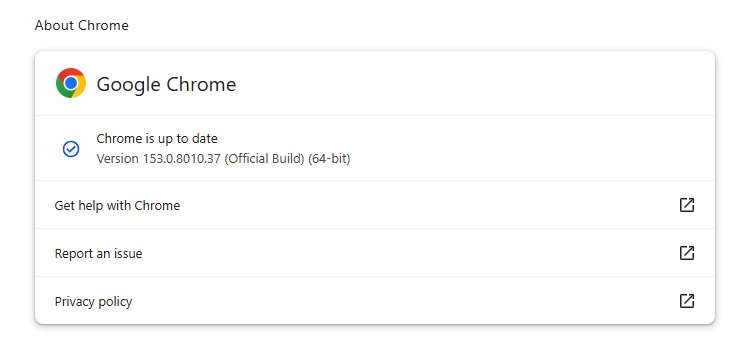
Chrome is rolling out an update for its desktop browser. The update includes 230 security fixes, one of which is known to be actively exploited . The stable channel has been updated to 153.0.8010.36/.37 for Windows and Mac, and 153.0.8010.36 for Linux. How to update Chrome If you don’t want to wait for the rollout to reach you, manually updating is easy. The…

Fix: Review advisory findings, isolate suspect endpoints, and verify threat signatures.
CISA Flags Exploited Cisco, Citrix, Fortinet Flaws, Sets Sept. 12 Federal Patch Deadline Important CVE-2026-20079 The Hacker News
2026-09-10 The Hacker News

CISA Flags Exploited Cisco, Citrix, Fortinet Flaws, Sets Sept. 12 Federal Patch Deadline

The U.S. Cybersecurity and Infrastructure Security Agency (CISA) on Wednesday added three flaws, each impacting Cisco, Citrix, and Fortinet, to its Known Exploited Vulnerabilities (KEV) catalog, requiring Federal Civilian Executive Branch (FCEB) agencies to apply the patches by September 12, 2026. The vulnerabilities are listed below - CVE-2026-20079 (CVSS s…

Fix: Review advisory findings, isolate suspect endpoints, and verify threat signatures.
The Machine With Many Faces: Post-Exploitation Identity Misuse in SPIFFE/SPIRE Important Palo Alto Unit 42
2026-09-10 Palo Alto Unit 42

The Machine With Many Faces: Post-Exploitation Identity Misuse in SPIFFE/SPIRE

Learn how root access on a compromised K8s node allows attackers to utilize SPIFFE/SPIRE metadata to spoof and harvest co-located workload identities. The post The Machine With Many Faces: Post-Exploitation Identity Misuse in SPIFFE/SPIRE appeared first on Unit 42 .

Fix: Review advisory findings, isolate suspect endpoints, and verify threat signatures.
Copyright scammers get Instagram accounts suspended and demand payment Moderate Malwarebytes Labs
2026-09-10 Malwarebytes Labs

Copyright scammers get Instagram accounts suspended and demand payment

Scammers are abusing Meta’s copyright-reporting system to suspend people’s Instagram accounts and then hold them for ransom, according to the BBC . Criminals file fake copyright complaints with Instagram, claiming that an account is using material it doesn’t own. Repeated complaints can trigger a temporary account suspension from the platform, locking out th…

Fix: Review advisory findings, isolate suspect endpoints, and verify threat signatures.
What Is ISPM? How It Differs from IAM, PAM, IGA, and IDaaS Moderate Qualys Security Blog
2026-09-10 Qualys Security Blog

What Is ISPM? How It Differs from IAM, PAM, IGA, and IDaaS

Key Takeaways Identity Security Posture Management (ISPM) is the continuous risk and posture layer of the identity stack not a replacement for Identity and Access Management (IAM), Privileged Access Management (PAM), Identity Governance and Administration (IGA), or Identity-as-a-Service (IDaaS), but the layer that continuously assesses the exposure those sys…

Fix: Review advisory findings, isolate suspect endpoints, and verify threat signatures.
Anthropic Reveals Yet Another Cybersecurity Incident Moderate Infosecurity Magazine
2026-09-10 Infosecurity Magazine

Anthropic Reveals Yet Another Cybersecurity Incident

Anthropic has found a fourth case of its model accessing third-party systems without authorization

Fix: Review advisory findings, isolate suspect endpoints, and verify threat signatures.
OFAC Sanctions Chinese Scam Platform Xinbi Guarantee Moderate Infosecurity Magazine
2026-09-10 Infosecurity Magazine

OFAC Sanctions Chinese Scam Platform Xinbi Guarantee

The US Treasury has placed sanctions on notorious Chinese cybercrime marketplace Xinbi Guarantee

Fix: Review advisory findings, isolate suspect endpoints, and verify threat signatures.
Nearly 1 in 10 Exposed LiteLLM Gateways Accepted the Example "sk-1234" Admin Key Moderate The Hacker News
2026-09-10 The Hacker News

Nearly 1 in 10 Exposed LiteLLM Gateways Accepted the Example "sk-1234" Admin Key

Nearly one in ten of the internet-facing LiteLLM servers that Wiz Research scanned in February accepted sk-1234, the example admin key in LiteLLM's own setup guide. LiteLLM is an open-source AI gateway, the software a company puts between its applications and the model providers it pays for. That key is the gateway's administrator credential. Anyone who hold…

Fix: Review advisory findings, isolate suspect endpoints, and verify threat signatures.
Anthropic Discloses Fourth AI Hacking Incident Involving Claude Opus 4.6 Moderate The Hacker News
2026-09-10 The Hacker News

Anthropic Discloses Fourth AI Hacking Incident Involving Claude Opus 4.6

Anthropic on Wednesday disclosed a fourth incident in which its artificial intelligence (AI) model broke into real third-party systems, marking the latest in a growing list of cases that have raised concerns about the security risks posed by autonomous AI agents. The AI company said the incident dates back to January 2026 and involved an early version of Cla…

Fix: Review advisory findings, isolate suspect endpoints, and verify threat signatures.
EU Cyber Resilience Act to Enforce New Reporting Requirements Critical Dark Reading
2026-09-10 Dark Reading

EU Cyber Resilience Act to Enforce New Reporting Requirements

Starting Friday, European organizations will have just 24 hours to notify the EU government any time they discover serious product security incidents.

Fix: Review advisory findings, isolate suspect endpoints, and verify threat signatures.
Smashing Security podcast #484: How websites are tracking you with silence Moderate Graham Cluley Security
2026-09-09 Graham Cluley Security

Smashing Security podcast #484: How websites are tracking you with silence

When a chap called Matt noticed his Bluetooth headphones wouldn't switch to his phone, he was surprised to realise the reason was a single AliExpress webpage sitting open in his browser - playing nothing at all, at zero volume. And yet somehow his hardware could hear it. Audio fingerprinting is one of the sneakiest tracking tricks on the web. Meanwhile, the …

Fix: Review advisory findings, isolate suspect endpoints, and verify threat signatures.
Chromium: CVE-2026-85046 Type confusion in V8 Moderate CVE-2026-85046 Microsoft MSRC
2026-09-09 Microsoft MSRC

Chromium: CVE-2026-85046 Type confusion in V8

This CVE was assigned by Chrome. Microsoft Edge (Chromium-based) ingests Chromium, which addresses this vulnerability. Please see [Google Chrome Releases](https://chromereleases.googleblog.com/2026) for more information. Google is aware that an exploit for CVE-2026-85046 exists in the wild.

Fix: Deploy cumulative update via Windows Update or Microsoft Update Catalog.
Mythos Vulnerability Firehose Hits a Human Bottleneck Important Dark Reading
2026-09-09 Dark Reading

Mythos Vulnerability Firehose Hits a Human Bottleneck

An analysis of Project Glasswing findings shows only a fraction of the bugs it has discovered have reached disclosure, and an even smaller number have been fixed.

Fix: Review advisory findings, isolate suspect endpoints, and verify threat signatures.
U.S. Disrupts Xinbi Guarantee Scam Marketplace, Freezes $52.8 Million in Crypto Moderate The Hacker News
2026-09-09 The Hacker News

U.S. Disrupts Xinbi Guarantee Scam Marketplace, Freezes $52.8 Million in Crypto

The U.S. Department of Justice (DoJ) on Wednesday announced coordinated actions aimed at an illicit online marketplace called Xinbi Guarantee that offered scam services, including seizing Telegram channels used to run the service, confiscating two cryptocurrency wallets, and deploying the Scam Center Strike Force to Madagascar to help disrupt 13 scam compoun…

Fix: Review advisory findings, isolate suspect endpoints, and verify threat signatures.
Notification