Threat Wire
BleepingComputer [Critical] FBI links $6.3 billion Binance crypto heist to North Korean hackers BleepingComputer [Critical] Alpine Linux rebuilds GitLab after attempted RCE attack CVE-2026-118539 [Critical] Security Affairs newsletter Round 602 by Pierluigi Paganini – INTERNATIONAL EDITION CVE-2026-58882 [Critical] SMS of Death: Android under attack, an invisible SMS can block calls and emergency services The Hacker News [Critical] CVSS 10.0 LXD, MicroCloud Flaw Lets Attackers Impersonate Trusted Clients Without a Private Key The Hacker News [Critical] FBI Links North Korea's TraderTraitor to Record $6.43 Billion Binance Crypto Heist CVE-2026-111357 [Critical] U.S. CISA adds Ivanti Connect Secure flaws to its Known Exploited Vulnerabilities catalog BleepingComputer [Critical] Northflank security breach leads to abuse of customers' AI API keys BleepingComputer [Critical] FBI links $6.3 billion Binance crypto heist to North Korean hackers BleepingComputer [Critical] Alpine Linux rebuilds GitLab after attempted RCE attack CVE-2026-118539 [Critical] Security Affairs newsletter Round 602 by Pierluigi Paganini – INTERNATIONAL EDITION CVE-2026-58882 [Critical] SMS of Death: Android under attack, an invisible SMS can block calls and emergency services The Hacker News [Critical] CVSS 10.0 LXD, MicroCloud Flaw Lets Attackers Impersonate Trusted Clients Without a Private Key The Hacker News [Critical] FBI Links North Korea's TraderTraitor to Record $6.43 Billion Binance Crypto Heist CVE-2026-111357 [Critical] U.S. CISA adds Ivanti Connect Secure flaws to its Known Exploited Vulnerabilities catalog BleepingComputer [Critical] Northflank security breach leads to abuse of customers' AI API keys

CyberWatch Newsroom Live Intel

Continuous enterprise threat intelligence tracking active in-the-wild zero-days (CISA KEV), Microsoft Windows KB cumulative updates, MSRC security advisories, and CVE remediation.

Last Checked: Nov 2, 2026 - 02:28:59 UTC (Hourly Auto-Sync Active)
Showing 24 of 608 advisories
Page 13 of 26
We've got one word for it, and it's usually the wrong one Moderate CVE-2026-20079 Cisco Talos Intelligence
2026-09-10 Cisco Talos Intelligence

We've got one word for it, and it's usually the wrong one

Welcome to this week’s edition of the Threat Source newsletter. Ask anybody in this industry what the work does to the health of the people who do it and you get one word back: burnout. It's a fine word, in and of itself. It’s easy to reach for, understandable to everyone… and it's the wrong one, most of the time. So, story time. Last year I gave an intervie…

Fix: Review advisory findings, isolate suspect endpoints, and verify threat signatures.

BlueMoon exploit kit turns Chrome and Windows flaws into attacks Important Malwarebytes Labs
2026-09-10 Malwarebytes Labs

BlueMoon exploit kit turns Chrome and Windows flaws into attacks

BlueMoon , a shared Chrome and Windows exploit kit, shows why “patch later” is becoming a dangerous gamble. Security updates are easy to put off. The browser still opens, Windows still works, and choosing to relaunch your browser or restart your computer later can feel harmless. But a newly documented exploit kit called “BlueMoon” shows how quickly patching …

Fix: Review advisory findings, isolate suspect endpoints, and verify threat signatures.

CISA Adds Two Known Exploited Vulnerabilities to Catalog Critical CISA Advisory
2026-09-10 CISA Advisory

CISA Adds Two Known Exploited Vulnerabilities to Catalog

CISA has added two new vulnerabilities to its Known Exploited Vulnerabilities (KEV) Catalog , based on evidence of active exploitation. CVE-2026-67277 MikroTik RouterOS Missing Authentication for Critical Function Vulnerability CVE-2026-86060 MikroTik RouterOS Improper Neutralization of Argument Delimiters in a Command Vulnerability These types of vulnerabilities are a frequent attack vector for malicious cyber actors and pose significant risks to the federal enterprise. Binding Operational Directive (BOD) 26-04: Prioritizing Security Updates Based on Risk establishes vulnerability management requirements for Federal Civilian Executive Branch (FCEB) agencies. BOD 26-04 reinforces the importance of the KEV Catalog and requires federal agencies to prioritize rapid remediation of high-risk vulnerabilities, specifically those identified by Common Vulnerabilities and Exposures (CVEs) listed in CISA’s KEV Catalog on publicly exposed assets that grant total control of the asset post-exploitation, while deferring action for lower-risk vulnerabilities. BOD 26-04 further establishes basic expectations for when agencies must check whether threat actors compromised the system before the patch was applied. While BOD 26-04 applies only to FCEB agencies, CISA encourages all organizations to adopt risk-based vulnerability management and prioritize remediation of KEV Catalog vulnerabilities . CISA will continue to add vulnerabilities to the catalog that meet the specified criteria . Aware of an exploited vulnerability not currently listed in the KEV Catalog? Submit it for potential addition through CISA’s KEV Nomination Form . Potential KEV additions must have a CVE ID, evidence of exploitation, and clear mitigation guidance.

Fix: Review CISA guidance and apply vendor security updates immediately.
Update Chrome now to protect against an actively exploited vulnerability Critical CVE-2026-87491 Malwarebytes Labs
2026-09-10 Malwarebytes Labs

Update Chrome now to protect against an actively exploited vulnerability

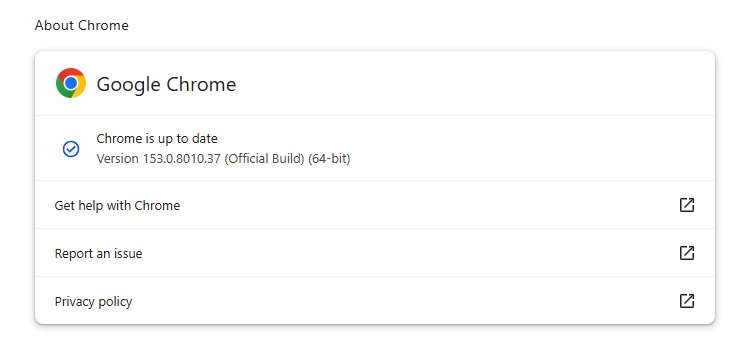
Chrome is rolling out an update for its desktop browser. The update includes 230 security fixes, one of which is known to be actively exploited . The stable channel has been updated to 153.0.8010.36/.37 for Windows and Mac, and 153.0.8010.36 for Linux. How to update Chrome If you don’t want to wait for the rollout to reach you, manually updating is easy. The…

Fix: Review advisory findings, isolate suspect endpoints, and verify threat signatures.
Active exploitation of Cisco Secure Firewall Management Center vulnerabilities Important CVE-2026-20079 Cisco Talos Intelligence
2026-09-09 Cisco Talos Intelligence

Active exploitation of Cisco Secure Firewall Management Center vulnerabilities

Cisco Talos is actively tracking the exploitation of two vulnerabilities in Cisco’s Secure Firewall Management Center (FMC) Software. First, CVE-2026-20079 is an authentication bypass vulnerability in unpatched instances of Cisco’s Secure FMC Software, which allows an unauthenticated, remote attacker to bypass authentications and execute scripts on impacted …

Fix: Review advisory findings, isolate suspect endpoints, and verify threat signatures.
The Models That Found 10,000 Zero-Days Broke Into Three Companies Using Weak Passwords Critical Qualys Security Blog
2026-09-09 Qualys Security Blog

The Models That Found 10,000 Zero-Days Broke Into Three Companies Using Weak Passwords

The question of whether a Frontier AI model could find vulnerabilities that no human researcher had found was settled in April. Claude Mythos Preview identified thousands of previously unknown flaws across every major operating system and browser, including a 27-year-old denial-of-service condition in OpenBSD, and within a month Anthropic and its Project Gla…

Fix: Review advisory findings, isolate suspect endpoints, and verify threat signatures.

CISA Adds Four Known Exploited Vulnerabilities to Catalog Critical CISA Advisory
2026-09-09 CISA Advisory

CISA Adds Four Known Exploited Vulnerabilities to Catalog

CISA has added four new vulnerabilities to its Known Exploited Vulnerabilities (KEV) Catalog , based on evidence of active exploitation. CVE-2025-25249 Fortinet Multiple Products Heap-based Buffer Overflow Vulnerability CVE-2026-19490 Citrix NetScaler Authentication Bypass Using an Alternate Path or Channel Vulnerability CVE-2026-87491 Google Chromium V8 Out of Bounds Write Vulnerability CVE-2026-20079 Cisco Firewall Management Center Authentication Bypass Using an Alternate Path or Channel Vulnerability These types of vulnerabilities are a frequent attack vector for malicious cyber actors and pose significant risks to the federal enterprise. Binding Operational Directive (BOD) 26-04: Prioritizing Security Updates Based on Risk establishes vulnerability management requirements for Federal Civilian Executive Branch (FCEB) agencies. BOD 26-04 reinforces the importance of the KEV Catalog and requires federal agencies to prioritize rapid remediation of high-risk vulnerabilities, specifically those identified by Common Vulnerabilities and Exposures (CVEs) listed in CISA’s KEV Catalog on publicly exposed assets that grant total control of the asset post-exploitation, while deferring action for lower-risk vulnerabilities. BOD 26-04 further establishes basic expectations for when agencies must check whether threat actors compromised the system before the patch was applied. While BOD 26-04 applies only to FCEB agencies, CISA encourages all organizations to adopt risk-based vulnerability management and prioritize remediation of KEV Catalog vulnerabilities . CISA will continue to add vulnerabilities to the catalog that meet the specified criteria . Aware of an exploited vulnerability not currently listed in the KEV Catalog? Submit it for potential addition through CISA’s KEV Nomination Form . Potential KEV additions must have a CVE ID, evidence of exploitation, and clear mitigation guidance.

Fix: Review CISA guidance and apply vendor security updates immediately.
Microsoft fixes record 964 flaws, including 2 exploited zero-days Critical CVE-2026-81963 Malwarebytes Labs
2026-09-09 Malwarebytes Labs

Microsoft fixes record 964 flaws, including 2 exploited zero-days

Microsoft’s September 2026 Patch Tuesday addresses 964 CVEs, including 104 rated Critical and 860 rated Important, making it the company’s largest Patch Tuesday release on record. Microsoft lists 974 CVEs in its full September security release. However, 10 of those affect cloud services or involve fixes that Microsoft applies itself, leaving 964 vulnerabilit…

Fix: Review advisory findings, isolate suspect endpoints, and verify threat signatures.
Microsoft Patch Tuesday for September 2026 — Snort rules and prominent vulnerabilities Critical CVE-2026-81963 Cisco Talos Intelligence
2026-09-08 Cisco Talos Intelligence

Microsoft Patch Tuesday for September 2026 — Snort rules and prominent vulnerabilities

Microsoft has released its monthly security update for September 2026, which includes 973 vulnerabilities affecting a range of products, including 113 that Microsoft marked as "critical." Microsoft notes that 2 of the vulnerabilities disclosed this month have been exploited in the wild: CVE-2026-81963 affects Windows Update Stack. CVE-2026-81963 is a elevati…

Fix: Review advisory findings, isolate suspect endpoints, and verify threat signatures.
Patch Tuesday - September 2026 Moderate CVE-2026-85880 Rapid7 Threat Research
2026-09-08 Rapid7 Threat Research

Patch Tuesday - September 2026

Microsoft is publishing 974 own-product vulnerabilities on September 2026 Patch Tuesday , including 723 vulnerabilities in Windows. Along with Microsoft fixes for 25 non-Microsoft CVEs, that brings the total number of vulnerabilities on the table today to 999. Whether this is the biggest Patch Tuesday ever depends on how we count, but this is by far the most…

Fix: Review advisory findings, isolate suspect endpoints, and verify threat signatures.
September 2026 Microsoft Patch Tuesday, (Tue, Sep 8th) Critical SANS Internet Storm Center
2026-09-08 SANS Internet Storm Center

September 2026 Microsoft Patch Tuesday, (Tue, Sep 8th)

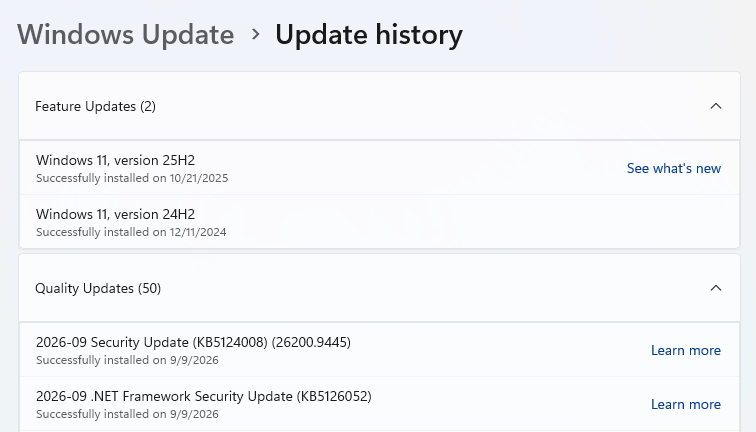
This month, Microsoft released patches for a record-breaking 973 vulnerabilities, including 113 rated critical. It is by far the largest Patch Tuesday to date, well ahead of the previous high of 664 set in July 2026. Two vulnerabilities are listed as exploited in the wild, while none were publicly disclosed before Patch Tuesday. Notable fixes include Windows…

Fix: Review advisory findings, isolate suspect endpoints, and verify threat signatures.
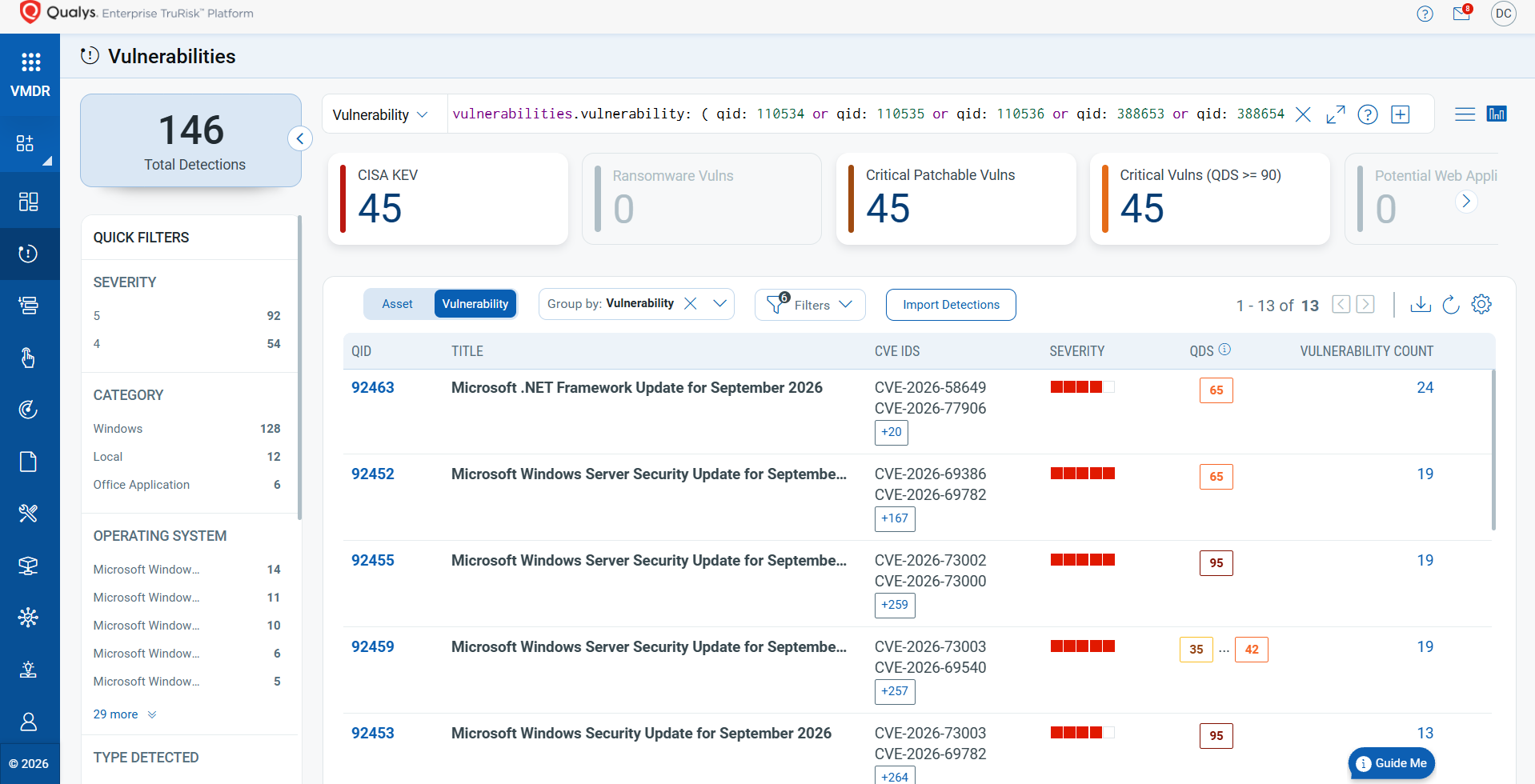
Microsoft and Adobe Patch Tuesday, September 2026 Security Update Review Moderate CVE-2026-81963 Qualys Security Blog
2026-09-08 Qualys Security Blog

Microsoft and Adobe Patch Tuesday, September 2026 Security Update Review

Microsoft kicks off September with its monthly Patch Tuesday release, delivering fixes for security vulnerabilities affecting its products. The security updates are packed with security fixes, providing organizations with important updates to help protect their environments from emerging threats. This Patch Tuesday is Microsoft’s largest security update ever…

Fix: Review advisory findings, isolate suspect endpoints, and verify threat signatures.
The September 2026 Security Update Review Critical CVE-2026-75650 Trend Micro ZDI
2026-09-08 Trend Micro ZDI

The September 2026 Security Update Review

Whelp, here we are. Deep into the new normal. With nearly 1,000 CVEs coming out from Microsoft and a healthy release from Adobe as well, there’s a phrase from my military days that comes to mind: embrace the suck. Take an extended break from your regularly scheduled activities as we take a look at the latest security patches from Adobe and Microsoft. If you’…

Fix: Review advisory findings, isolate suspect endpoints, and verify threat signatures.
4 Questions to Ask When Evaluating an Exposure Management Platform Moderate Qualys Security Blog
2026-09-08 Qualys Security Blog

4 Questions to Ask When Evaluating an Exposure Management Platform

Executive Summary Exposure management platforms are increasingly evaluated based on post-detection actions rather than detection itself. This piece sets out four questions to ask when evaluating one: whether it narrows vulnerabilities to the exploitable using environment context rather than severity scores; whether it validates exploitability continuously ra…

Fix: Review advisory findings, isolate suspect endpoints, and verify threat signatures.
CISA Adds Four Known Exploited Vulnerabilities to Catalog Critical CISA Advisory
2026-09-08 CISA Advisory

CISA Adds Four Known Exploited Vulnerabilities to Catalog

CISA has added four new vulnerabilities to its Known Exploited Vulnerabilities (KEV) Catalog , based on evidence of active exploitation. CVE-2026-75650 Adobe Commerce and Magento Improper Neutralization of Special Elements Used in a Template Engine Vulnerability CVE-2026-81963 Microsoft Windows Link Following Vulnerability CVE-2026-85880 Microsoft Windows Heap-Based Buffer Overflow Vulnerability CVE-2026-86218 N-able N-central Static Code Injection Vulnerability These types of vulnerabilities are a frequent attack vector for malicious cyber actors and pose significant risks to the federal enterprise. Binding Operational Directive (BOD) 26-04: Prioritizing Security Updates Based on Risk establishes vulnerability management requirements for Federal Civilian Executive Branch (FCEB) agencies. BOD 26-04 reinforces the importance of the KEV Catalog and requires federal agencies to prioritize rapid remediation of high-risk vulnerabilities, specifically those identified by Common Vulnerabilities and Exposures (CVEs) listed in CISA’s KEV Catalog on publicly exposed assets that grant total control of the asset post-exploitation, while deferring action for lower-risk vulnerabilities. BOD 26-04 further establishes basic expectations for when agencies must check whether threat actors compromised the system before the patch was applied. While BOD 26-04 applies only to FCEB agencies, CISA encourages all organizations to adopt risk-based vulnerability management and prioritize remediation of KEV Catalog vulnerabilities . CISA will continue to add vulnerabilities to the catalog that meet the specified criteria . Aware of an exploited vulnerability not currently listed in the KEV Catalog? Submit it for potential addition through CISA’s KEV Nomination Form . Potential KEV additions must have a CVE ID, evidence of exploitation, and clear mitigation guidance.

Fix: Review CISA guidance and apply vendor security updates immediately.
CVE-2026-86206, CVE-2026-86207: N-able N-central Authentication Bypass (FIXED) Important CVE-2026-86206 Rapid7 Threat Research
2026-09-08 Rapid7 Threat Research

CVE-2026-86206, CVE-2026-86207: N-able N-central Authentication Bypass (FIXED)

Overview While conducting research into a recent N-able N-central authentication bypass vulnerability ( CVE-2026-18577 ), Rapid7 Labs discovered two new vulnerabilities affecting the latest version of N-central. When chained together, these two vulnerabilities allow a remote unauthenticated attacker to bypass authentication and create a new attacker-controll…

Fix: Review advisory findings, isolate suspect endpoints, and verify threat signatures.
ClickFix moves into the browser: Cryptocurrency theft with Google-hosted C2 Moderate Cisco Talos Intelligence
2026-09-08 Cisco Talos Intelligence

ClickFix moves into the browser: Cryptocurrency theft with Google-hosted C2

Cisco Talos is tracking a cryptocurrency-stealing campaign that abuses the Google Visualization API for command and control (C2), retrieving obfuscated JavaScript from a publicly published Google Sheets document and injecting it into the victim's browser session. The actors use a variation on ClickFix social engineering. Instead of convincing targets to run …

Fix: Review advisory findings, isolate suspect endpoints, and verify threat signatures.
7th September – Threat Intelligence Report Moderate CVE-2026-83548 Check Point Research
2026-09-07 Check Point Research

7th September – Threat Intelligence Report

For the latest discoveries in cyber research for the week of 7th Setpember, please download our Threat Intelligence Bulletin. TOP ATTACKS AND BREACHES Thomson Reuters, a global information and technology company, has disclosed a breach of its C-Track court case-management platform affecting courts across 11 US states and Canada. An unauthorized party obtaine…

Fix: Review advisory findings, isolate suspect endpoints, and verify threat signatures.
CISA Adds One Known Exploited Vulnerability to Catalog Critical CISA Advisory
2026-09-04 CISA Advisory

CISA Adds One Known Exploited Vulnerability to Catalog

CISA has added one new vulnerability to its Known Exploited Vulnerabilities (KEV) Catalog , based on evidence of active exploitation. CVE-2026-85046 Google Chromium V8 Type Confusion Vulnerability This type of vulnerability is a frequent attack vector for malicious cyber actors and poses significant risks to the federal enterprise. Binding Operational Directive (BOD) 26-04: Prioritizing Security Updates Based on Risk establishes vulnerability management requirements for Federal Civilian Executive Branch (FCEB) agencies. BOD 26-04 reinforces the importance of the KEV Catalog and requires federal agencies to prioritize rapid remediation of high-risk vulnerabilities, specifically those identified by Common Vulnerabilities and Exposures (CVEs) listed in CISA’s KEV Catalog on publicly exposed assets that grant total control of the asset post-exploitation, while deferring action for lower-risk vulnerabilities. BOD 26-04 further establishes basic expectations for when agencies must check whether threat actors compromised the system before the patch was applied. While BOD 26-04 applies only to FCEB agencies, CISA encourages all organizations to adopt risk-based vulnerability management and prioritize remediation of KEV Catalog vulnerabilities . CISA will continue to add vulnerabilities to the catalog that meet the specified criteria . Aware of an exploited vulnerability not currently listed in the KEV Catalog? Submit it for potential addition through CISA’s KEV Nomination Form . Potential KEV additions must have a CVE ID, evidence of exploitation, and clear mitigation guidance.

Fix: Review CISA guidance and apply vendor security updates immediately.
Critical SonicWall SMA1000 Vulnerabilities CVE-2026-83548, CVE-2026-83549 Exploited in the Wild Critical CVE-2026-83548 Rapid7 Threat Research
2026-09-02 Rapid7 Threat Research

Critical SonicWall SMA1000 Vulnerabilities CVE-2026-83548, CVE-2026-83549 Exploited in the Wild

Overview On September 1, 2026, SonicWall disclosed two vulnerabilities affecting SonicWall SMA1000 appliances that the vendor says are being actively exploited in the wild. The vulnerabilities, CVE-2026-83548 and CVE-2026-83549 , can be chained to achieve unauthenticated remote code execution (RCE) on affected appliances. CVE-2026-83548 is a critical pre-aut…

Fix: Review advisory findings, isolate suspect endpoints, and verify threat signatures.
Notification