
Threat Wire
BleepingComputer [Critical] FBI links $6.3 billion Binance crypto heist to North Korean hackers BleepingComputer [Critical] Alpine Linux rebuilds GitLab after attempted RCE attack CVE-2026-118539 [Critical] Security Affairs newsletter Round 602 by Pierluigi Paganini – INTERNATIONAL EDITION CVE-2026-58882 [Critical] SMS of Death: Android under attack, an invisible SMS can block calls and emergency services The Hacker News [Critical] CVSS 10.0 LXD, MicroCloud Flaw Lets Attackers Impersonate Trusted Clients Without a Private Key The Hacker News [Critical] FBI Links North Korea's TraderTraitor to Record $6.43 Billion Binance Crypto Heist CVE-2026-111357 [Critical] U.S. CISA adds Ivanti Connect Secure flaws to its Known Exploited Vulnerabilities catalog BleepingComputer [Critical] Northflank security breach leads to abuse of customers' AI API keys BleepingComputer [Critical] FBI links $6.3 billion Binance crypto heist to North Korean hackers BleepingComputer [Critical] Alpine Linux rebuilds GitLab after attempted RCE attack CVE-2026-118539 [Critical] Security Affairs newsletter Round 602 by Pierluigi Paganini – INTERNATIONAL EDITION CVE-2026-58882 [Critical] SMS of Death: Android under attack, an invisible SMS can block calls and emergency services The Hacker News [Critical] CVSS 10.0 LXD, MicroCloud Flaw Lets Attackers Impersonate Trusted Clients Without a Private Key The Hacker News [Critical] FBI Links North Korea's TraderTraitor to Record $6.43 Billion Binance Crypto Heist CVE-2026-111357 [Critical] U.S. CISA adds Ivanti Connect Secure flaws to its Known Exploited Vulnerabilities catalog BleepingComputer [Critical] Northflank security breach leads to abuse of customers' AI API keys

CyberWatch Newsroom Live Intel

Continuous enterprise threat intelligence tracking active in-the-wild zero-days (CISA KEV), Microsoft Windows KB cumulative updates, MSRC security advisories, and CVE remediation.

Last Checked: Nov 2, 2026 - 02:28:59 UTC (Hourly Auto-Sync Active)
Showing 24 of 5,807 advisories
Page 99 of 242
Hitachi Energy RTU500 Important CISA Advisory
2026-10-06 CISA Advisory

Hitachi Energy RTU500

View CSAF Summary Hitachi Energy is publishing this cybersecurity advisory in response to the security findings reported by Dragos affecting end-of-life RTU500 CMU firmware version 9.x. The reported findings are associated with legacy RTU500 firmware versions that were developed according to the cybersecurity requirements, threat landscape, and industry practices that existed at the time of their release. As cybersecurity threats and security expectations have evolved, these end-of-life versions no longer incorporate many of the security controls and hardening measures that are standard in modern industrial control systems. Over successive RTU500 releases, Hitachi Energy has continuously enhanced the security of the product through the introduction of additional security features, protocol hardening, stronger authentication and access controls, encrypted communications, and other security-by-design improvements. While the findings reported by Dragos do not affect currently supported RTU500 CMU firmware versions, there is a likelihood that the end-of-life versions 11.x and prior are affected by these vulnerabilities. Since the end-of-life versions are no longer maintained with security updates, Hitachi Energy strongly recommends upgrading to a currently supported RTU500 firmware version. Customers should also implement appropriate defense-in-depth measures and cybersecurity best practices to reduce risk and strengthen the security posture of their operational environments. Please refer to the Recommended Immediate Actions for information about the mitigation/remediation. The following versions of Hitachi Energy RTU500 are affected: RTU500 series CMU Firmware vers:RTU500_series_CMU_Firmware/ CVSS Vendor Equipment v3 9.8 Hitachi Energy RTU500 series CMU Firmware 5 Vulnerabilities Missing Authentication for Critical Function, Relative Path Traversal, Missing Authorization, Incorrect Authorization, Download of Code Without Integrity Check Background Critical Infrastructure Sectors: Energy Countries/Areas Deployed: Worldwide Company Headquarters Location: Switzerland Vulnerabilities Expand All + CVE-2026-8065 An authentication bypass vulnerability in the firmware update endpoint of Hitachi Energy RTU500 allows an unauthenticated attacker to upload arbitrary firmware through a crafted POST request. Successful exploitation could allow the attacker to modify device functionality or compromise the integrity or availability of the device. Read More 1 Affected Product RTU500 series CMU Firmware versions 11.x and prior (End-of-Life) Product Status: known_affected Remediations Vendor fix Upgrade to version 12.7.8 or 13.9.1 or latest Additional Metrics Relevant CWE: CWE-306 Missing Authentication for Critical Function CVSS Version Base Score Base Severity Vector String 3.1 9.1 CRITICAL CVSS:3.1/AV:N/AC:L/PR:N/UI:N/S:U/C:N/I:H/A:H View CVE Details CVE-2026-8066 A directory traversal vulnerability in the file upload functionality of Hitachi Energy RTU500 allows an unauthenticated attacker to write or overwrite arbitrary files on the device file system. Depending on the files affected, successful exploitation could result in unauthorized modification of device data or disruption of the device’s intended operation. Read More 2 Affected Products RTU500 series CMU Firmware versions 11.x and prior (End-of-Life) Product Status: known_affected Remediations Vendor fix Upgrade to version 12.7.8 or 13.9.1 or latest RTU500 series CMU Firmware versions 11.x and prior (End-of-Life) Product Status: known_affected Remediations Vendor fix Upgrade to version 12.7.8 or 13.9.1 or latest Additional Metrics Relevant CWE: CWE-23 Relative Path Traversal CVSS Version Base Score Base Severity Vector String 3.1 9.1 CRITICAL CVSS:3.1/AV:N/AC:L/PR:N/UI:N/S:U/C:N/I:H/A:H View CVE Details CVE-2026-8067 An improper authorization vulnerability in the RTU500’s web application allows an authenticated user to trigger the RTU500 to reboot through the reset endpoint. Successful exploitation could cause temporary device unavailability and disruption of its intended operation. Read More 3 Affected Products RTU500 series CMU Firmware versions 11.x and prior (End-of-Life) Product Status: known_affected Remediations Vendor fix Upgrade to version 12.7.8 or 13.9.1 or latest RTU500 series CMU Firmware versions 11.x and prior (End-of-Life) Product Status: known_affected Remediations Vendor fix Upgrade to version 12.7.8 or 13.9.1 or latest RTU500 series CMU Firmware versions 11.x and prior (End-of-Life) Product Status: known_affected Remediations Vendor fix Upgrade to version 12.7.8 or 13.9.1 or latest Additional Metrics Relevant CWE: CWE-862 Missing Authorization CVSS Version Base Score Base Severity Vector String 3.1 6.5 MEDIUM CVSS:3.1/AV:N/AC:L/PR:L/UI:N/S:U/C:N/I:N/A:H View CVE Details CVE-2010-2965 The WDB target agent debug service in Wind River VxWorks 6.x, 5.x, and earlier, as used on few of the Hitachi Energy RTU500 CMU firmware legacy versions, allows remote attackers to read or modify arbitrary memory locations, perform function calls, or manage tasks via requests to UDP port 17185. Read More 4 Affected Products RTU500 series CMU Firmware versions 11.x and prior (End-of-Life) Product Status: known_affected Remediations Vendor fix Upgrade to version 12.7.8 or 13.9.1 or latest RTU500 series CMU Firmware versions 11.x and prior (End-of-Life) Product Status: known_affected Remediations Vendor fix Upgrade to version 12.7.8 or 13.9.1 or latest RTU500 series CMU Firmware versions 11.x and prior (End-of-Life) Product Status: known_affected Remediations Vendor fix Upgrade to version 12.7.8 or 13.9.1 or latest RTU500 series CMU Firmware versions 11.x and prior (End-of-Life) Product Status: known_affected Remediations Vendor fix Upgrade to version 12.7.8 or 13.9.1 or latest Additional Metrics Relevant CWE: CWE-863 Incorrect Authorization CVSS Version Base Score Base Severity Vector String 3.1 9.8 CRITICAL CVSS:3.1/AV:N/AC:L/PR:N/UI:N/S:U/C:H/I:H/A:H View CVE Details CVE-2014-9195 Missing authentication vulnerability in a network service of Hitachi Energy RTU500 allows an unauthenticated remote attacker to execute arbitrary commands using protocol-compliant network traffic. Successful exploitation could result in unauthorized modification of the device or disruption of its intended operation. Read More 5 Affected Products RTU500 series CMU Firmware versions 11.x and prior (End-of-Life) Product Status: known_affected Remediations Vendor fix Upgrade to version 12.7.8 or 13.9.1 or latest RTU500 series CMU Firmware versions 11.x and prior (End-of-Life) Product Status: known_affected Remediations Vendor fix Upgrade to version 12.7.8 or 13.9.1 or latest RTU500 series CMU Firmware versions 11.x and prior (End-of-Life) Product Status: known_affected Remediations Vendor fix Upgrade to version 12.7.8 or 13.9.1 or latest RTU500 series CMU Firmware versions 11.x and prior (End-of-Life) Product Status: known_affected Remediations Vendor fix Upgrade to version 12.7.8 or 13.9.1 or latest RTU500 series CMU Firmware versions 11.x and prior (End-of-Life) Product Status: known_affected Remediations Vendor fix Upgrade to version 12.7.8 or 13.9.1 or latest Additional Metrics Relevant CWE: CWE-306 Missing Authentication for Critical Function CVSS Version Base Score Base Severity Vector String 3.1 8.1 HIGH CVSS:3.1/AV:N/AC:H/PR:N/UI:N/S:U/C:H/I:H/A:H View CVE Details CVE-2023-46143 A download of code without integrity check vulnerability in Hitachi Energy RTU500 allows an unauthenticated remote attacker to modify some or all applications running on the device. Successful exploitation could result in unauthorized modification of device functionality or disruption of its intended operation. Read More 6 Affected Products RTU500 series CMU Firmware versions 11.x and prior (End-of-Life) Product Status: known_affected Remediations Vendor fix Upgrade to version 12.7.8 or 13.9.1 or latest RTU500 series CMU Firmware versions 11.x and prior (End-of-Life) Product Status: known_affected Remediations Vendor fix Upgrade to version 12.7.8 or 13.9.1 or latest RTU500 series CMU Firmware versions 11.x and prior (End-of-Life) Product Status: known_affected Remediations Vendor fix Upgrade to version 12.7.8 or 13.9.1 or latest RTU500 series CMU Firmware versions 11.x and prior (End-of-Life) Product Status: known_affected Remediations Vendor fix Upgrade to version 12.7.8 or 13.9.1 or latest RTU500 series CMU Firmware versions 11.x and prior (End-of-Life) Product Status: known_affected Remediations Vendor fix Upgrade to version 12.7.8 or 13.9.1 or latest RTU500 series CMU Firmware versions 11.x and prior (End-of-Life) Product Status: known_affected Remediations Vendor fix Upgrade to version 12.7.8 or 13.9.1 or latest Additional Metrics Relevant CWE: CWE-494 Download of Code Without Integrity Check CVSS Version Base Score Base Severity Vector String 3.1 7.5 HIGH CVSS:3.1/AV:N/AC:L/PR:N/UI:N/S:U/C:N/I:H/A:N View CVE Details Acknowledgments Dragos reported these vulnerabilities to CISA. Notice The information in this document is subject to change without notice and should not be construed as a commitment by Hitachi Energy. Hitachi Energy provides no warranty, express or implied, including warranties of merchantability and fitness for a particular purpose, for the information contained in this document, and assumes no responsibility for any errors that may appear in this document. In no event shall Hitachi Energy or any of its suppliers be liable for direct, indirect, special, incidental or consequential damages of any nature or kind arising from the use of this document, or from the use of any hardware or software described in this document, even if Hitachi Energy or its suppliers have been advised of the possibility of such damages. This document and parts hereof must not be reproduced or copied without written permission from Hitachi Energy and the contents hereof must not be imparted to a third party nor used for any unauthorized purpose. All rights to registrations and trademarks reside with their respective owners. Support For additional information and support please contact your product provider or Hitachi Energy service organization. For contact information, see https://www.hitachienergy.com/contact-us/ for Hitachi Energy contact-centers. General Mitigation Factors Recommended security practices and firewall configurations can help protect a process control network from attacks that originate from outside the network. Such practices include that process control systems are physically protected from direct access by unauthorized personnel, have no direct connections to the Internet, and are separated from other networks by means of a firewall system that has a minimal number of ports exposed, and others that have to be evaluated case by case. Process control systems should not be used for Internet surfing, instant messaging, or receiving e-mails. Portable computers and removable storage media should be carefully scanned for viruses before they are connected to a control system. Proper password policies and processes should be followed. Additional information on Industrial Control Systems Cybersecurity Best Practices can be found in the Hitachi Energy “Industrial Control Systems Cybersecurity Best Practices” Cybersecurity Notification. [1] SSVC SSVCv2/E:N/A:N/2026-09-28T14:38:32Z/ Legal Notice and Terms of Use This product is provided subject to this Notification (https://www.cisa.gov/notification) and this Privacy & Use policy (https://www.cisa.gov/privacy-policy). Recommended Practices CISA recommends users take defensive measures to minimize the exploitation risk of this vulnerability. Minimize network exposure for all control system devices and/or systems, and ensure they are not accessible from the internet. Locate control system networks and remote devices behind firewalls and isolate them from business networks. When remote access is required, use more secure methods, such as Virtual Private Networks (VPNs), recognizing VPNs may have vulnerabilities and should be updated to the most recent version available. Also recognize VPN is only as secure as its connected devices. CISA reminds organizations to perform proper impact analysis and risk assessment prior to deploying defensive measures. CISA also provides a section for control systems security recommended practices on the ICS webpage on cisa.gov. Several CISA products detailing cyber defense best practices are available for reading and download, including Improving Industrial Control Systems Cybersecurity with Defense-in-Depth Strategies. CISA encourages organizations to implement recommended cybersecurity strategies for proactive defense of ICS assets. Additional mitigation guidance and recommended practices are publicly available on the ICS webpage at cisa.gov in the technical information paper, ICS-TIP-12-146-01B--Targeted Cyber Intrusion Detection and Mitigation Strategies. Organizations observing suspected malicious activity should follow established internal procedures and report findings to CISA for tracking and correlation against other incidents. Advisory Conversion Disclaimer This ICSA is a verbatim republication of Hitachi Energy PSIRT 8DBD000251 from a direct conversion of the vendor's Common Security Advisory Framework (CSAF) advisory. This is republished to CISA's website as a means of increasing visibility and is provided "as-is" for informational purposes only. CISA is not responsible for the editorial or technical accuracy of republished advisories and provides no warranties of any kind regarding any information contained within this advisory. Further, CISA does not endorse any commercial product or service. Please contact Hitachi Energy PSIRT directly for any questions regarding this advisory. Revision History Initial Release Date: 2026-09-29 Date Revision Summary 2026-09-29 1 Initial public release 2026-10-06 2 Initial CISA Republication of Hitachi Energy PSIRT 8DBD000251 advisory Legal Notice and Terms of Use


Fix: Review CISA guidance and apply vendor security updates immediately.
Hitachi Energy Asset Suite Important CISA Advisory
2026-10-06 CISA Advisory

Hitachi Energy Asset Suite

View CSAF Summary Hitachi Energy is aware of unauthenticated servlet access vulnerabilities that affect Asset Suite product versions listed in this document. These vulnerabilities can be exploited to potentially cause confidentiality, integrity and availability impact on the product. Please refer to the Recommended Immediate Actions for information about the mitigation/remediation. The following versions of Hitachi Energy Asset Suite are affected: Asset Suite vers:Asset_Suite/ CVSS Vendor Equipment v3 8.1 Hitachi Energy Asset Suite 1 Vulnerability Missing Authentication for Critical Function Background Critical Infrastructure Sectors: Energy Countries/Areas Deployed: Worldwide Company Headquarters Location: Switzerland Vulnerabilities Expand All + CVE-2026-7395 Asset Suite allows unauthenticated users to access HTTPPublishAdapterTestServlet that can be used for configuration file upload, leading to information disclosure and integrity compromise. The HTTPPublishAdapterTestServlet is specifically meant for testing purposes to be used in a non-production environment. Read More 1 Affected Product Asset Suite versions 9.9.0 and prior Product Status: known_affected Remediations Vendor fix Update or upgrade to Asset Suite 9.9.1 when available Mitigation Disable the affected servlet [2] [3] [2] HTTPPublishAdapterTestServlet is meant for testing purposes used in non-production environment [3] Functionality of the servlets, PropertiesReloadServlet, CacheFlushServlet, MetadataCacheFlushServlet and ResourceBundleReloadServlet to be evaluated for its utility in the production environment Additional Metrics Relevant CWE: CWE-306 Missing Authentication for Critical Function CVSS Version Base Score Base Severity Vector String 3.1 8.1 HIGH CVSS:3.1/AV:N/AC:L/PR:N/UI:R/S:U/C:H/I:H/A:N 4.0 8.5 HIGH CVSS:4.0/AV:N/AC:L/AT:N/PR:N/UI:A/VC:H/VI:H/VA:N/SC:N/SI:N/SA:N View CVE Details CVE-2026-11796 Asset Suite allows unauthenticated users to access PropertiesReloadServlet, CacheFlushServlet, MetadataCacheFlushServlet and ResourceBundleReloadServlet, which could result in denial-of-service conditions affecting application availability. These servlets are designed to perform specific functions within production environment depending on how the Asset Suite application is configured. Read More 2 Affected Products Asset Suite versions 9.9.0 and prior Product Status: known_affected Remediations Vendor fix Update or upgrade to Asset Suite 9.9.1 when available Mitigation Disable the affected servlet [2] [3] [2] HTTPPublishAdapterTestServlet is meant for testing purposes used in non-production environment [3] Functionality of the servlets, PropertiesReloadServlet, CacheFlushServlet, MetadataCacheFlushServlet and ResourceBundleReloadServlet to be evaluated for its utility in the production environment Asset Suite versions 9.9.0 and prior Product Status: known_affected Remediations Vendor fix Update or upgrade to Asset Suite 9.9.1 when available Mitigation Disable the affected servlet [2] [3] [2] HTTPPublishAdapterTestServlet is meant for testing purposes used in non-production environment [3] Functionality of the servlets, PropertiesReloadServlet, CacheFlushServlet, MetadataCacheFlushServlet and ResourceBundleReloadServlet to be evaluated for its utility in the production environment Additional Metrics Relevant CWE: CWE-306 Missing Authentication for Critical Function CVSS Version Base Score Base Severity Vector String 3.1 4.3 MEDIUM CVSS:3.1/AV:N/AC:L/PR:N/UI:R/S:U/C:N/I:N/A:L 4.0 5.1 MEDIUM CVSS:4.0/AV:N/AC:L/AT:N/PR:N/UI:A/VC:N/VI:N/VA:L/SC:N/SI:N/SA:N View CVE Details Acknowledgments EDF reported these vulnerabilities to CISA. Notice The information in this document is subject to change without notice and should not be construed as a commitment by Hitachi Energy. Hitachi Energy provides no warranty, express or implied, including warranties of merchantability and fitness for a particular purpose, for the information contained in this document, and assumes no responsibility for any errors that may appear in this document. In no event shall Hitachi Energy or any of its suppliers be liable for direct, indirect, special, incidental or consequential damages of any nature or kind arising from the use of this document, or from the use of any hardware or software described in this document, even if Hitachi Energy or its suppliers have been advised of the possibility of such damages. This document and parts hereof must not be reproduced or copied without written permission from Hitachi Energy and the contents hereof must not be imparted to a third party nor used for any unauthorized purpose. All rights to registrations and trademarks reside with their respective owners. Support For additional information and support please contact your product provider or Hitachi Energy service organization. For contact information, see https://www.hitachienergy.com/contact-us/ for Hitachi Energy contact-centers. General Mitigation Factors Recommended security practices and firewall configurations can help protect a process control network from attacks that originate from outside the network. Such practices include that process control systems are physically protected from direct access by unauthorized personnel, have no direct connections to the Internet, and are separated from other networks by means of a firewall system that has a minimal number of ports exposed, and others that have to be evaluated case by case. Process control systems should not be used for Internet surfing, instant messaging, or receiving e-mails. Portable computers and removable storage media should be carefully scanned for viruses before they are connected to a control system. Proper password policies and processes should be followed. Additional information on Industrial Control Systems Cybersecurity Best Practices can be found in the Hitachi Energy “Industrial Control Systems Cybersecurity Best Practices” Cybersecurity Notification. SSVC SSVCv2/E:N/A:N/2026-09-28T14:32:19Z/ Legal Notice and Terms of Use This product is provided subject to this Notification ( https://www.cisa.gov/notification ) and this Privacy & Use policy ( https://www.cisa.gov/privacy-policy ). Recommended Practices CISA recommends users take defensive measures to minimize the exploitation risk of this vulnerability. Minimize network exposure for all control system devices and/or systems, and ensure they are not accessible from the internet. Locate control system networks and remote devices behind firewalls and isolate them from business networks. When remote access is required, use more secure methods, such as Virtual Private Networks (VPNs), recognizing VPNs may have vulnerabilities and should be updated to the most recent version available. Also recognize VPN is only as secure as its connected devices. CISA reminds organizations to perform proper impact analysis and risk assessment prior to deploying defensive measures. CISA also provides a section for control systems security recommended practices on the ICS webpage on cisa.gov. Several CISA products detailing cyber defense best practices are available for reading and download, including Improving Industrial Control Systems Cybersecurity with Defense-in-Depth Strategies. CISA encourages organizations to implement recommended cybersecurity strategies for proactive defense of ICS assets. Additional mitigation guidance and recommended practices are publicly available on the ICS webpage at cisa.gov in the technical information paper, ICS-TIP-12-146-01B--Targeted Cyber Intrusion Detection and Mitigation Strategies. Organizations observing suspected malicious activity should follow established internal procedures and report findings to CISA for tracking and correlation against other incidents. Advisory Conversion Disclaimer This ICSA is a verbatim republication of Hitachi Energy PSIRT 8DBD000254 from a direct conversion of the vendor's Common Security Advisory Framework (CSAF) advisory. This is republished to CISA's website as a means of increasing visibility and is provided "as-is" for informational purposes only. CISA is not responsible for the editorial or technical accuracy of republished advisories and provides no warranties of any kind regarding any information contained within this advisory. Further, CISA does not endorse any commercial product or service. Please contact Hitachi Energy PSIRT directly for any questions regarding this advisory. Revision History Initial Release Date: 2026-09-29 Date Revision Summary 2026-09-29 1 Initial public release 2026-10-06 2 Initial CISA Republication of Hitachi Energy PSIRT 8DBD000254 advisory Legal Notice and Terms of Use

Fix: Review CISA guidance and apply vendor security updates immediately.
Savannah lwIP SMTP client Important CISA Advisory
2026-10-06 CISA Advisory

Savannah lwIP SMTP client

View CSAF Summary Successful exploitation of this vulnerability could crash the device being accessed; a buffer overflow condition may allow remote code execution. The following versions of Savannah lwIP SMTP client are affected: lwIP SMTP client 2.2.1 (CVE-2026-15340) CVSS Vendor Equipment v3 9.8 Savannah lwIP SMTP client 1 Vulnerability Buffer Copy without Checking Size of Input ('Classic Buffer Overflow') Background Critical Infrastructure Sectors: Energy, Water and Wastewater Systems Countries/Areas Deployed: Worldwide Company Headquarters Location: Sweden Vulnerabilities CVE-2026-15340 lwIP SMTP client does not check the size of inputs, potentially allowing a buffer overflow. Read More 1 Affected Product Savannah lwIP SMTP client: 2.2.1 Product Status: known_affected Remediations Mitigation xchglabs reports that the vulnerability was fixed and released in the following patch: patch_125_smtp_txbuf.diff . This is available as available as git commit (614420f82c8729d070e01464c0dddb3c9525c772) Additional Metrics Relevant CWE: CWE-120 Buffer Copy without Checking Size of Input ('Classic Buffer Overflow') CVSS Version Base Score Base Severity Vector String 3.1 9.8 CRITICAL CVSS:3.1/AV:N/AC:L/PR:N/UI:N/S:U/C:H/I:H/A:H 4.0 9.3 CRITICAL CVSS:4.0/AV:N/AC:L/AT:N/PR:N/UI:N/VC:H/VI:H/VA:H/SC:N/SI:N/SA:N View CVE Details Acknowledgments xchglabs reported this vulnerability directly to Savannah and then disclosed once the fix was released Legal Notice and Terms of Use This product is provided subject to this Notification ( https://www.cisa.gov/notification ) and this Privacy & Use policy ( https://www.cisa.gov/privacy-policy ). Recommended Practices CISA recommends users take defensive measures to minimize the risk of exploitation of this vulnerability. Minimize network exposure for all control system devices and/or systems, ensuring they are not accessible from the internet. Locate control system networks and remote devices behind firewalls and isolating them from business networks. When remote access is required, use more secure methods, such as virtual private networks (VPNs), recognizing VPNs may have vulnerabilities and should be updated to the most current version available. Also recognize VPN is only as secure as the connected devices. CISA reminds organizations to perform proper impact analysis and risk assessment prior to deploying defensive measures. CISA also provides a section for control systems security recommended practices on the ICS webpage on cisa.gov/ics. Several CISA products detailing cyber defense best practices are available for reading and download, including Improving Industrial Control Systems Cybersecurity with Defense-in-Depth Strategies. CISA encourages organizations to implement recommended cybersecurity strategies for proactive defense of ICS assets. Additional mitigation guidance and recommended practices are publicly available on the ICS webpage at cisa.gov/ics in the technical information paper, ICS-TIP-12-146-01B--Targeted Cyber Intrusion Detection and Mitigation Strategies. Organizations observing suspected malicious activity should follow established internal procedures and report findings to CISA for tracking and correlation against other incidents. Revision History Initial Release Date: 2026-10-06 Date Revision Summary 2026-10-06 1 Initial Publication Legal Notice and Terms of Use

Fix: Review CISA guidance and apply vendor security updates immediately.
Hitachi Energy REB500 Important CISA Advisory
2026-10-06 CISA Advisory

Hitachi Energy REB500

View CSAF Summary Hitachi Energy is aware of open-source software vulnerabilities that affect REB500 product versions listed in this document. These vulnerabilities can be exploited to carry out Denial of Service (DoS) attack on the product. Please refer to the Recommended Immediate Actions for information about the mitigation/remediation. The following versions of Hitachi Energy REB500 are affected: REB500 vers:REB500/ CVSS Vendor Equipment v3 6.5 Hitachi Energy REB500 2 Vulnerabilities Uncontrolled Recursion, Allocation of Resources Without Limits or Throttling Background Critical Infrastructure Sectors: Energy Countries/Areas Deployed: Worldwide Company Headquarters Location: Switzerland Vulnerabilities Expand All + CVE-2024-8176 A stack overflow vulnerability exists in the libexpat library used by the IEC61850 functionality supported by REB500 product. An authenticated malicious user with local access could use a crafted IEC 61850 message to exploit the vulnerability in the libexpat library. This issue could lead to denial of service (DoS) or, in some cases, exploitable memory corruption, depending on the environment and library usage. Read More 1 Affected Product REB500 versions 8.3.3.1 and prior Product Status: known_affected Remediations Vendor fix Update to version 8.3.4.0 Additional Metrics Relevant CWE: CWE-674 Uncontrolled Recursion CVSS Version Base Score Base Severity Vector String 3.1 6.5 MEDIUM CVSS:3.1/AV:N/AC:L/PR:L/UI:N/S:U/C:N/I:N/A:H View CVE Details CVE-2025-59375 libexpat in Expat before 2.7.2 used by the IEC 61850 functionality supported by the REB500 product allows authenticated users to trigger large dynamic memory allocations via a small document that is submitted for parsing. Read More 2 Affected Products REB500 versions 8.3.3.1 and prior Product Status: known_affected Remediations Vendor fix Update to version 8.3.4.0 REB500 versions 8.3.3.1 and prior Product Status: known_affected Remediations Vendor fix Update to version 8.3.4.0 Additional Metrics Relevant CWE: CWE-770 Allocation of Resources Without Limits or Throttling CVSS Version Base Score Base Severity Vector String 3.1 6.5 MEDIUM CVSS:3.1/AV:N/AC:L/PR:L/UI:N/S:U/C:N/I:N/A:H View CVE Details Acknowledgments Hitachi Energy Internal Team reported these vulnerabilities to CISA. Notice The information in this document is subject to change without notice and should not be construed as a commitment by Hitachi Energy. Hitachi Energy provides no warranty, express or implied, including warranties of merchantability and fitness for a particular purpose, for the information contained in this document, and assumes no responsibility for any errors that may appear in this document. In no event shall Hitachi Energy or any of its suppliers be liable for direct, indirect, special, incidental or consequential damages of any nature or kind arising from the use of this document, or from the use of any hardware or software described in this document, even if Hitachi Energy or its suppliers have been advised of the possibility of such damages. This document and parts hereof must not be reproduced or copied without written permission from Hitachi Energy and the contents hereof must not be imparted to a third party nor used for any unauthorized purpose. All rights to registrations and trademarks reside with their respective owners. Support For additional information and support please contact your product provider or Hitachi Energy service organization. For contact information, see https://www.hitachienergy.com/contact-us/ for Hitachi Energy contact-centers. General Mitigation Factors Recommended security practices and firewall configurations can help protect a process control network from attacks that originate from outside the network. Such practices include that process control systems are physically protected from direct access by unauthorized personnel, have no direct connections to the Internet, and are separated from other networks by means of a firewall system that has a minimal number of ports exposed, and others that have to be evaluated case by case. Process control systems should not be used for Internet surfing, instant messaging, or receiving e-mails. Portable computers and removable storage media should be carefully scanned for viruses before they are connected to a control system. Proper password policies and processes should be followed. Additional information on Industrial Control Systems Cybersecurity Best Practices can be found in the Hitachi Energy’s “Industrial Control Systems Cybersecurity Best Practices” Cybersecurity Notification. [1] SSVC SSVCv2/E:N/A:N/2026-09-28T14:39:04Z/ Legal Notice and Terms of Use This product is provided subject to this Notification (https://www.cisa.gov/notification) and this Privacy & Use policy (https://www.cisa.gov/privacy-policy). Recommended Practices CISA recommends users take defensive measures to minimize the exploitation risk of this vulnerability. Minimize network exposure for all control system devices and/or systems, and ensure they are not accessible from the internet. Locate control system networks and remote devices behind firewalls and isolate them from business networks. When remote access is required, use more secure methods, such as Virtual Private Networks (VPNs), recognizing VPNs may have vulnerabilities and should be updated to the most recent version available. Also recognize VPN is only as secure as its connected devices. CISA reminds organizations to perform proper impact analysis and risk assessment prior to deploying defensive measures. CISA also provides a section for control systems security recommended practices on the ICS webpage on cisa.gov. Several CISA products detailing cyber defense best practices are available for reading and download, including Improving Industrial Control Systems Cybersecurity with Defense-in-Depth Strategies. CISA encourages organizations to implement recommended cybersecurity strategies for proactive defense of ICS assets. Additional mitigation guidance and recommended practices are publicly available on the ICS webpage at cisa.gov in the technical information paper, ICS-TIP-12-146-01B--Targeted Cyber Intrusion Detection and Mitigation Strategies. Organizations observing suspected malicious activity should follow established internal procedures and report findings to CISA for tracking and correlation against other incidents. Advisory Conversion Disclaimer This ICSA is a verbatim republication of Hitachi Energy PSIRT 8DBD000247 from a direct conversion of the vendor's Common Security Advisory Framework (CSAF) advisory. This is republished to CISA's website as a means of increasing visibility and is provided "as-is" for informational purposes only. CISA is not responsible for the editorial or technical accuracy of republished advisories and provides no warranties of any kind regarding any information contained within this advisory. Further, CISA does not endorse any commercial product or service. Please contact Hitachi Energy PSIRT directly for any questions regarding this advisory. Revision History Initial Release Date: 2026-09-29 Date Revision Summary 2026-09-29 1 Initial public release 2026-10-06 2 Initial CISA Republication of Hitachi Energy PSIRT 8DBD000247 advisory Legal Notice and Terms of Use
Fix: Review CISA guidance and apply vendor security updates immediately.
Hitachi Energy SOI Important CISA Advisory
2026-10-06 CISA Advisory

Hitachi Energy SOI

View CSAF Summary Hitachi Energy is aware of RCE (Remote Code Execution) vulnerability in Apache ActiveMQ component of SOI product versions listed in this document. These vulnerabilities can be exploited to carry out various attacks affecting confidentiality, integrity, and availability of the product. Please refer to the Recommended Immediate Actions for information about the mitigation/remediation. The following versions of Hitachi Energy SOI are affected: SOI vers:SOI/>=2.0.0| CVSS Vendor Equipment v3 8.8 Hitachi Energy SOI 1 Vulnerability Improper Control of Generation of Code ('Code Injection') Background Critical Infrastructure Sectors: Energy Countries/Areas Deployed: Worldwide Company Headquarters Location: Switzerland Vulnerabilities CVE-2026-34197 Improper Input Validation, Improper Control of Generation of Code ('Code Injection') vulnerability in Apache ActiveMQ Broker, Apache ActiveMQ used in SOI product. Apache ActiveMQ Classic exposes the Jolokia JMX-HTTP bridge at /api/jolokia/ on the web console. The default Jolokia access policy permits exec operations on all ActiveMQ MBeans (org.apache.activemq:*), including BrokerService.addNetworkConnector(String) and BrokerService.addConnector(String). An authenticated attacker can invoke these operations with a crafted discovery URI that triggers the VM transport's brokerConfig parameter to load a remote Spring XML application context using ResourceXmlApplicationContext. Because Spring's ResourceXmlApplicationContext instantiates all singleton beans before the BrokerService validates the configuration, arbitrary code execution occurs on the broker's JVM through bean factory methods such as Runtime.exec(). Read More 1 Affected Product SOI Version 2.0.0 to 2.2.0 Product Status: known_affected Remediations Vendor fix Apply the patch SOI EP2, which upgrades the ActiveMQ version (JMS message broker) for the SOI Core to version 5.19.5. EP2 is a cumulative patch that covers previous EP1 patch. EP2 also upgrades the SOI management scripts to the latest version and installs an upgraded OpenJDK version 11 to run ActiveMQ MESSAGE BROKER in the newer JRE. It also upgrades the ActiveMQ client libraries installed in the WildFly module. Mitigation Follow General Mitigation Factors/Workarounds and refer to the product deployment guidelines for securing the product environment. Additional Metrics Relevant CWE: CWE-94 Improper Control of Generation of Code ('Code Injection') CVSS Version Base Score Base Severity Vector String 3.1 8.8 HIGH CVSS:3.1/AV:N/AC:L/PR:L/UI:N/S:U/C:H/I:H/A:H View CVE Details Acknowledgments Hitachi Energy Internal Team reported this vulnerability to CISA. Notice The information in this document is subject to change without notice and should not be construed as a commitment by Hitachi Energy. Hitachi Energy provides no warranty, express or implied, including warranties of merchantability and fitness for a particular purpose, for the information contained in this document, and assumes no responsibility for any errors that may appear in this document. In no event shall Hitachi Energy or any of its suppliers be liable for direct, indirect, special, incidental or consequential damages of any nature or kind arising from the use of this document, or from the use of any hardware or software described in this document, even if Hitachi Energy or its suppliers have been advised of the possibility of such damages. This document and parts hereof must not be reproduced or copied without written permission from Hitachi Energy and the contents hereof must not be imparted to a third party nor used for any unauthorized purpose. All rights to registrations and trademarks reside with their respective owners. Support For additional information and support please contact your product provider or Hitachi Energy service organization. For contact information, see https://www.hitachienergy.com/contact-us/ for Hitachi Energy contact-centers. General Mitigation Factors Recommended security practices and firewall configurations can help protect a process control network from attacks that originate from outside the network. Such practices include that process control systems are physically protected from direct access by unauthorized personnel, have no direct connections to the Internet, and are separated from other networks by means of a firewall system that has a minimal number of ports exposed, and others that have to be evaluated case by case. Process control systems should not be used for Internet surfing, instant messaging, or receiving e-mails. Portable computers and removable storage media should be carefully scanned for viruses before they are connected to a control system. Proper password policies and processes should be followed. Additional information on Industrial Control Systems Cybersecurity Best Practices can be found in the Hitachi Energy’s “Industrial Control Systems Cybersecurity Best Practices” Cybersecurity Notification. [1] SSVC SSVCv2/E:N/A:N/2026-09-28T14:31:35Z/ Legal Notice and Terms of Use This product is provided subject to this Notification (https://www.cisa.gov/notification) and this Privacy & Use policy (https://www.cisa.gov/privacy-policy). Recommended Practices CISA recommends users take defensive measures to minimize the exploitation risk of these vulnerabilities. Minimize network exposure for all control system devices and/or systems, and ensure they are not accessible from the internet. Locate control system networks and remote devices behind firewalls and isolate them from business networks. When remote access is required, use more secure methods, such as Virtual Private Networks (VPNs), recognizing VPNs may have vulnerabilities and should be updated to the most recent version available. Also recognize VPN is only as secure as its connected devices. CISA reminds organizations to perform proper impact analysis and risk assessment prior to deploying defensive measures. CISA also provides a section for control systems security recommended practices on the ICS webpage on cisa.gov. Several CISA products detailing cyber defense best practices are available for reading and download, including Improving Industrial Control Systems Cybersecurity with Defense-in-Depth Strategies. CISA encourages organizations to implement recommended cybersecurity strategies for proactive defense of ICS assets. Additional mitigation guidance and recommended practices are publicly available on the ICS webpage at cisa.gov in the technical information paper, ICS-TIP-12-146-01B--Targeted Cyber Intrusion Detection and Mitigation Strategies. Organizations observing suspected malicious activity should follow established internal procedures and report findings to CISA for tracking and correlation against other incidents. Advisory Conversion Disclaimer This ICSA is a verbatim republication of Hitachi Energy PSIRT 8DBD000244 from a direct conversion of the vendor's Common Security Advisory Framework (CSAF) advisory. This is republished to CISA's website as a means of increasing visibility and is provided "as-is" for informational purposes only. CISA is not responsible for the editorial or technical accuracy of republished advisories and provides no warranties of any kind regarding any information contained within this advisory. Further, CISA does not endorse any commercial product or service. Please contact Hitachi Energy PSIRT directly for any questions regarding this advisory. Revision History Initial Release Date: 2026-09-29 Date Revision Summary 2026-09-29 1 Initial public release 2026-10-06 2 Initial CISA Republication of Hitachi Energy PSIRT 8DBD000244 advisory Legal Notice and Terms of Use

Fix: Review CISA guidance and apply vendor security updates immediately.
Johnson Controls EasyIO FG Important CISA Advisory
2026-10-06 CISA Advisory

Johnson Controls EasyIO FG

View CSAF Summary Successful exploitation of these vulnerabilities could allow an attacker to gain full unauthorized access to the device. The following versions of Johnson Controls EasyIO FG are affected: EasyIO FG firmware CVSS Vendor Equipment v3 7.7 Johnson Controls EasyIO FG firmware 2 Vulnerabilities Use of Hard-coded Credentials, Improper Privilege Management Background Critical Infrastructure Sectors: Critical Manufacturing, Commercial Facilities, Government Services and Facilities, Transportation Systems, Energy Countries/Areas Deployed: Worldwide Company Headquarters Location: Ireland Vulnerabilities Expand All + CVE-2026-27872 A vulnerability exists in EasyIO FG relating to an attacker gaining unauthorized access to the system through hard-coded credentials and improper privilege management, potentially resulting in full device compromise. Successful exploitation could result in technical or operational impact. Read More 1 Affected Product Johnson Controls EasyIO FG firmware: Product Status: known_affected Remediations Mitigation Johnson Controls has determined that the EasyIO FG Series has reached End-of-Life (EOL) and End-of-Support (EOS) status. The product has not been manufactured or sold since prior to 2019, and the source code is no longer available. As a result, no firmware patch or code-level fix will be issued. Users are advised to migrate to supported current-generation products (e.g., EasyIO Neo R1 Series). Mitigation Deploy devices only within isolated BAS/OT networks Mitigation Ensure no direct Internet exposure Mitigation Enforce strict VLAN segmentation from enterprise IT networks Mitigation Restrict access to trusted engineering workstations only Mitigation Block all remote login access from untrusted networks Mitigation Allow connections only from whitelisted IP addresses Mitigation Block all Internet-originated traffic Mitigation Prevent unauthorized lateral movement across networks Mitigation Restrict communication to required protocols only Mitigation Disable insecure services (e.g., Telnet), if enabled Mitigation Disable any unnecessary services or exposed ports Mitigation Monitor for repeated login attempts Mitigation Monitor for unauthorized or root-level access Mitigation Enable logging and centralized monitoring (where supported) Mitigation Restrict distribution of firmware images Mitigation Prevent unauthorized physical and console access Mitigation For more detailed mitigation instructions, please see Johnson Controls Product Security Advisory JCI-PSA-2026-12 at the following location: https://www.johnsoncontrols.com/trust-center/cybersecurity/security-advisories Additional Metrics Relevant CWE: CWE-798 Use of Hard-coded Credentials CVSS Version Base Score Base Severity Vector String 3.1 7.7 HIGH CVSS:3.1/AV:L/AC:H/PR:L/UI:N/S:C/C:L/I:H/A:H 4.0 7.2 HIGH CVSS:4.0/AV:L/AC:H/AT:P/PR:L/UI:N/VC:L/VI:H/VA:H/SC:L/SI:H/SA:H View CVE Details CVE-2026-27873 A vulnerability exists in EasyIO FG relating to an attacker gaining unauthorized access to the system through hard-coded credentials and improper privilege management, potentially resulting in full device compromise. Successful exploitation could result in technical or operational impact. Read More 2 Affected Products Johnson Controls EasyIO FG firmware: Product Status: known_affected Remediations Mitigation Johnson Controls has determined that the EasyIO FG Series has reached End-of-Life (EOL) and End-of-Support (EOS) status. The product has not been manufactured or sold since prior to 2019, and the source code is no longer available. As a result, no firmware patch or code-level fix will be issued. Users are advised to migrate to supported current-generation products (e.g., EasyIO Neo R1 Series). Mitigation Deploy devices only within isolated BAS/OT networks Mitigation Ensure no direct Internet exposure Mitigation Enforce strict VLAN segmentation from enterprise IT networks Mitigation Restrict access to trusted engineering workstations only Mitigation Block all remote login access from untrusted networks Mitigation Allow connections only from whitelisted IP addresses Mitigation Block all Internet-originated traffic Mitigation Prevent unauthorized lateral movement across networks Mitigation Restrict communication to required protocols only Mitigation Disable insecure services (e.g., Telnet), if enabled Mitigation Disable any unnecessary services or exposed ports Mitigation Monitor for repeated login attempts Mitigation Monitor for unauthorized or root-level access Mitigation Enable logging and centralized monitoring (where supported) Mitigation Restrict distribution of firmware images Mitigation Prevent unauthorized physical and console access Mitigation For more detailed mitigation instructions, please see Johnson Controls Product Security Advisory JCI-PSA-2026-12 at the following location: https://www.johnsoncontrols.com/trust-center/cybersecurity/security-advisories Johnson Controls EasyIO FG firmware: Product Status: known_affected Remediations Mitigation Johnson Controls has determined that the EasyIO FG Series has reached End-of-Life (EOL) and End-of-Support (EOS) status. The product has not been manufactured or sold since prior to 2019, and the source code is no longer available. As a result, no firmware patch or code-level fix will be issued. Users are advised to migrate to supported current-generation products (e.g., EasyIO Neo R1 Series). Mitigation Deploy devices only within isolated BAS/OT networks Mitigation Ensure no direct Internet exposure Mitigation Enforce strict VLAN segmentation from enterprise IT networks Mitigation Restrict access to trusted engineering workstations only Mitigation Block all remote login access from untrusted networks Mitigation Allow connections only from whitelisted IP addresses Mitigation Block all Internet-originated traffic Mitigation Prevent unauthorized lateral movement across networks Mitigation Restrict communication to required protocols only Mitigation Disable insecure services (e.g., Telnet), if enabled Mitigation Disable any unnecessary services or exposed ports Mitigation Monitor for repeated login attempts Mitigation Monitor for unauthorized or root-level access Mitigation Enable logging and centralized monitoring (where supported) Mitigation Restrict distribution of firmware images Mitigation Prevent unauthorized physical and console access Mitigation For more detailed mitigation instructions, please see Johnson Controls Product Security Advisory JCI-PSA-2026-12 at the following location: https://www.johnsoncontrols.com/trust-center/cybersecurity/security-advisories Additional Metrics Relevant CWE: CWE-269 Improper Privilege Management CVSS Version Base Score Base Severity Vector String 3.1 7.7 HIGH CVSS:3.1/AV:L/AC:H/PR:L/UI:N/S:C/C:L/I:H/A:H 4.0 7.2 HIGH CVSS:4.0/AV:L/AC:H/AT:P/PR:L/UI:N/VC:L/VI:H/VA:H/SC:L/SI:H/SA:H View CVE Details Acknowledgments Gabriele Gardois, Zachary Bushell and Lorenzo De Carli of the University of Calgary (Canada) reported these vulnerabilities to Johnson Controls. Legal Notice and Terms of Use This product is provided subject to this Notification ( https://www.cisa.gov/notification ) and this Privacy & Use policy ( https://www.cisa.gov/privacy-policy ). Recommended Practices CISA recommends users take defensive measures to minimize the risk of exploitation of these vulnerabilities. Minimize network exposure for all control system devices and/or systems, ensuring they are not accessible from the internet. Locate control system networks and remote devices behind firewalls and isolating them from business networks. When remote access is required, use more secure methods, such as Virtual Private Networks (VPNs), recognizing VPNs may have vulnerabilities and should be updated to the most current version available. Also recognize VPN is only as secure as the connected devices. CISA reminds organizations to perform proper impact analysis and risk assessment prior to deploying defensive measures. CISA also provides a section for control systems security recommended practices on the ICS webpage on cisa.gov/ics. Several CISA products detailing cyber defense best practices are available for reading and download, including Improving Industrial Control Systems Cybersecurity with Defense-in-Depth Strategies. CISA encourages organizations to implement recommended cybersecurity strategies for proactive defense of ICS assets. Additional mitigation guidance and recommended practices are publicly available on the ICS webpage at cisa.gov/ics in the technical information paper, ICS-TIP-12-146-01B--Targeted Cyber Intrusion Detection and Mitigation Strategies. Organizations observing suspected malicious activity should follow established internal procedures and report findings to CISA for tracking and correlation against other incidents. CISA also recommends users take the following measures to protect themselves from social engineering attacks: Do not click web links or open attachments in unsolicited email messages. Refer to Recognizing and Avoiding Email Scams for more information on avoiding email scams. Refer to Avoiding Social Engineering and Phishing Attacks for more information on social engineering attacks. No known public exploitation specifically targeting these vulnerabilities has been reported to CISA at this time. These vulnerabilities have a high attack complexity. These vulnerabilities are not exploitable remotely. Revision History Initial Release Date: 2026-10-06 Date Revision Summary 2026-10-06 1 Initial Republication of Johnson Controls Product Security Advisory JCI-PSA-2026-12. Legal Notice and Terms of Use

Fix: Review CISA guidance and apply vendor security updates immediately.
LibreOffice and OpenOffice Flaws Let Malicious Spreadsheets Run Code Without Macro Warnings Important The Hacker News
2026-10-06 The Hacker News

LibreOffice and OpenOffice Flaws Let Malicious Spreadsheets Run Code Without Macro Warnings

A malicious spreadsheet can make LibreOffice and Apache OpenOffice run an attacker's code as soon as the file is opened, security researchers have shown. There is no warning first, of the kind either program shows before it runs a macro. The attack works only when the program's Java support is enabled. So far, it has only been shown as a proof of concept, an…

Fix: Review advisory findings, isolate suspect endpoints, and verify threat signatures.
Wikimedia: Rogue OpenAI agents behind unauthorized Wikipedia edits Moderate BleepingComputer
2026-10-06 BleepingComputer

Wikimedia: Rogue OpenAI agents behind unauthorized Wikipedia edits

The Wikimedia Foundation says rogue OpenAI agents made unauthorized Wikipedia edits and may have been partially responsible for a May outage. [...]

Fix: Review advisory findings, isolate suspect endpoints, and verify threat signatures.
Wikimedia Says OpenAI Agents Tried to Compromise Etherpad and Use Wiki Tools as Proxies Moderate The Hacker News
2026-10-06 The Hacker News

Wikimedia Says OpenAI Agents Tried to Compromise Etherpad and Use Wiki Tools as Proxies

The Wikimedia Foundation, which hosts Wikipedia, has confirmed that it has discovered activity by rogue OpenAI agents on its platforms, including unsuccessful efforts to compromise Etherpad, a public note-taking tool, and edit Wikipedia pages. "The unauthorized bot activities included edits to our wikis, some unsuccessful attempts to exploit a public note-ta…

Fix: Review advisory findings, isolate suspect endpoints, and verify threat signatures.
Domino’s customers targeted in credential stuffing attacks Important Malwarebytes Labs
2026-10-06 Malwarebytes Labs

Domino’s customers targeted in credential stuffing attacks

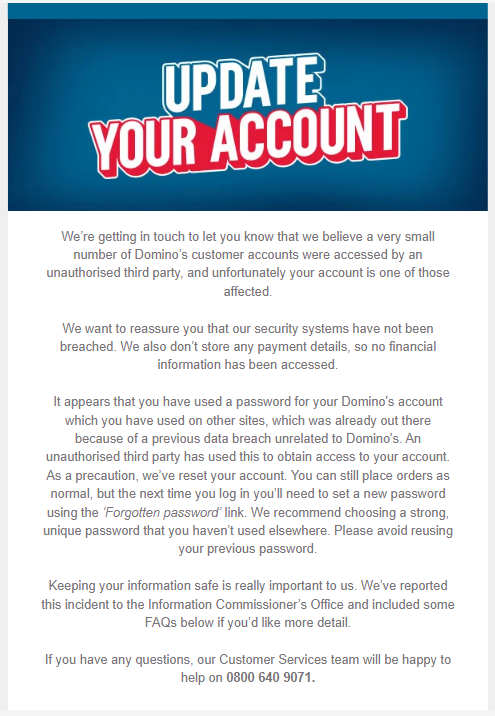
Domino’s Pizza customers tell us they have received emails saying they account has been accessed by a third party. Domino’s says its internal systems weren’t breached, but that individual accounts were logged into using a password and email combination stolen from another online account owned by the customer. This is known as credential stuffing. Here’s the …

Fix: Review advisory findings, isolate suspect endpoints, and verify threat signatures.
Welcome to the Jungle: What We Found Inside 15,465 Public MCP Servers Moderate The Hacker News
2026-10-06 The Hacker News

Welcome to the Jungle: What We Found Inside 15,465 Public MCP Servers

In 2024, MCP (Model Context Protocol) set out to become the USB-C of AI: one standard for connecting models, agents, and IDEs to tools and data. The protocol delivered. Thousands of developers built servers, and enterprises plugged them into agent workflows. The ecosystem around it fell short. Earlier this year, our team at OX Security, traced critical vulne…

Fix: Review advisory findings, isolate suspect endpoints, and verify threat signatures.
Dell System Update flaw allows attackers to gain root privileges (CVE-2026-86360) Important CVE-2026-86360 Help Net Security
2026-10-06 Help Net Security

Dell System Update flaw allows attackers to gain root privileges (CVE-2026-86360)

Dell is urging customers to patch a vulnerability (CVE-2026-86360) in Dell System Update (DSU) that could allow an unauthenticated remote attacker to execute arbitrary code with root privileges. DSU is a tool used by enterprise IT administrators to apply driver, BIOS, and firmware updates to Dell PowerEdge servers. About CVE-2026-86360 CVE-2026-86360 is a pa…

Fix: Review advisory findings, isolate suspect endpoints, and verify threat signatures.
Ontinue extends ION MXDR with managed dark web monitoring Moderate Help Net Security
2026-10-06 Help Net Security

Ontinue extends ION MXDR with managed dark web monitoring

Ontinue has announced the launch of ION for Dark Web Monitoring (DWM), a new managed add-on service that extends ION MXDR to continuously identify exposed credentials, detect brand impersonation attempts, and uncover emerging external threats before attackers can exploit them. Compromised credentials are traded across criminal forums, lookalike domains are c…

Fix: Review advisory findings, isolate suspect endpoints, and verify threat signatures.
Blinder Tunnel Campaign Targets Iraqi Infrastructure Moderate Palo Alto Unit 42
2026-10-06 Palo Alto Unit 42

Blinder Tunnel Campaign Targets Iraqi Infrastructure

Analysis of Blinder Tunnel, an Iran-nexus campaign using fake Dubai Airports recruitment lures and GitHub C2 malware to target critical infrastructure. The post Blinder Tunnel Campaign Targets Iraqi Infrastructure appeared first on Unit 42 .

Fix: Review advisory findings, isolate suspect endpoints, and verify threat signatures.
GitHub’s ReviewBench puts AI code reviewers to the test Moderate Help Net Security
2026-10-06 Help Net Security

GitHub’s ReviewBench puts AI code reviewers to the test

GitHub’s ReviewBench measures how well AI code review tools detect problems before software is released. Available in research preview through its website, the benchmark lets users compare review agents and evaluate their own tools. Code review involves checking proposed changes for mistakes. ReviewBench measures AI reviewers’ ability to identify issues and …

Fix: Review advisory findings, isolate suspect endpoints, and verify threat signatures.
Pwn2Own Ireland 2026 - Day One Results Critical Trend Micro ZDI
2026-10-06 Trend Micro ZDI

Pwn2Own Ireland 2026 - Day One Results

Welcome to Day One of Pwn2Own Ireland 2026! Today, 21 entries took the Pwn2Own stage to target multiple categories - including multiple Samsung attempts and our first Pixel entry. Follow the action live! We’ll be posting real-time updates and results throughout the competition on our blog and across social media. Stay up to date by following us on Twitter , …

Fix: Review advisory findings, isolate suspect endpoints, and verify threat signatures.
FBI Drops Accenture Contractor After Sensitive Data Breach Critical SecurityAffairs
2026-10-06 SecurityAffairs

FBI Drops Accenture Contractor After Sensitive Data Breach

Accenture lost an FBI contract after a missed security patch exposed sensitive employee data, raising serious concerns over operational security. The FBI pulled an Accenture contractor off its account on Monday, and the reason is almost mundane compared to the damage it caused. One update didn’t get installed on time. “The ‌Federal Bureau of Investigation re…

Fix: Review advisory findings, isolate suspect endpoints, and verify threat signatures.
Nikkei discloses breaches of employees’ Microsoft, Google email accounts Critical BleepingComputer
2026-10-06 BleepingComputer

Nikkei discloses breaches of employees’ Microsoft, Google email accounts

Over the weekend, Japanese publishing giant Nikkei disclosed that unknown attackers recently breached two employee email accounts and used one to send thousands of phishing emails. [...]

Fix: Review advisory findings, isolate suspect endpoints, and verify threat signatures.
Google Pauses OSS Product Bug Bounty Rewards After Surge in Invalid Automated Reports Moderate The Hacker News
2026-10-06 The Hacker News

Google Pauses OSS Product Bug Bounty Rewards After Surge in Invalid Automated Reports

Google has stopped accepting product vulnerability reports through its bug bounty program for its open-source software. The change, in effect since October 1, means researchers can no longer submit security flaws in the code of projects such as Go, Angular, and Protocol Buffers there for a reward. Reports about supply chain compromises are still accepted, an…

Fix: Review advisory findings, isolate suspect endpoints, and verify threat signatures.
Data breach at Denmark’s population register exposes 8.8 million people Critical Help Net Security
2026-10-06 Help Net Security

Data breach at Denmark’s population register exposes 8.8 million people

A data breach at Denmark’s Central Population Register (CPR) has exposed the personal information of 8.8 million people. These include people living in Denmark, deceased people and citizens who have moved abroad. The CPR is Denmark’s national register of residents, and the 10-digit CPR number it assigns to each person is used for everything from taxes and he…

Fix: Review advisory findings, isolate suspect endpoints, and verify threat signatures.
Notification