The Ports That Built a Nation
Sri Lanka's geography made it inevitable. Sitting at the crossroads of the Indian Ocean, the island was a natural waystation for ships travelling between the Persian Gulf, the Red Sea, and the ports of Southeast Asia and China. Arab merchants did not merely pass through — they stopped, traded, settled, and transformed the places they called home.
Beruwala: Sri Lanka's Oldest Arab Settlement
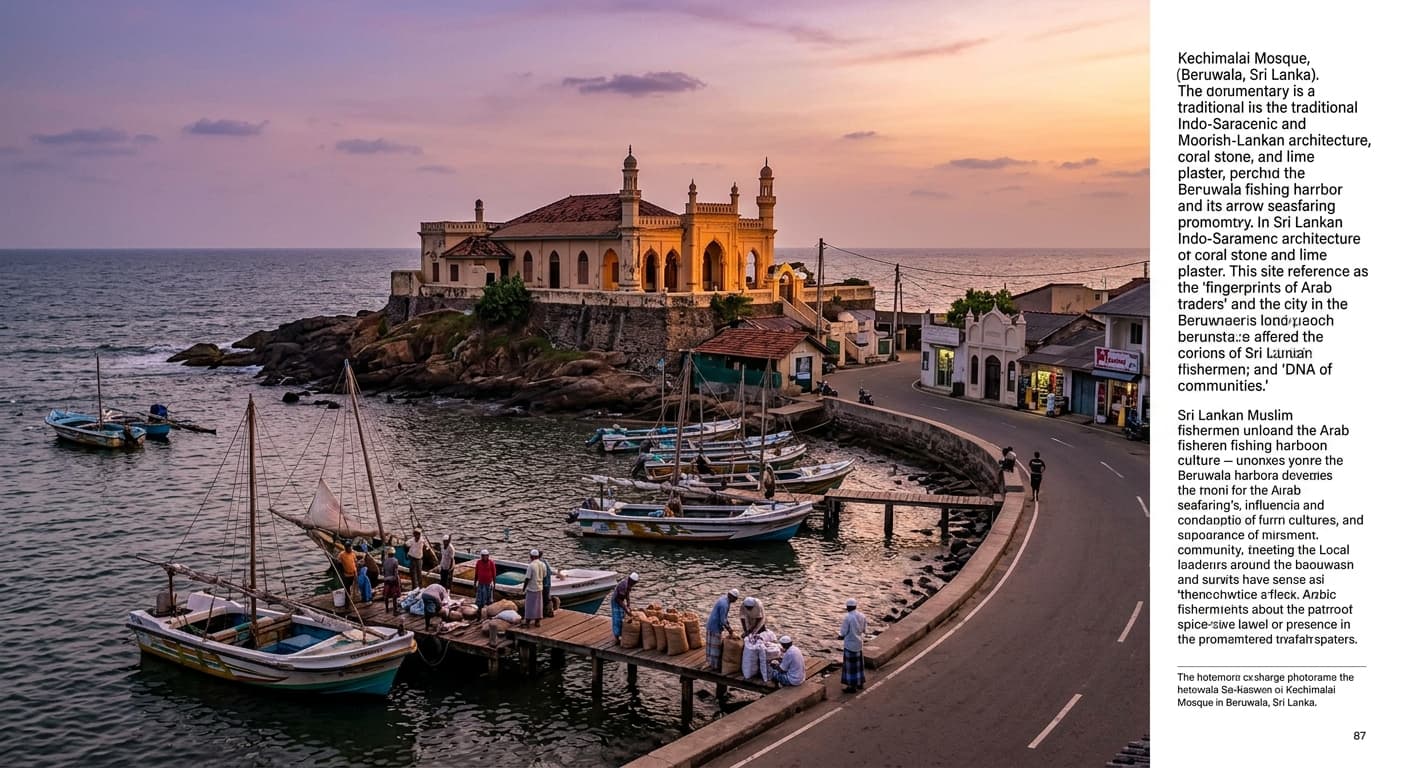
Beruwala, a small coastal town about 60 kilometres south of Colombo, holds a special place in Sri Lankan history. It is widely regarded as the site of the first Arab settlement on the island, established around the 8th century CE. The Kechimalai Mosque, perched on a rocky promontory overlooking the sea, is said to be one of the oldest mosques in Sri Lanka — a testament to the enduring presence of Arab Muslims in this community.
Today, Beruwala remains a predominantly Muslim town, its fishing harbour still active, its streets lined with mosques and Arabic-influenced architecture. The annual Ramadan celebrations here draw visitors from across the country.
Colombo: From Arab Trading Post to Capital City
The origins of Colombo as a significant settlement are closely tied to Arab trade. Arab merchants established a trading post near the mouth of the Kelani River, attracted by its natural harbour and its position on the main sea route between the Middle East and Southeast Asia. The name "Colombo" itself may derive from the Sinhala Kolon thota (port on the Kelani River) or possibly from the Arabic Kalambu.
By the time the Portuguese arrived in 1505, they found a thriving Arab trading community already well-established in Colombo. The Portuguese, recognising the commercial importance of the Arab merchants, initially maintained trading relations with them before eventually attempting to displace them.
Galle: The Jewel of the Southern Coast
Galle, with its magnificent natural harbour, was another major centre of Arab trade. Arab merchants traded here for centuries before the Portuguese built their famous fort in 1588. The Muslim community of Galle — known locally as the "Moors" — maintained their presence through the Portuguese, Dutch, and British colonial periods, adapting to each new political reality while preserving their cultural identity.
The old town of Galle still has a significant Muslim quarter, with mosques dating back several centuries. The Meeran Jumma Mosque, built in the 17th century, stands as a reminder of the Arab commercial presence that predated European colonialism by many generations.
Batticaloa and the Eastern Coast
The eastern coast of Sri Lanka, particularly around Batticaloa and Trincomalee, also has deep Arab connections. Arab traders used the eastern ports as alternative entry points, particularly during the north-east monsoon season when the western coast was less accessible. The Muslim communities of the east coast have maintained distinct cultural traditions that reflect their Arab heritage, including unique architectural styles and culinary practices.
The Legacy in Architecture and Culture
The Arab influence on Sri Lanka's coastal architecture is subtle but unmistakable. The older mosques of the western and southern coasts show clear influences from Arab and Moorish architectural traditions — arched doorways, geometric tile work, and minarets that echo the styles of the Arabian Peninsula and North Africa.
In cuisine, the Arab influence is equally profound. Dishes like biriyani, watalappan (a coconut custard dessert with clear Arab origins), and various rice-and-curry preparations reflect centuries of culinary exchange between Arab and Sri Lankan cooking traditions.
Frequently Asked Questions
Which Sri Lankan city has the strongest Arab heritage?
Beruwala is considered the oldest Arab settlement in Sri Lanka, but Colombo, Galle, and Batticaloa all have significant Arab heritage. The western and eastern coastal cities generally have the strongest Arab-influenced Muslim communities.
What is watalappan and what are its Arab origins?
Watalappan is a traditional Sri Lankan Muslim dessert made from coconut milk, jaggery, eggs, and spices. It is believed to have been introduced by Malay and Arab traders and is now considered a quintessential Sri Lankan Muslim dish, particularly popular during Ramadan and Eid celebrations.