The Holy Month in a Tropical Island
Ramadan in Sri Lanka has a character all its own. The island's Muslim community — concentrated in the western and eastern coastal areas — observes the holy month with a combination of deep religious devotion and vibrant community celebration that reflects the unique synthesis of Arab and Sri Lankan culture.
Sehri: The Pre-Dawn Meal
In Sri Lanka's Muslim communities, the pre-dawn meal (sehri or suhoor) is a family affair. Families wake before dawn to eat together before the fast begins. Traditional sehri foods include rice and curry, string hoppers, and various rice-based dishes that provide sustained energy through the fasting day.
Iftar: Breaking the Fast
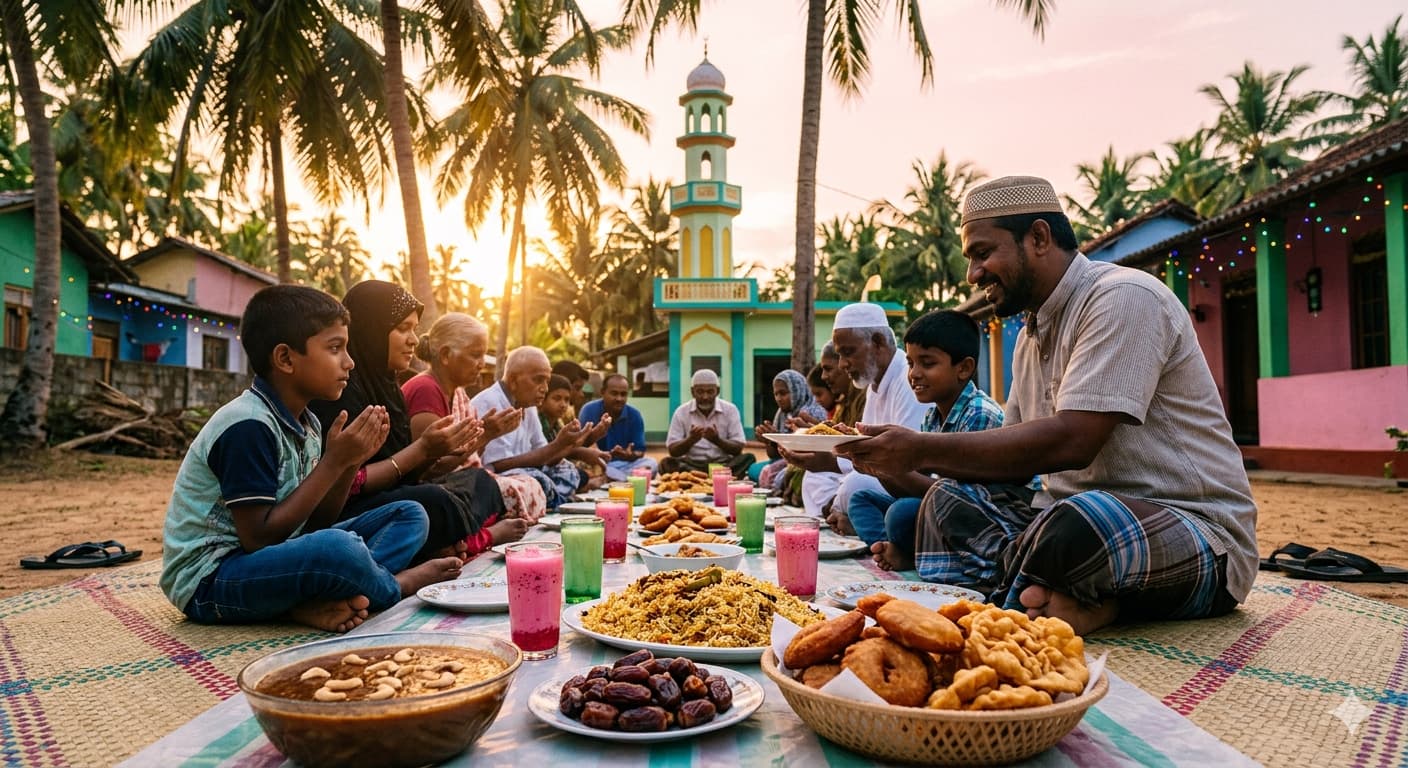
The breaking of the fast at sunset (iftar) is the social highlight of Ramadan. In Sri Lanka, iftar is typically a communal affair, with families, neighbours, and community members gathering together. The traditional first food is dates — following the Prophetic tradition — followed by a spread of special Ramadan foods.
Special Ramadan Foods
Sri Lankan Ramadan cuisine is a feast of flavours:
- Watalappan: The iconic coconut custard dessert, made in large quantities during Ramadan
- Kavum: Deep-fried rice flour cakes
- Kokis: Crispy fried snacks
- Biryani: Fragrant rice dish, often made for large iftar gatherings
- Faluda: A sweet drink made with rose syrup, basil seeds, and milk
Eid ul-Fitr: The Celebration
The end of Ramadan is marked by Eid ul-Fitr, one of the most important celebrations in the Sri Lankan Muslim calendar. Families dress in new clothes, attend morning prayers at the mosque, visit relatives, and exchange gifts. The streets of Muslim neighbourhoods are decorated, and the smell of special Eid foods fills the air.
Frequently Asked Questions
When is Ramadan in Sri Lanka?
Ramadan follows the Islamic lunar calendar and moves approximately 11 days earlier each year. The exact dates are announced by the All Ceylon Jamiyyathul Ulama (ACJU) based on moon sighting. In 2025, Ramadan is expected to begin in late February or early March.